Taiwan Security Monitor

Taiwan Affairs Office: Lai Ching-teโ€™s whitewashing of Japanese colonial rule once again exposes his pro-Japan, sellout-of-Taiwan posture and the provocative nature of his pursuit of โ€˜independence.

At the March 25 Taiwan Affairs Office press conference, a reporter asked: Lai Ching-te recently made remarks praising the โ€œGreater East Asia Co-Prosperity Sphereโ€ and portraying Japanโ€™s colonial rule in Taiwan in a favorable light, triggering strong reaction in Taiwanโ€™s public opinion. Experts and scholars on the island have listed atrocities committed by Japanese colonial authorities in Taiwan, including massacres and suppression campaigns, and criticized the Lai administration for distorting history, fawning over Japan, romanticizing colonialism, and creating hatred and division for the sake of party and personal interests. What is your comment on this?

Taiwan Affairs Office spokesperson Zhu Fenglian responded that it is well known that during the half century in which Japan occupied and colonially ruled Taiwan, it brutally suppressed the resistance of Taiwan compatriots, plundered Taiwanโ€™s resources through policies such as โ€œTaiwan for agriculture, Japan for industry,โ€ and forcibly promoted the so-called โ€œkominkaโ€ movement in an attempt to alter the national and ethnic identity of Taiwanโ€™s people. She said these crimes were numerous and impossible to fully enumerate, brought profound disaster to the people of Taiwan, and marked the darkest page in Taiwanโ€™s history. She added that large numbers of Taiwan compatriots fought one after another against Japanese invasion and colonial rule, and that hundreds of thousands paid with their blood and lives.

Zhu said that Lai Ching-te, in disregard of historical facts, has gone out of his way to whitewash and glorify Japanese colonial rule, which she described as a distortion of history, a desecration of the martyrs, and a betrayal of the nation. She said this once again exposes what she called his ugly essence of โ€œfawning over Japan and selling out Taiwanโ€ and his provocative pursuit of โ€œindependence.โ€

Zhu further stated that they will never allow anyone to defend colonialism or overturn the verdict on aggression, and will never allow certain external forces to intervene in the Taiwan issue or interfere in Chinaโ€™s internal affairs. She said compatriots on both sides of the Strait should forever remember the glorious history in which all Chinese people made enormous sacrifices to defeat brutal Japanese militarism and defended national sovereignty and dignity with their blood and lives. She called on both sides to firmly oppose โ€œTaiwan independenceโ€ separatism and external interference, work together to advance the process of national reunification, and jointly create a bright future of national rejuvenation.

Taiwan Affairs Office: What lies between the two sides of the Strait is absolutely not a struggle between systems, but a struggle between unification and separatism.

At the March 25 Taiwan Affairs Office press conference, a reporter asked: Regarding the mainlandโ€™s formulation of a law to promote ethnic unity and progress, Straits Exchange Foundation Secretary-General Lo Wen-chia said that the issue between the two sides of the Strait is a matter of โ€œdemocracy,โ€ that ethnicity is an issue of the past, while democracy is the issue of the present and the future, and that he hopes China will one day pass laws related to promoting democracy in China. What is your comment on this?

Taiwan Affairs Office spokesperson Zhu Fenglian responded that compatriots on both sides of the Strait all belong to the Chinese nation and are all Chinese people. The natural bonds of affection and ethnic identity between them, rooted in shared blood and mutual support, cannot be changed by anyone. Taiwanโ€™s future lies in national unification, and the well-being of Taiwan compatriots is tied to national rejuvenation.

Zhu said that recently the DPP authorities have continuously made irresponsible remarks about the law to promote ethnic unity and progress, spreading rumors and smearing it. Their purpose, she said, is to incite confrontation and antagonism across the Strait and create a โ€œchilling effectโ€ on the island. The issue between the two sides of the Strait, she said, is absolutely not a contest between political systems, but a struggle between unification and separatism. For the sake of its own one-party interests, she said, the DPP authorities, under the guise of โ€œdemocracy,โ€ have engaged in โ€œgreen terrorโ€ and โ€œTaiwan independence authoritarianismโ€ on the island, abused the judiciary to suppress and persecute political opponents, and repeatedly trampled on democracy, obstructed freedom, and damaged the rule of law. She asked how they could possibly have the standing to speak about โ€œdemocracy.โ€

Zhu added that the founding purpose of the Straits Exchange Foundation is to be โ€œChinese, benevolent, and service-oriented.โ€ She said she hopes it will not forget that purpose, engage in less malicious political manipulation, and do more that benefits the peaceful development of cross-Strait relations and improves the welfare of people on both sides of the Strait.

Taiwan Affairs Office: The โ€˜22 Measures for Agriculture and Forestryโ€™ have achieved positive results over the five years since their implementation.

At the March 25 Taiwan Affairs Office press conference, a reporter asked: Agriculture is one of the earliest-starting, broadest-based, and most productive areas of cross-Strait exchange and cooperation. This March marks the fifth anniversary of the promulgation of the โ€œ22 Measures for Agriculture and Forestry.โ€ Could you introduce the concrete results these policies have achieved over the past five years? Some people in Taiwanโ€™s agricultural sector have pointed out that the 15th Five-Year Plan provides new opportunities for cross-Strait agricultural cooperation. Do you have any comment on this?

Taiwan Affairs Office spokesperson Zhu Fenglian responded that, in March 2021, the Taiwan Affairs Office, the Ministry of Agriculture and Rural Affairs, the National Forestry and Grassland Administration, and other departments jointly issued the โ€œSeveral Measures to Support the Development of Taiwan Compatriots and Taiwan-Funded Enterprises in the Mainlandโ€™s Agriculture and Forestry Sectorsโ€ (abbreviated as the โ€œ22 Measures for Agriculture and Forestryโ€). Over the past five years, localities have continued to tailor implementation to local conditions, steadily refining and carrying out these policies to support Taiwanese farmers and enterprises in achieving better development on the mainland. She then introduced several examples.

Zhu said, first, land-use support has become more robust. Local governments have strictly implemented the provisions in the โ€œ22 Measures for Agriculture and Forestryโ€ concerning the transfer of land-use management rights and the management of land for agricultural facilities, streamlined approval procedures, shortened processing times, and optimized land-use services. For example, over the past five years Gansu has helped Taiwan-funded enterprises transfer more than 10,000 mu of land; Zhejiang has innovated a โ€œstandard landโ€ supply model and assisted several Taiwan-funded enterprises in obtaining land-use approvals; and Fujian has built a province-wide forest rights trading platform and digital system that provides entities including Taiwan compatriots and Taiwan-funded enterprises with information publishing, policy consultation, and transaction guidance for forest-rights transfers.

Second, financial support has become stronger. Local governments have promoted equal access for Taiwan compatriots and Taiwan-funded enterprises to pro-agriculture support policies, various subsidies, and more convenient financing. For example, Xinjiang has helped Taiwan-funded agricultural enterprises obtain more than RMB 10 million in subsidies, awards, and equity investment; Fujian has innovatively established a cross-border credit information service platform and issued financial credit certificates for Taiwanese businesspeople and Taiwan compatriots, allowing certificate holders to access convenient financial services such as higher credit limits, lower loan interest rates, reduced fees, and green channels; and Hainan, Chongqing, Jiangxi, and Jiangsu have introduced financial services such as biological resource collateral loans, government risk compensation funds, special agricultural loans for Taiwanese farmers, and other rural credit programs to broaden financing channels.

Third, platform construction has become more diversified. By the end of 2025, among the 36 Taiwan Farmer Entrepreneurship Parks approved in 14 provinces, 10 had also been approved for construction as modern agricultural industrial parks. Their industrial clustering effects and spillover benefits have become increasingly apparent, making them centers where Taiwanese farmers and Taiwan compatriots can put down roots and develop on the mainland. Relevant departments have also established a Cross-Strait Rural Integrated Development Pilot Zone in Sanming, Fujian, and supported the holding of rural integration development forums to explore pathways for cooperation in rural industry, rural construction, and rural governance, thereby building new platforms and creating new opportunities for exchanges and cooperation among practitioners and scholars on both sides of the Strait.

Fourth, integrated development has deepened further. Taiwan compatriots have been supported in participating in honorary selection and recognition programs, and three Taiwan compatriots โ€” Xie Dongqing, Wu Yunzhen, and Guo Yangfu โ€” were recognized as notable โ€œThree Ruralโ€ figures. Taiwan compatriots and Taiwan-funded enterprises have also been encouraged to participate in mainland rural revitalization. Ningxia, Heilongjiang, and Inner Mongolia have incubated and cultivated a number of benchmark Taiwan-funded agricultural processing enterprises; over the past five years Fujian has cumulatively invested RMB 687 million to support Taiwanese youth participation in rural construction and rural innovation; Zhejiang has invited Taiwan compatriots and Taiwan-funded enterprises to help create rural planning demonstration projects such as Jinhuaโ€™s โ€œTaipei Villageโ€; Hainan has implemented a policy allowing Taiwan-funded enterprises to enjoy the Hainan Free Trade Portโ€™s โ€œzero tariffโ€ treatment for self-use production equipment; and Guangdong and Fujian have encouraged Taiwan compatriots and Taiwan-funded enterprises to participate jointly in drafting technical standards.

Zhu further noted that this year marks the opening year of the 15th Five-Year Plan period. The outline of the 15th Five-Year Plan explicitly calls for โ€œaccelerating agricultural and rural modernization and solidly advancing comprehensive rural revitalization,โ€ and systematically lays out key tasks such as enhancing agricultural production capacity, quality, and efficiency; advancing the construction of livable, workable, and beautiful villages; and improving the effectiveness of policies that strengthen, benefit, and enrich agriculture. These measures, she said, provide many opportunities for Taiwanese farmers and Taiwan compatriots to participate in the mainlandโ€™s high-quality development.

She added that the mainland is willing to take the lead in sharing development opportunities in the agriculture and forestry sectors with Taiwan compatriots, further improve policies and measures that enhance Taiwan compatriotsโ€™ welfare and allow them to enjoy equal treatment, and create better conditions for Taiwanese farmers and Taiwan-funded enterprises to develop on the mainland. She said the mainland welcomes more Taiwanese farmers and Taiwan-funded enterprises to invest and start businesses there, share opportunities, and pursue development together.

Taiwan Affairs Office: We hope more and more Taiwan compatriots will want to come to the mainland, enjoy coming to the mainland, and come often.

At the March 25 Taiwan Affairs Office press conference, a reporter asked: Recently, a Taiwanese tech blogger attended Appleโ€™s spring product launch event in Shanghai and posted a short video saying, โ€œHappiness really is this simple.โ€ He also ate pan-fried buns he had been craving for a long time and ordered a favorite coffee drink. The post drew attention from netizens on both sides of the Strait, and many mainland netizens commented with suggestions such as โ€œyou need to learn how to use delivery apps to get coupons.โ€ Earlier, a Taiwanese media personality also shared impressions from a first visit to Chengdu on social media, praising the pandas as very cute, local restaurant service as excellent, prices as inexpensive, and the food as abundant and delicious. Do you have any comment on this?

Taiwan Affairs Office spokesperson Zhu Fenglian responded that, recently, a number of Taiwanese internet personalities active on social media have shared what they saw and experienced while visiting the mainland, and their followers and fans have responded enthusiastically. She said this is a good thing for enhancing mutual understanding and exchanges between people on both sides of the Strait.

Zhu said that they have repeatedly stated that they warmly welcome broad numbers of Taiwan compatriots, including internet influencers and media workers, to come to the mainland to look around and see for themselves. People can check in at landscapes across the mainland, including mountains, plateaus, plains, coastlines, and glaciers; they can also experience the everyday life of cities and villages where tradition and modernity are blended; they can study and pursue further education at more than 500 mainland universities; and they can intern, work, and start businesses in a wide range of sectors in order to realize their life ambitions.

She added that they will continue creating more convenient conditions for Taiwan compatriots, especially Taiwanese youth, to come to the mainland, and that they hope more and more Taiwan compatriots will want to come to the mainland, enjoy coming to the mainland, and come often, in pursuit of a different kind of life experience.

Weekly Security Review: 3/2/26

Author: Jaime Ocon


Welcome to the Weekly Security Review, where we highlight key military, security, and political developments around Taiwan in one straightforward summary!

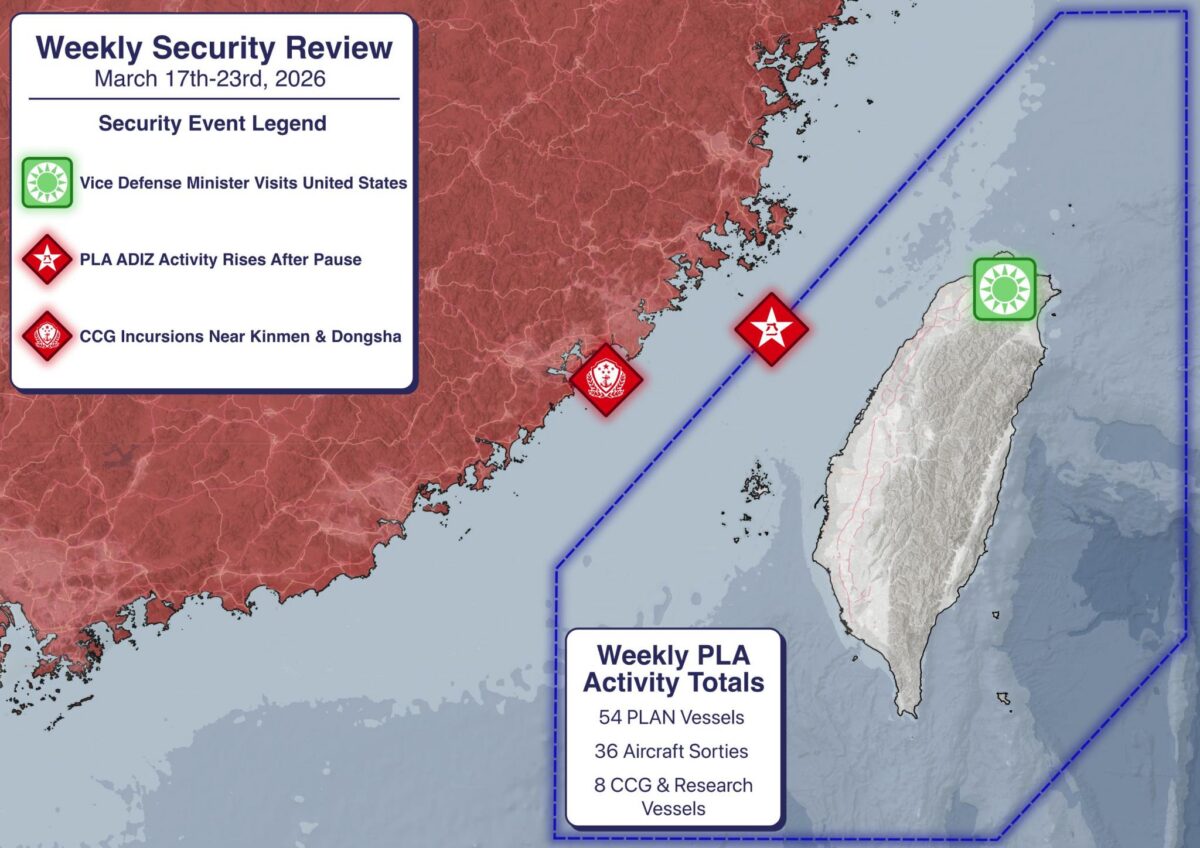
This week, senior members of Taiwanโ€™s defense ministry traveled to the U.S. to inspect military aircraft, ADIZ activity in the Taiwan Strait continues to spark public discourse, and Chinaโ€™s Coast Guard steps up pressure near Kinmen and Dongsha Island. 

Vice Defense Minister Makes U.S. Trip, Showcases Updates on U.S. Systems. 

Taiwanโ€™s Ministry of National Defense (MND) announced on March 21 that Vice Minister of Defense Hsu Shih-chien led a delegation to the United States to inspect key procurement projects that are close to delivery. In a press release, the MND delegation says they witnessed the completion of testing for Taiwanโ€™s first F-16 Block 70 fighter jet at Lockheed Martinโ€™s production facility in Greenville, South Carolina. The testing took place on March 16, and alongside Vice Minister Hsu were Taiwanโ€™s Representative to the United States, Alexander Yui Tah-ray; Air Force Deputy Chief of Staff, Major General Tian Chung-yi; and Taiwanโ€™s Defense Mission Chief, Major General Wei Chung-hsing. The MND specified that the group observed the first Acceptance Check Flight (ACF) and that Lockheed Martin briefed the delegation on production progress. Officials at Lockheed say that the F-16 Block 70 production line is at full capacity and has assigned hundreds of staff to the program to ensure delivery remains on track. The MND says that after Taiwanโ€™s Block 70 aircraft receive factory acceptance, they will undergo final inspections by the U.S. government before delivery to Taiwan later this year.

The U.S. approved an $8 billion sale of F-16 fighter jets to Taiwan in 2019, a deal that would expand the countryโ€™s F-16 fleet to more than 200 aircraft, the largest in Asia. The deal, however, has continued to face delays due to production and software issues. As part of a broader modernization effort, Taiwan has already upgraded 141 of its older F-16A/B models to the advanced F-16V variant and is now awaiting delivery of 66 brand-new F-16Vs. Taiwanese officials say all aircraft will be delivered by 2028. The MND says it will continue to use existing Taiwanโ€“U.S. security cooperation mechanisms to accelerate the delivery of the fighter jets, which it says are important to Taiwanโ€™s air defense and deterrence capabilities.

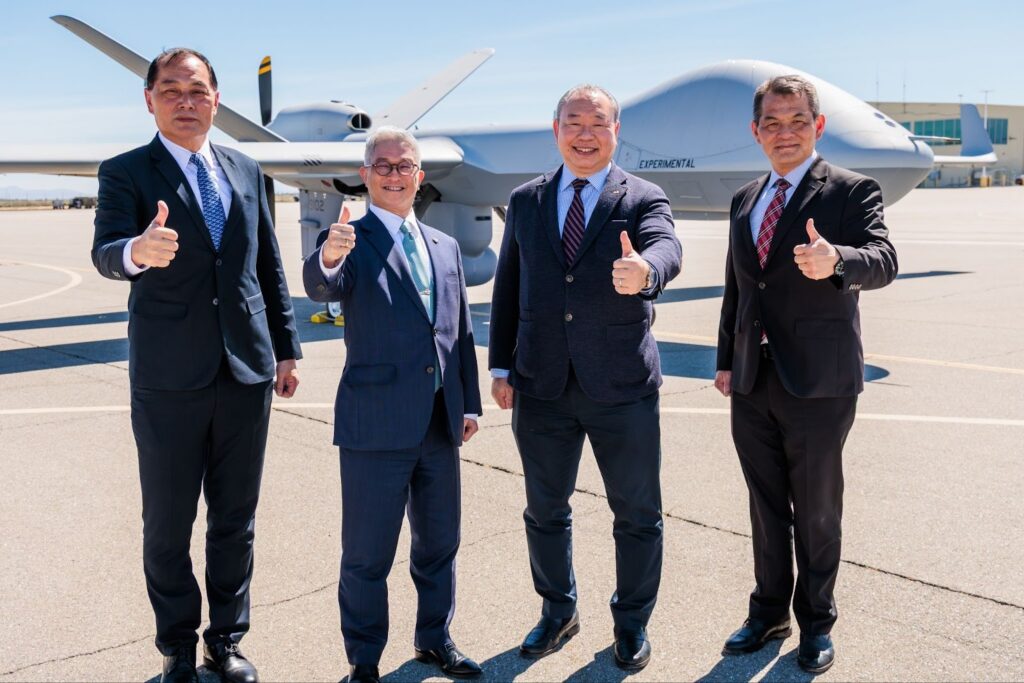
During the same trip, the MND delegation also attended the handover ceremony for the first batch of MQ-9B SeaGuardian maritime surveillance drones. Taiwan purchased four MQ-9Bs from General Atomics Aeronautical Systems, Inc. in 2022, of which the U.S. is scheduled to deliver two aircraft in 2026 and two more in 2027. During the ceremony, Vice Minister Hsu observed a flight demonstration and also hopped into the driverโ€™s seat to test the UAVโ€™s capabilities. 

Taiwan ADIZ Activity Continues to Fluctuate After Lull

Taiwanโ€™s Ministry of National Defense reported 28 Peopleโ€™s Liberation Army (PLA) aircraft, including J-10, J-16 fighter jets, and KJ-500 command and control planes operating around the region on Tuesday (March 17). 21 of the aircraft crossed the median line of the Taiwan Strait and entered Taiwanโ€™s air defense identification zone (ADIZ). The MND says these aircraft were conducting joint air-sea training along PLAN vessels. The spike in activity comes as Taiwanโ€™s MND reported a small uptick in Chinese military activity around the island last Sunday (March 15), ending a lull that had analysts looking for answers. 

Interestingly enough, Sundayโ€™s ADIZ report sent shockwaves across social media after multiple media outlets began reporting that there was โ€œLarge Scale Chinese Military Activity Surrounding Taiwanโ€. Despite the MND reporting nothing indicating that it was surrounded, multiple accounts on X and Bluesky had a field day, reposting this false narrative. AI-generated maps based on previous military exercises in 2024 began to circulate, and within 12-24 hours, some posts had reached nearly 5 million engagements. A dangerous and concerning look into how misinformation around Taiwan can spread like wildfire. 

Our analysis and leadership team at TSM wrote a great article that goes into detail about what happened, which can be found here: https://tsm.schar.gmu.edu/from-16-aircraft-to-surrounded-fear-virality-and-the-misinformation-cascade-in-adiz-discourse/ 

Despite that, Minister of National Defense Wellington Koo acknowledged the recent lull in activity but cautioned against reading too much into it, emphasizing that Taiwanโ€™s armed forces need to remain on alert regardless. Koo told the Wall Street Journal that โ€œwe cannot rely on a single indicator like the absence of aircraft,โ€ pointing to daily Chinese naval patrols around the island as a sign of continued pressure. Some analysts believe the lull was linked either to the annual meeting of the PRCโ€™s National Peopleโ€™s Congress or to a broader diplomatic strategy ahead of a planned meeting between U.S. President Donald Trump and President Xi Jinping in late March. 

Coast Guard Activity Surges in Kinmen and Dongsha 

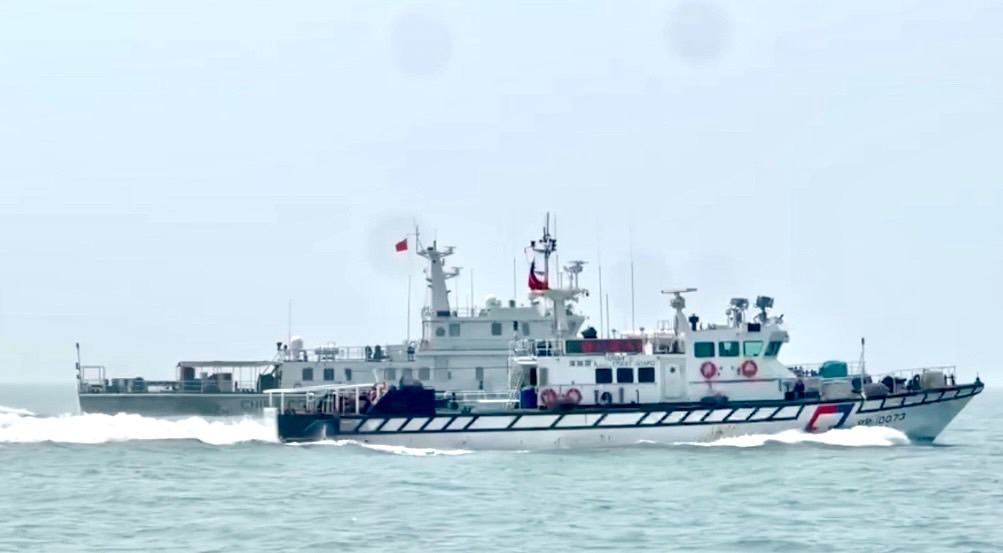
Taiwanโ€™s Coast Guard Administration (CGA) has reported a surge in China Coast Guard (CCG) ships entering restricted waters around Kinmen and Dongsha Island. On March 16th, 17th, 20th, and 23rd, multiple CCG vessels breached restricted waters off Kinmen in coordinated formations, prompting Taiwanโ€™s CGA to dispatch its own patrol boats. Taiwan says it conducted one-to-one shadowing of each Chinese vessel and issued repeated radio warnings in Chinese and English. 

A similar situation unfolded near Dongsha Island on March 18, when a China Coast Guard ship (hull number 3102) entered Taiwanโ€™s restricted waters after first being detected loitering just outside this area. Taiwanโ€™s CGA is accusing Beijing of deliberately switching off the AIS signal and using small but frequent probes to test Taiwanโ€™s detection and reaction capabilities. CGA officials say they will use high-tech surveillance and robust forward deployments to safeguard national sovereignty and maintain maritime security amid mounting gray-zone pressure.

For more information about the CCG’s activity around Taiwan, check out the China Coast Guard Incident Tracker on our website.

Visualization: Japan P-1 Patrol Aircraft Deployment


Author: Maxwell Hollingsworth


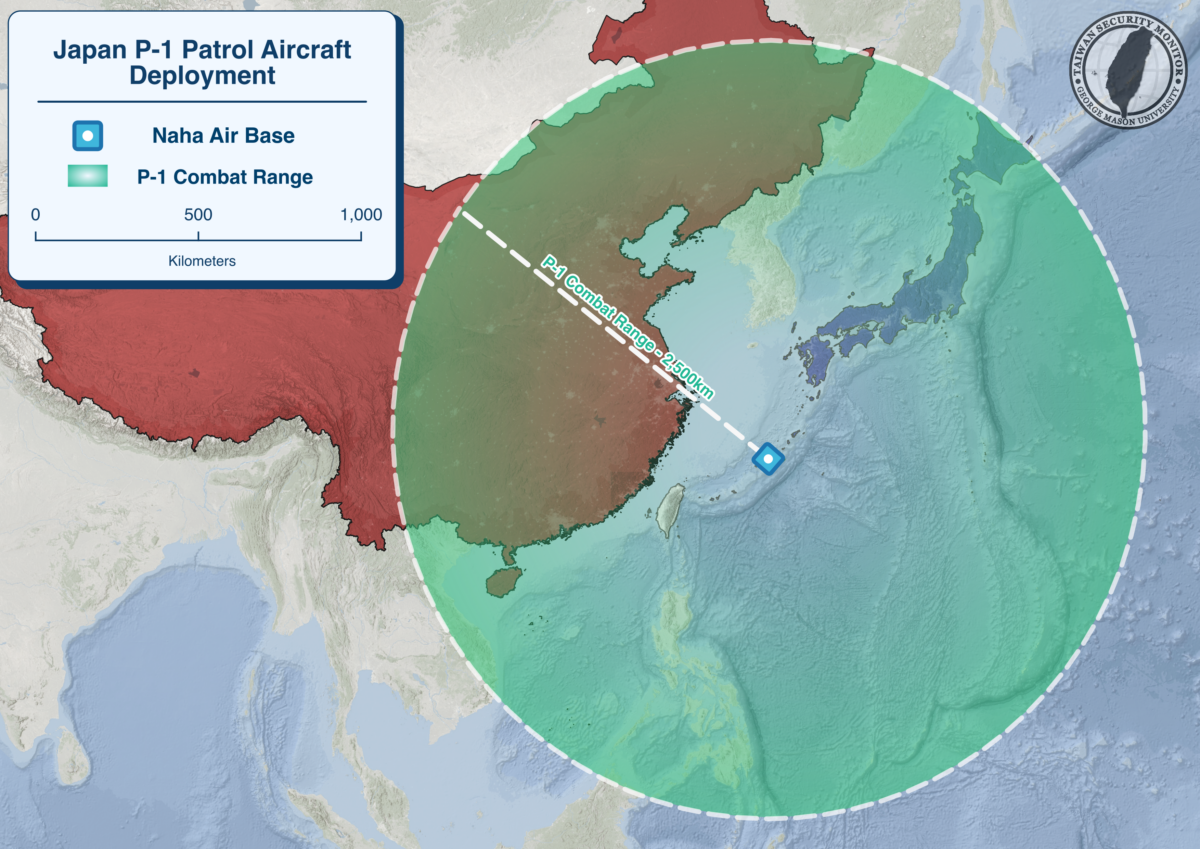
Japan has begun deploying its domestically constructed P-1 maritime patrol aircraft to Naha Air Base for the first time, with 10 aircraft expected by FY2027 to replace aging P-3C Orions. 

Above is our visualization of the P-1’s deployment at Naha Air Base and its operational range.

Taiwan Affairs Office: In accordance with the requirements of the 15th Five-Year Plan outline, we will actively promote the peaceful development and integrated development of cross-Strait relations.

At the March 18 press conference of the State Council Taiwan Affairs Office, a reporter asked: The Fourth Session of the 14th National Peopleโ€™s Congress approved the outline of the 15th Five-Year Plan. How should the section specifically related to Taiwan be interpreted? How will the Taiwan Affairs Office of the State Council implement it?

Taiwan Affairs Office spokesperson Chen Binhua responded: On March 12, the Fourth Session of the 14th National Peopleโ€™s Congress voted to adopt the outline of the 15th Five-Year Plan for national economic and social development. The outline provides top-level design and strategic planning for Taiwan-related work during the 15th Five-Year Plan period, and clarifies the objectives and tasks of promoting the peaceful development of cross-Strait relations and advancing the great cause of national reunification in the course of building a modern socialist power in all respects. The outline clearly states that it is necessary to thoroughly implement the Partyโ€™s overall strategy for resolving the Taiwan question in the new era, adhere to the one-China principle and the โ€œ1992 Consensus,โ€ firmly crack down on โ€œTaiwan independenceโ€ separatist forces, oppose interference by external forces, safeguard peace and stability in the Taiwan Strait, firmly grasp the dominance and initiative in cross-Strait relations, improve the well-being of compatriots on both sides of the Strait, and resolutely safeguard the common homeland of the Chinese nation.

In terms of specific measures, first is promoting cross-Strait economic cooperation. This includes continuing to introduce and implement policies and measures benefiting Taiwan compatriots and Taiwan-funded enterprises, guiding them to actively integrate into and serve the new development pattern, supporting Taiwan businesses in establishing long-term roots on the mainland, participating in national regional development strategies and the joint construction of the Belt and Road Initiative, strengthening industrial cooperation, and building a common cross-Strait market. It also includes supporting Fujian in high-quality construction of a demonstration zone for cross-Strait integrated development, advancing key cross-Strait cooperation platforms and industrial cooperation zones in places such as Pingtan, Kunshan, and Dongguan, supporting the development of multi-level cross-Strait financial markets, and encouraging qualified Taiwan-funded enterprises to list on the mainland.

Second is deepening cross-Strait exchanges. This includes improving systems and policies that promote cross-Strait economic and cultural exchanges and cooperation, expanding personnel exchanges, and promoting interaction, engagement, and integration across the Strait. It also includes deepening cooperation in education, healthcare, social security, and the sharing of public resources; promoting cultural exchanges across the Strait; jointly preserving and promoting Chinese culture; and enhancing Taiwan compatriotsโ€™ identification with the Chinese nation, Chinese culture, and the Chinese state. It also calls for strengthening exchanges among youth and at the grassroots level, continuing to create better conditions for young people from Taiwan to pursue, build, and realize their dreams on the mainland, implementing equal-treatment policies for Taiwan compatriots, creating better conditions for them to study, work, and live on the mainland, and uniting the broad mass of Taiwan compatriots to create enduring well-being for the Chinese nation.

We will thoroughly implement the Partyโ€™s overall strategy for resolving the Taiwan question in the new era and, in accordance with the requirements of the 15th Five-Year Plan outline, unite the broad mass of Taiwan compatriots, grasp the trend of history, and actively promote the peaceful development and integrated development of cross-Strait relations, working together for the great cause of national reunification and national rejuvenation.

Taiwan Affairs Office: The Government Work Report has important guiding significance for carrying out this yearโ€™s Taiwan-related work.

At the March 18 press conference of the State Council Taiwan Affairs Office, a question was raised that, due to recent instability in the Middle East, Taiwan faces the risk of disruptions to oil and natural gas supplies, and concerns over energy reserves and supply security have become a major issue on the island. This has also drawn renewed attention to the mainlandโ€™s statement last October about the โ€œseven ways Taiwan would be better off after unification,โ€ including the claim that โ€œafter peaceful unification, with the strong motherland as its backing, Taiwanโ€™s energy and resource security will be better.โ€ Could you elaborate on this?

Taiwan Affairs Office spokesperson Chen Binhua responded: Achieving unification by peaceful means is in the greatest interest of compatriots on both sides of the Strait and of the Chinese nation as a whole. Peaceful unification would create enormous opportunities for Taiwanโ€™s economic and social development and bring tangible benefits to the broad mass of Taiwan compatriots. This includes stronger guarantees for Taiwanโ€™s energy and resource security with the support of a powerful motherland.

During the 14th Five-Year Plan period, the mainland developed a multi-driver energy supply system based on coal, oil, gas, nuclear power, and renewable energy. Traditional energy production has remained stable and increased, while new energy sources have been fully utilized and their share has risen rapidly, with wind and solar power now accounting for about 22 percent of total electricity consumption. Investment has also expanded in new forms of energy infrastructure such as new-type energy storage, frontier hydrogen energy, virtual power plants, and charging and battery-swapping facilities. The mainlandโ€™s capacity to guarantee energy supply has strong resilience and broad potential. Taking electricity as an example, major countries around the world are now developing artificial intelligence and related industries, and the growth of the AI sector depends heavily on a stable power supply. The mainland has already built the worldโ€™s largest clean power supply system, with an average electricity reliability rate of over 99.9 percent. In 2025, total electricity consumption surpassed 10 trillion kilowatt-hours for the first time, exceeding the combined electricity use of the United States, Germany, Japan, and India. In both July and August, monthly electricity consumption exceeded 1 trillion kilowatt-hours, setting a world record, yet there were neither power cuts nor price increases. Power on that scale, fully supplied, would be enough to meet the electricity needs of Taiwan businesses and would also allow households across Taiwan to put an end to the inconvenience and anxiety of summer electricity shortages and rationing.

The recently concluded Fourth Session of the 14th National Peopleโ€™s Congress reviewed and approved the outline of the 15th Five-Year Plan. The outline makes strategic arrangements for accelerating a comprehensive green transformation in economic and social development and for building a Beautiful China during the 15th Five-Year Plan period. We will accelerate the construction of a new energy system, continuously strengthen the foundations of energy and resource security, and keep advancing the building of an energy powerhouse. After peaceful unification, the two sides of the Strait will achieve connectivity wherever possible and full interconnection where appropriate. This will make it entirely possible to make up for Taiwanโ€™s shortages in electricity, natural gas, crude oil, and other resources, providing reliable guarantees for Taiwanโ€™s energy and resource security, allowing Taiwan compatriots to enjoy cheaper, cleaner, and more stable energy supplies, and reducing the energy burden on households and businesses.

Dr. Sun Yat-sen once said: โ€œUnification is the hope of all Chinese citizens. If unification can be achieved, the whole nation will enjoy happiness; if it cannot, the nation will suffer.โ€ We are willing to provide Taiwan compatriots with stable and reliable guarantees for energy and resource supplies, so that they may live better lives. We hope that compatriots in Taiwan and on the mainland will work together to create a better future of national unification and national rejuvenation.

Taiwan Affairs Office: After peaceful unification, Taiwan will have reliable guarantees for energy and resource supplies.

At the March 18 press conference of the State Council Taiwan Affairs Office, a reporter asked: Regarding the passage by the Fourth Session of the 14th National Peopleโ€™s Congress of the Law of the Peopleโ€™s Republic of China on Promoting Ethnic Unity and Progress, the head of Taiwanโ€™s Mainland Affairs Council said that โ€œthis law carries implications of punishing independence, treats opposing independence and promoting unification as the same thing, and creates the possibility of using the law to impose penalties. This is a typical form of transnational repression.โ€ What is your comment on this?

Taiwan Affairs Office spokesperson Chen Binhua responded: The joint struggle and shared prosperity of all ethnic groups are the source of life, strength, and hope for the Chinese nation. The formulation of the Law on Promoting Ethnic Unity and Progress lays a stronger legal foundation for forging a strong sense of the Chinese national community and advancing the building of that community. It is of major significance for comprehensively advancing the cause of ethnic unity and progress, and for promoting the united struggle of people of all ethnic groups across the country in pursuit of national strength and national rejuvenation through Chinese modernization.

Compatriots on both sides of the Strait share the same language and race, the same roots and origins, and all belong to the Chinese nation. They are a community with close blood ties and a shared destiny in both honor and hardship. We will thoroughly implement the Law on Promoting Ethnic Unity and Progress, further deepen cross-Strait exchanges and cooperation, strengthen the shared interests of compatriots on both sides, jointly promote Chinese culture, enhance Taiwan compatriotsโ€™ identification with the Chinese nation, Chinese culture, and the Chinese state, and work together to achieve the great rejuvenation of the Chinese nation.

Driven by its private interest in pursuing โ€œindependence,โ€ the DPP authorities are deliberately confusing the public, fabricating so-called โ€œrisks,โ€ and trying to intimidate the people of Taiwan in order to create a chilling effect. As for acts by โ€œTaiwan independenceโ€ separatist forces that divide the nation and undermine national unity, we will take all necessary measures and punish them in accordance with the law.

Taiwan Affairs Office: We will punish, in accordance with the law, โ€˜Taiwan independenceโ€™ separatist forces for splitting the nation and undermining national unity.

At the March 18 press conference of the State Council Taiwan Affairs Office, a reporter asked: In response to criticism from the Taiwan Affairs Office spokesperson of Lai Ching-teโ€™s โ€œTaiwan independenceโ€ fallacies at the so-called โ€œ30th Anniversary of Taiwanโ€™s Direct Presidential Election and Democratic Resilience Forum,โ€ the DPP authorities said that โ€œthe essence of cross-Strait relations lies in a struggle between political systems,โ€ that โ€œthe mainland should engage in dialogue with Taiwanโ€™s legitimately elected government and pragmatically address problems,โ€ and that โ€œTaiwanโ€™s future must be decided jointly by the 23.5 million people of Taiwan.โ€ What is your comment on this?

Taiwan Affairs Office spokesperson Chen Binhua responded: Under the banner of so-called โ€œuniversal values,โ€ the Lai Ching-te authorities use democracy as a cover for suppressing dissent, promoting โ€œresist China, protect Taiwan,โ€ and colluding with external forces. They are attempting to mislead the public, confuse the issue, stir up cross-Strait confrontation, โ€œseek independence by relying on foreign forces,โ€ and โ€œreject unification through military means.โ€ Their sinister intentions are plain for all to see.

Differences in political systems are not an obstacle to unification, much less an excuse for division. What exists across the Strait is absolutely not a struggle between systems, but rather a struggle between unification and division. The so-called โ€œstruggle between systemsโ€ is merely an excuse used by the DPP authorities to pursue โ€œindependence,โ€ and a trick to deceive Taiwan compatriots and international public opinion.

No matter what Lai Ching-te and others like him say or do, they cannot change the fact that Taiwan is part of China; they cannot sever the unbreakable historical and legal ties across the Strait; and they cannot overturn the iron rule that Taiwanโ€™s future can only be decided jointly by all Chinese people, including Taiwan compatriots. In the face of the historical trend that the two sides of the Strait will inevitably and must inevitably be unified, and in the face of the resolve and will of more than 1.4 billion compatriots to safeguard national sovereignty and territorial integrity, any plot to split the country or resist unification is nothing more than wishful thinking.