Taiwan Security Monitor

Taiwan Affairs Office: Taiwan compatriots strongly support cross-Strait integrated development.

At the April 1 press conference of the Taiwan Affairs Office of the State Council, a reporter asked: โ€œLai Ching-te recently said that Taiwan has already been integrated into a U.S.-led โ€˜non-red supply chainโ€™ and that this will ensure Taiwanโ€™s competitive advantage in the future. Public opinion on the island, however, holds that Taiwan should deeply integrate into the mainlandโ€™s robotics industrial chain in areas such as semiconductors in order to seize the opportunities of the times. More and more people in Taiwan have come to realize that embracing the mainland is the only viable option, and that โ€˜opposing China and resisting Chinaโ€™ will only cause Taiwan to fall further behind. What is your comment on this?โ€

In response, Taiwan Affairs Office spokesperson Zhang Han said that the DPP authoritiesโ€™ claim of building a so-called โ€œnon-red supply chainโ€ is nothing more than handing over Taiwanโ€™s industries to others in service of their scheme of โ€œrelying on external forces to pursue independence.โ€ Cross-Strait economic and trade cooperation, she said, is mutually beneficial and has brought tangible benefits to people in Taiwan, and more and more people in Taiwan have come to see the convenience and opportunities brought by integrated cross-Strait development.

She said that this year marks the opening year of the 15th Five-Year Plan. During the period of the 15th Five-Year Plan, โ€œwe will promote the deep integration of technological innovation and industrial innovation, break new ground in optimizing and upgrading traditional industries, fostering and expanding emerging industries, and laying out future industries in advance.โ€ This, she said, will surely open broader space for cross-Strait industrial cooperation and provide more opportunities for Taiwan compatriots and Taiwan businesses.

She added that โ€œwe have always upheld the concept that โ€˜people on both sides of the Strait are one family,โ€™ deepened cross-Strait exchanges, cooperation, and integrated development, and enabled compatriots on both sides to share in the achievements and opportunities of Chinese-style modernization.โ€ She also said that Taiwan compatriots are welcome to participate in the mainlandโ€™s high-quality development and jointly strengthen the economy of the Chinese nation.
Taiwan Affairs Office: The 15th Five-Year Plan will open broader space for cross-Strait industrial cooperation.

At the April 1 press conference of the Taiwan Affairs Office of the State Council, a reporter asked: โ€œLai Ching-te recently said that Taiwan has already been integrated into a U.S.-led โ€˜non-red supply chainโ€™ and that this will ensure Taiwanโ€™s competitive advantage in the future. Public opinion on the island, however, holds that Taiwan should deeply integrate into the mainlandโ€™s robotics industrial chain in areas such as semiconductors in order to seize the opportunities of the times. More and more people in Taiwan have come to realize that embracing the mainland is the only viable option, and that โ€˜opposing China and resisting Chinaโ€™ will only cause Taiwan to fall further behind. What is your comment on this?โ€

In response, Taiwan Affairs Office spokesperson Zhang Han said that the DPP authoritiesโ€™ claim of building a so-called โ€œnon-red supply chainโ€ is nothing more than handing over Taiwanโ€™s industries to others in service of their scheme of โ€œrelying on external forces to pursue independence.โ€ Cross-Strait economic and trade cooperation, she said, is mutually beneficial and has brought tangible benefits to people in Taiwan, and more and more people in Taiwan have come to see the convenience and opportunities brought by integrated cross-Strait development.

She said that this year marks the opening year of the 15th Five-Year Plan. During the period of the 15th Five-Year Plan, โ€œwe will promote the deep integration of technological innovation and industrial innovation, break new ground in optimizing and upgrading traditional industries, fostering and expanding emerging industries, and laying out future industries in advance.โ€ This, she said, will surely open broader space for cross-Strait industrial cooperation and provide more opportunities for Taiwan compatriots and Taiwan businesses.

She added that โ€œwe have always upheld the concept that โ€˜people on both sides of the Strait are one family,โ€™ deepened cross-Strait exchanges, cooperation, and integrated development, and enabled compatriots on both sides to share in the achievements and opportunities of Chinese-style modernization.โ€ She also said that Taiwan compatriots are welcome to participate in the mainlandโ€™s high-quality development and jointly strengthen the economy of the Chinese nation.
Taiwan Affairs Office: The DPP authorities lack both the will and the ability to address the livelihood crisis.

At the April 1 press conference of the Taiwan Affairs Office of the State Council, a reporter asked: โ€œTaiwan media have reported that, due to the impact of the fighting in the Middle East, Taiwanโ€™s oil supply has become tight, which has in turn affected the plastics raw materials market, leading to a recent wave of panic buying of plastic products on the island. There may also be a future wave of medicine shortages. Public opinion in Taiwan has pointed out that, when faced with these difficulties, the DPP authorities do nothing but say that โ€˜oil and gas supplies are sufficient,โ€™ and are always a step slow in responding to crises. What is your comment on this?โ€

In response, Taiwan Affairs Office spokesperson Zhang Han said that the DPP authoritiesโ€™ claim that โ€œoil and gas supplies are sufficientโ€ is nothing more than self-comfort for their inability to ensure such supplies, and also amounts to misleading and deceiving the public. The DPP authorities lack both the will and the ability to respond to livelihood crises on the island and do nothing but evade responsibility. All sectors of Taiwanese society, she said, are already deeply dissatisfied with this.

She added that after peaceful reunification, the two sides of the Taiwan Strait would achieve full connectivity and integration, and the mainlandโ€™s complete industrial system and stable market supply capacity would become the strongest support for people in Taiwan, fully compensating for Taiwanโ€™s shortages in crude oil, natural gas, industrial raw materials, and other areas. No matter how turbulent the external situation may be, she said, the mainland would be able to provide timely guarantees for Taiwanโ€™s energy and resource security and for industrial production supplies, so that people in Taiwan would no longer need to worry about shortages of energy and other materials.

Taiwan Affairs Office: Japan must not condone any Taiwan-related provocations or troublemaking.

At the April 1 press conference of the Taiwan Affairs Office of the State Council, a reporter asked: โ€œIn response to the egregious Taiwan-related actions of Japanese House of Representatives member Keiji Furuya, Chinaโ€™s Ministry of Foreign Affairs recently announced countermeasures against him. Japan has said Chinaโ€™s countermeasures are โ€˜regrettable.โ€™ What is your comment on this?โ€

In response, Taiwan Affairs Office spokesperson Zhang Han said: โ€œI want to emphasize once again that the Taiwan issue is the core of Chinaโ€™s core interests and a red line that must not be crossed. Keiji Furuya has openly interfered in Chinaโ€™s internal affairs on the Taiwan issue and seriously infringed upon Chinaโ€™s sovereignty and territorial integrity. The countermeasures taken by China in response are reasonable and lawful. Japan should deeply reflect on history, learn its lessons, and earnestly correct its errors. It must abide by the One China principle and the spirit of the four China-Japan political documents, and must not allow any person or any force to engage in provocation or troublemaking on the Taiwan issue.โ€

Taiwan Affairs Office: Compatriots on both sides of the Taiwan Strait jointly honor their ancestors during Qingming.

At the April 1 press conference of the Taiwan Affairs Office of the State Council, a reporter asked: โ€œPaying respects to oneโ€™s ancestors during Qingming is a traditional Chinese practice shared by compatriots on both sides of the Taiwan Strait. Could you introduce the relevant activities this year during the Qingming period in which people from both sides of the Strait will jointly honor their ancestors across the mainland?โ€

In response, Taiwan Affairs Office spokesperson Zhang Han said that the Yellow Emperor Xuanyuan is the cultural progenitor of the Chinese nation. Each year during Qingming, the public sacrificial ceremony for the Yellow Emperor held at the Yellow Emperor Mausoleum is a traditional grand occasion for all Chinese sons and daughters to trace their roots and strengthen their shared spirit. On April 5, the 2026 Qingming Public Ceremony in Honor of the Yellow Emperor, Year Bingwu, jointly organized by the Shaanxi Provincial Peopleโ€™s Government, the Taiwan Affairs Office of the State Council, the Overseas Chinese Affairs Office of the State Council, and the All-China Federation of Returned Overseas Chinese, will be solemnly held at the Yellow Emperor Mausoleum in Huangling County, Yanโ€™an, Shaanxi Province. This yearโ€™s ceremony will include nine ritual components, including singing the Ode to the Yellow Emperor, a formal reading of the sacrificial text, and ritual music and dance offerings. During the commemorative activities, several additional events will also be held, including โ€œEnduring Cultural Lineage and the Road to Rejuvenationโ€ โ€” Root-Seeking in Huangling, and โ€œOne Root Across the Land, One Shared Lineage Across the Straitโ€ โ€” the 19th Cross-Strait Cultural and Arts Exhibition.

From March 31 to April 5, the 2026 Cross-Strait Confucius Cultural Spring Gathering will be held in Qufu, Shandong. The event will include a cross-Strait education forum, a joint youth ceremony honoring Confucius, a cross-Strait ritual music carnival and coming-of-age ceremony at the Temple of Confucius, a Taiwan youth study camp on Confucianism titled โ€œEntering Confucius,โ€ cross-Strait youth Hanfu cultural exchange activities, and a cross-Strait Analects reading and writing competition. More than 900 guests from Taiwan have been invited to attend.

From April 2 to 4, the 10th King of Kaizhang Cultural Festival will be held in Yunxiao, Zhangzhou, Fujian. Centered on the cultural theme โ€œGreat Fortune in Opening Zhangzhou, Kinship Rooted Across the Seas,โ€ this yearโ€™s festival has invited more than 200 Taiwan compatriots, along with descendants of the 87 surnames associated with the founding of Zhangzhou and fellow townspeople from around the world, to witness the grand festivities together and experience kinship ties and cultural resonance that transcend geography. From April 4 to 5, the Luo Clan Ancestral Hall in Dongyuan, Quanzhou, and the Guo Clan Ancestral Temple in Baiqi will also invite relatives from Taiwan to jointly hold ancestral worship activities.

Taiwan Affairs Office: The spirit of the martyrs inspires later generations

At the April 1 press conference of the Taiwan Affairs Office of the State Council, a reporter asked: โ€œAccording to reports, after many years of joint efforts by both sides of the Taiwan Strait, the ashes of several individuals who died while serving on the covert front in Taiwan have, before this yearโ€™s Qingming Festival, been returned to the mainland, allowing their souls to return to their hometowns. What is your comment on this?โ€

In response, Taiwan Affairs Office spokesperson Zhang Han said that Qingming Festival is a traditional holiday of the Chinese nation for honoring the dead and remembering ancestors. History should be remembered, martyrs commemorated, and the future enlightened. The heroic deeds of these patriots and men of conviction will not be forgotten by the people, nor by history. Their ideals, convictions, and strength of will will surely inspire compatriots on both sides of the Taiwan Strait to strive unremittingly for the early completion of the great cause of national reunification and the great rejuvenation of the Chinese nation.

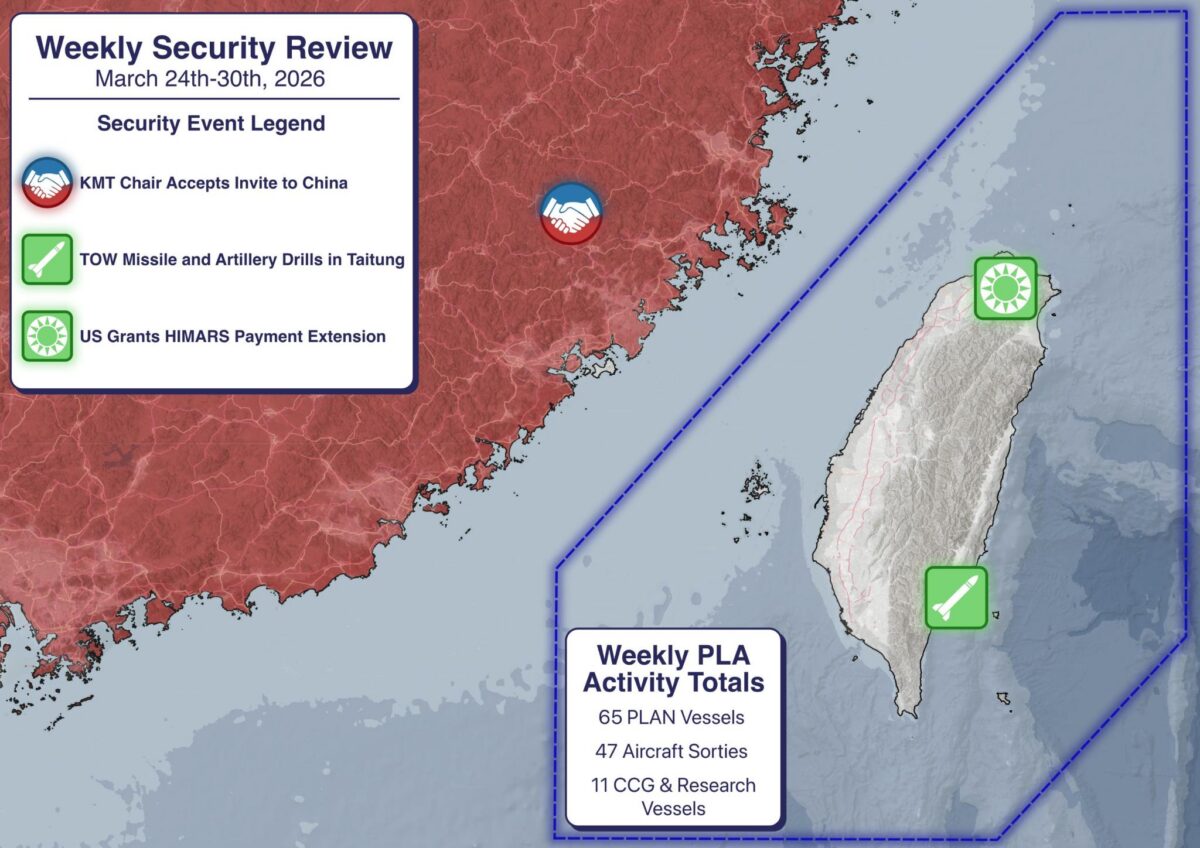
Weekly Security Review: 3/30/26

Author: Jaime Ocon


Welcome to the Weekly Security Review, where we highlight key military, security, and political developments around Taiwan in one straightforward summary!

This week, Taiwanโ€™s opposition leaders plan a landmark visit to Beijing to meet with Chinaโ€™s President Xi Jinping, Taiwanโ€™s military conducts a live-fire TOW missile drill in eastern Taiwan, and lawmakers again fail to advance the special defense budget. 

KMT Chairwoman Accepts Invitation to Visit Beijing

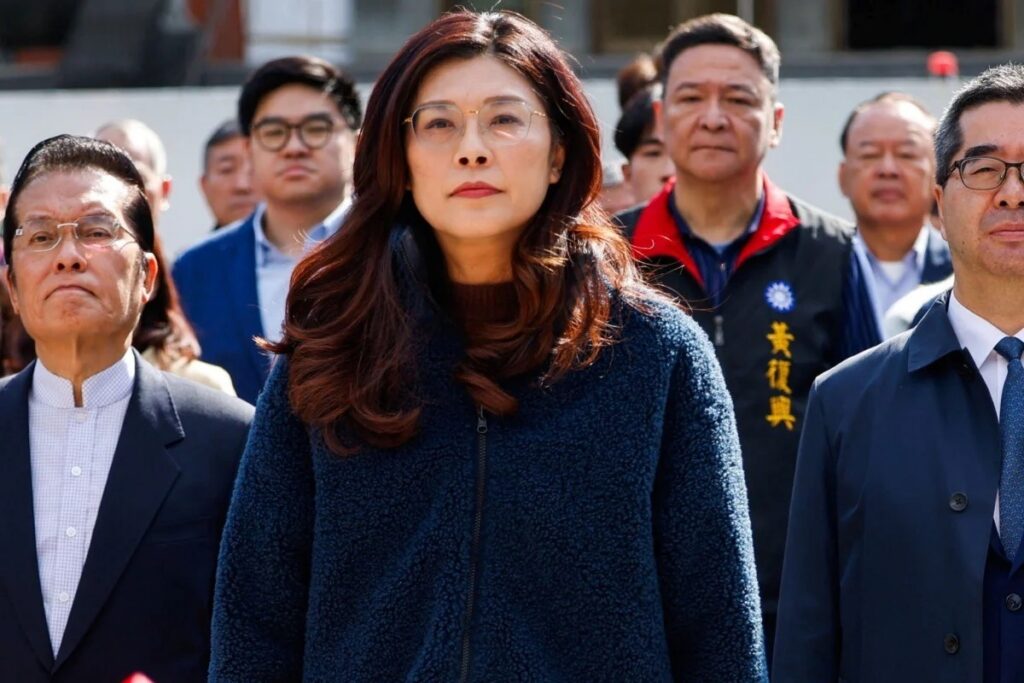
Kuomintang (KMT) Chairwoman Cheng Li-wun has announced that she has โ€œgladly acceptedโ€ an invitation from Chinese President Xi Jinping to lead a delegation to China from April 7 to 12. As part of the visit, she will visit Jiangsu and Shanghai before heading to Beijing and possibly meeting with President Xi. The invitation, which came from the Communist Party of China (CPC) Central Committee, comes after Cheng repeatedly expressed interest in visiting the mainland since taking office in November 2025. 

Speaking to reporters, Cheng says that the trip will demonstrate to Taiwan and the world that cross-strait relations are not destined for war, while stressing adherence to the “1992 Consensus” and opposition to Taiwan independence. The 1992 Consensus refers to a verbal understanding reached in 1992 between unofficial representatives of the KMT and CPC that there is โ€œone Chinaโ€ but with different interpretations of what that means. The visit will mark the first by a sitting KMT chair since Hung Hsiu-chu’s trip in 2016. Cheng framed the purpose of the visit as key to advancing KMT-CPC ties and peaceful cross-strait development. Details on delegation members and the exact agenda remain pending.

Many observers point to the timing of the visit, which is just weeks ahead of a planned Trump-Xi summit, and raises questions about potential U.S. reactions and domestic political risks for the KMT ahead of Taiwan’s local elections in the fall. Critics both from within and outside of the KMT have accused Cheng of being overly pro-China, but her party says they support the planned trip. 

Taiwan Conducts TOW Missile and Artillery Drills in Eastern Taiwan

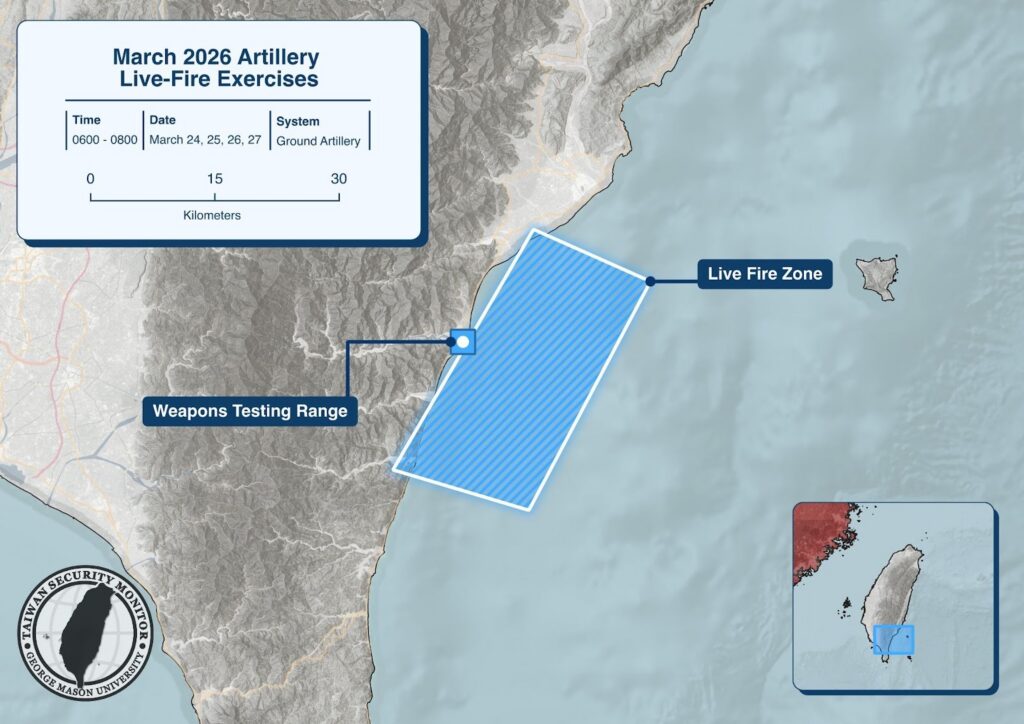
Taiwanโ€™s military this week conducted a series of live-fire drills featuring the newly introduced TOW-2B anti-armor missiles and various kinds of artillery. The exercises took place in eastern Taitung near Taimali Beach, and simulated coastal defense tactics against a Chinese amphibious assault. In total, there were two separate drills, with the  “Justice Exercise” featuring M60A3 tank guns, 155mm howitzers, and 120mm and 81mm mortars, while the โ€œSky Horse Exerciseโ€ featured TOW missiles. Both exercises had similar objectives, as military officials say the drills focus on intercepting a landing force approaching eastern Taiwan and testing the armyโ€™s ability to use anti-armor firepower to break up enemy forces at sea. It is the second artillery drill for the Armyโ€™s Huadong Defense Command since December, and Minister of National Defense Wellington Koo confirmed the presence of U.S. personnel at this weekโ€™s exercise. 

Budget Stalemate Continues with U.S. Granting Payment Extension for HIMARS

Taiwanโ€™s Legislative Yuan (LY) failed to make meaningful progress this week on passing a supplemental defense budget, prolonging the debate on funding for the U.S.-approved weapons sales until next month. The dispute remains centered on the budgetโ€™s size and scope, with the Lai administrationโ€™s version calling for $40 billion in spending, and opposition parties arguing for roughly $13 billion. 

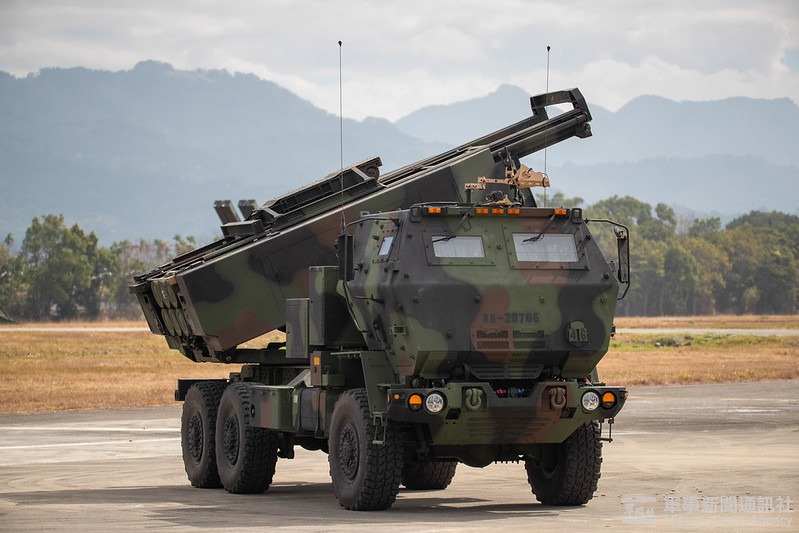
However, the debate comes at a time when the Ministry of National Defense (MND) is under pressure to sign agreements to begin paying for U.S. systems. Minister of National Defense Wellington Koo says the U.S. has agreed to extend the initial payment schedule until the end of May for 82 HIMARS systems and munitions, originally due on March 30 (today). In mid-March, the MND signed Letters of Offer and Acceptance (LOAs) for HIMARS and three other arms sales, but has not been able to make initial payments owing to the ongoing review of special defense budgets.

The MND says that time is of the essence, as further delays could affect payment deadlines for certain systems. Defense officials and U.S. lawmakers have continued to rally support for Taiwanese lawmakers to pass a supplemental defense budget, but debates on how much to spend have been stalled since November. 

Weekly Arms Update: 3/25/26

Author: Joseph Oโ€™Connor, Shikhar Chaturvedi, Danielle Kremer, & Wyeth Lindberg


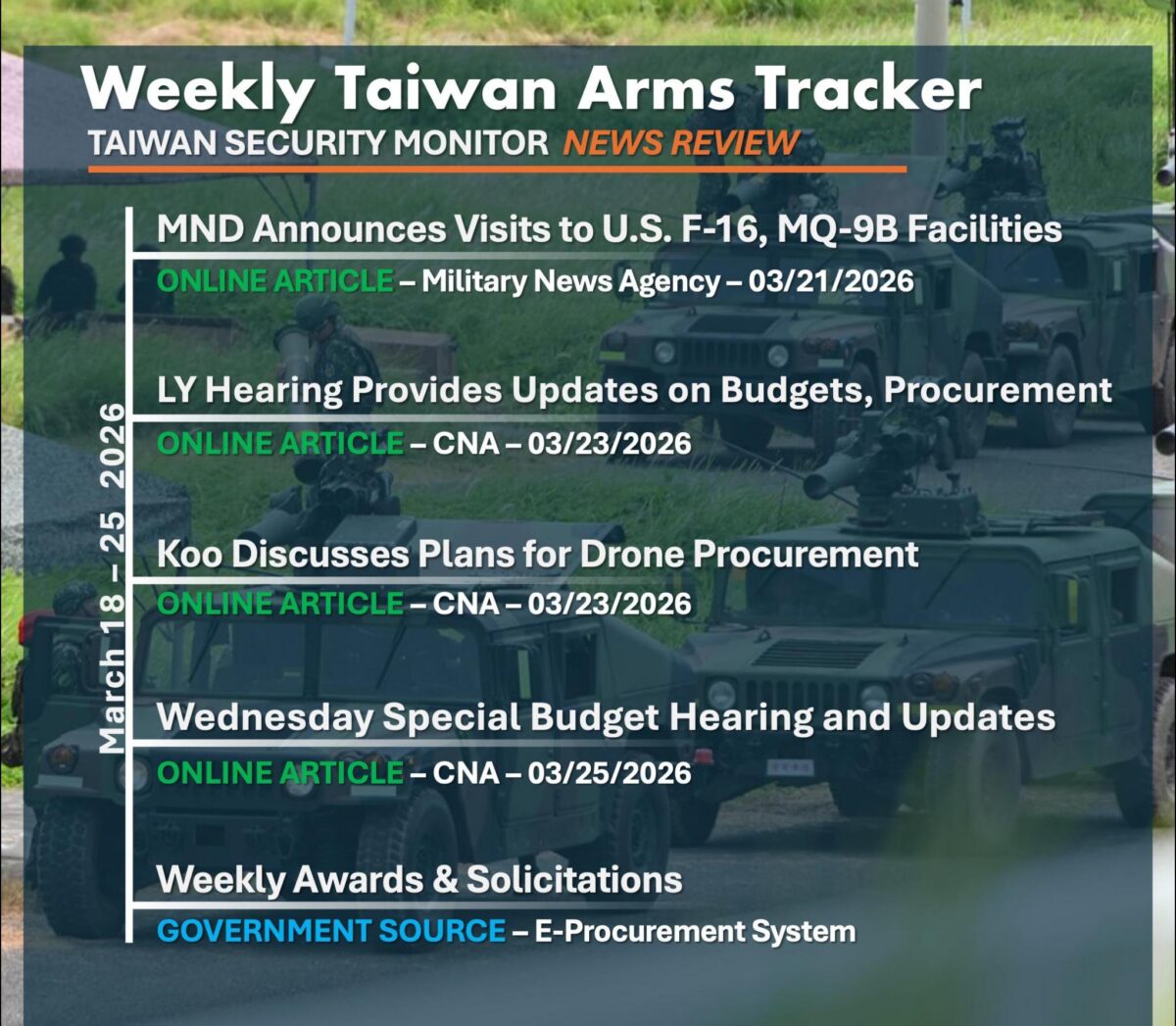
This week: the MND disclosed official visits to F-16 and MQ-9B production facilities, the Legislative Yuan began multiple days of hearings to consider the special defense budgets, and Minister Koo discussed plans for drone procurement, alongside weekly awards and solicitations.

MND Announces Visits to U.S. F-16, MQ-9B Facilities

As of March 21, the first Taiwanese F-16 Block 70 has completed its Acceptance Check Flight at Lockheed Martin facilities in Greenville, South Carolina. These tests were attended by several Taiwanese officials, including, Deputy Minister of National Defense Hsu Szu-chien, Deputy Air Force Chief of Staff General Tian Zhongyi, and the Taiwanese Representative to the U.S., Alexander Yui. In an MND press release, they stated that this success means Lockheed will begin their deliveries to Taiwan.

On March 21, the MND also confirmed that several Taiwanese officials attended a handover ceremony in the United States for two of the four MQ-9B SeaGuardian maritime surveillance drones purchased for NT$21.7 billion (US$674.02 million). However, the MND clarified that the two drones would stay in the United States for continued testing, with delivery expected in the third quarter of this year.

Monday LY Hearing Provides Updates on Budgets

On Monday, the Legislative Yuanโ€™s Foreign Affairs and National Defense Committee began formal consideration of three competing proposals for special defense budgets, submitted by the Lai administration, the Taiwan Peopleโ€™s Party (TPP), and the Kuomintang (KMT). Minister of National Defense Wellington Koo, alongside other officials, attended Mondayโ€™s question-and-answer session, reiterating that the administrationโ€™s budget is the most comprehensive. Koo also clarified that the first two MQ-9B SeaGuardians are expected to be delivered by the third quarter of the year and that the first F-16 Block 70 could arrive as early as September 2026.

Koo Discusses Plans for Drone Procurement


During a March 23 review in the Legislative Yuanโ€™s Foreign Affairs and National Defense Committee,the MND proposed procurement of more than 200,000 drones and 1,000-plus unmanned surface vessels. The proposal is best understood as an attempt to lock in a multi-year domestic unmanned systems production base. Minister Wellington Kooโ€™s main defense of the plan is that annual budgeting cannot generate the steady demand needed for firms to build production lines, lower costs, and incorporate iterative upgrades, whereas the Executive Yuanโ€™s eight-year special budget would allow procurement in batches as technology evolves. Koo and other Taiwanese officials are also tying the drone tranche to the creation of a โ€œnon-redโ€ supply chain, arguing that reliance on PRC-linked components creates cyber and operational risks. That logic aligns with the Executive Yuanโ€™s broader 2025-2030 drone industry plan, which seeks to expand and improve public-sector procurement, while deepening cooperation with U.S., European, and Japanese partners. Kooโ€™s proposed plan aims to build the domestic industrial base that Taiwan will need for longer-term drone cooperation with the U.S. and other partners.

Wednesday Special Budget Hearing and Updates

Today, March 25, the LYโ€™s Foreign Affairs and National Defense Committee re-convened for a markup session of special defense budget proposals, expected to continue into tomorrow, March 26. During this morningโ€™s meeting, the committee achieved consensus and passed several provisions, including those relating to procurement planning (taken from the KMT proposal) and authorities, but failed to reach consensus on provisions relating to legislative purpose, specific procurement items, and the topline budget amount.

Opposition legislators, including KMT Legislator Hsu Chiao-hsin, took issue specifically with the governmentโ€™s proposed budget items. Hsu accused some spending categories of being too vague or sometimes classified, arguing instead that opposition proposals such as from the KMT, already list known capabilities that Taiwan intends to purchase. DPP Legislator Puma Shen, backing the proposal, argued that less clear budget items provide flexibility in case of changes in price or schedule, which competing proposals would require an amendment for.

Weekly Awards/Solicitations

On Thursday, several bid solicitations and awards were announced:

The Army Command solicited bids for the purchase of one-day assault bags, personal carrying bags and multifunctional combat belts, worth NT$422.95 million (US$13.20 million).

The Army Logistics Command made a repeat solicitation of bids for Zero-annex specification editing and review equipment, worth NT$41.90 million (US$1.31 million).

The Naval Command and ROC Military Mission to the United States awarded the American Institute in Taiwan a NT$1.49 billion (US$46.65 million) contract for a second order of โ€œnaval spare parts.โ€ The contract is to be fulfilled in the Zuoying District of Kaohsiung City.

Additionally, the Naval Command and ROC Military Mission to the United States awarded the American Institute in Taiwan another NT$1.49 billion (US$46.65 million) contract for a second batch of โ€œaviation spare parts.โ€ The contract will also be fulfilled in the Zuoying District of Kaohsiung City.

On Tuesday, the Army Command solicited bids for the purchase of full-band handheld radios, worth NT$1.80 billion (US$56.38 million).

Taiwan Affairs Office: Peaceful reunification will be the starting point for a complete renewal of Taiwanโ€™s infrastructure.

At the March 25 Taiwan Affairs Office press conference, a reporter asked: Recently, a Taiwanese civic group visited the Xiamen section of the Xiamenโ€“Kinmen Bridge and the construction site of Xiamen Xiangโ€™an Airport, praising the rapid progress of both projects and expressing amazement at the mainlandโ€™s infrastructure capabilities. We also noted that in October last year, the mainland said that after unification Taiwan would enjoy โ€œseven areas of improvement,โ€ including that โ€œafter peaceful reunification, with the strong motherland as its backing, Taiwanโ€™s infrastructure development will be better.โ€ Could the spokesperson elaborate on this?

Taiwan Affairs Office spokesperson Zhu Fenglian responded that, at last weekโ€™s press conference, they had already explained the point among the โ€œseven areas of improvementโ€ concerning how โ€œenergy and resource security will be better,โ€ which drew a high degree of attention from public opinion on both sides of the Strait. Today, in response to public interest, they would further explain why infrastructure development in Taiwan would be โ€œbetterโ€ after unification.

Zhu said that during the 14th Five-Year Plan period, the mainlandโ€™s major infrastructure continued to upgrade, and its overall scale ranks first in the world. The total length of its comprehensive transportation network exceeds 6 million kilometers, including 5.49 million kilometers of highways and more than 165,000 kilometers of railways. High-speed rail totals 50,400 kilometers and covers 97 percent of cities with urban populations over 500,000. The aviation network covers 92.6 percent of prefecture-level cities. Transmission lines of 220 kilovolts and above stretch nearly 960,000 kilometers, oil and gas pipeline networks exceed 190,000 kilometers, and reservoir capacity surpasses 1 trillion cubic meters, forming what she described as an ultra-large-scale network advantage.

Zhu added that the mainlandโ€™s capacity for scientific and technological innovation has increased substantially. It has continued to make breakthroughs in such areas as long-span bridges, large-scale water conservancy projects, and next-generation mobile communications, producing a large number of core technologies with independent intellectual property rights. She said many โ€œmega-projectsโ€ have amazed the world.

She further stated that international connectivity has also expanded, with China-Europe freight trains and the โ€œSilk Road Maritimeโ€ network reaching cities and ports in dozens of countries and regions, while projects such as the China-Laos Railway and the Jakartaโ€“Bandung High-Speed Railway have been completed and entered operation. She said that Sun Yat-senโ€™s grand blueprint in The International Development of China had long since been realized, and that many of these achievements far exceeded even Sunโ€™s own vision.

Zhu said that during the 15th Five-Year Plan period, the mainland will accelerate the building of a modern infrastructure system to provide strong support for national strength and national rejuvenation. Of the 109 major engineering projects in the 15th Five-Year Plan, 23 are directly related to infrastructure. These projects will not only further improve transportation, water conservancy, and energy infrastructure, but also strengthen major science and technology infrastructure, information and communications networks, and computing power networks.

Zhu then said that after unification, the mainlandโ€™s strong infrastructure-building capacity would provide powerful support for the renewal and upgrading of Taiwanโ€™s infrastructure. Infrastructure in transportation, energy, agriculture and forestry, water conservancy, and urban renewal in Taiwan would be rebuilt and upgraded, and the lives of Taiwan compatriots would become more convenient as a result. For example, she said, they could help quickly complete a round-island high-speed railway and build more expressways linking Taiwanโ€™s western and eastern regions. Cross-Strait infrastructure connectivity would also gradually become a reality. As one example, she said both sides could jointly build the long-discussed cross-Strait transport corridor, turning a โ€œnatural barrier into a thoroughfare,โ€ so that people in Taiwan could one day drive from the island to Beijing via the Beijingโ€“Taipei Expressway.

In conclusion, Zhu said that peaceful reunification would mark the beginning of a complete renewal of Taiwanโ€™s infrastructure, including new infrastructure. She said she hopes Taiwan compatriots will pursue peaceful reunification just as they pursue happiness in life, so that the place where they work and live can become smoother, more convenient, and better.

Taiwan Affairs Office: Resolving the Taiwan issue is a matter for the Chinese people themselves and does not permit any external interference.

At the March 25 Taiwan Affairs Office press conference, a reporter asked: Recently, a U.S. intelligence community assessment concluded that China does not currently plan to โ€œuse force to attack Taiwanโ€ by 2027, and is more inclined to use non-military options to achieve unification, while at the same time continuing to strengthen the PLAโ€™s preparations for the use of force and viewing unification as an important condition for achieving national rejuvenation by 2049. What is your comment on this?

Taiwan Affairs Office spokesperson Zhu Fenglian responded that Taiwan is Chinaโ€™s Taiwan. Resolving the Taiwan issue is a matter for the Chinese people themselves and does not permit any external interference. She said the U.S. side should abide by the one-China principle and the three China-U.S. joint communiquรฉs, and act cautiously in both word and deed on the Taiwan issue.

Zhu said that โ€œpeaceful reunification, one country, two systemsโ€ is the basic policy for resolving the Taiwan issue, and that resolving the Taiwan issue and completing national reunification are inevitable requirements for the great rejuvenation of the Chinese nation. She said they are willing to create broad space for peaceful reunification and, with the utmost sincerity and greatest effort, strive for the prospect of peaceful reunification. At the same time, she said, they will never allow national sovereignty and territorial integrity to be damaged, will never promise to renounce the use of force, and reserve the option of taking all necessary measures.

Zhu added that the root cause of the current complex and severe situation in the Taiwan Strait is that the DPP authorities, in collusion with external forces, continue to engage in provocations aimed at seeking โ€œindependence.โ€ She said this will never be tolerated or condoned, and that they have the firm will, full confidence, and sufficient capability to thwart any form of โ€œTaiwan independenceโ€ separatist plot, safeguard national sovereignty and territorial integrity, and unswervingly advance the great cause of national reunification.