Taiwan Security Monitor

Weekly Security Review: 3/30/26

Author: Jaime Ocon


Welcome to the Weekly Security Review, where we highlight key military, security, and political developments around Taiwan in one straightforward summary!

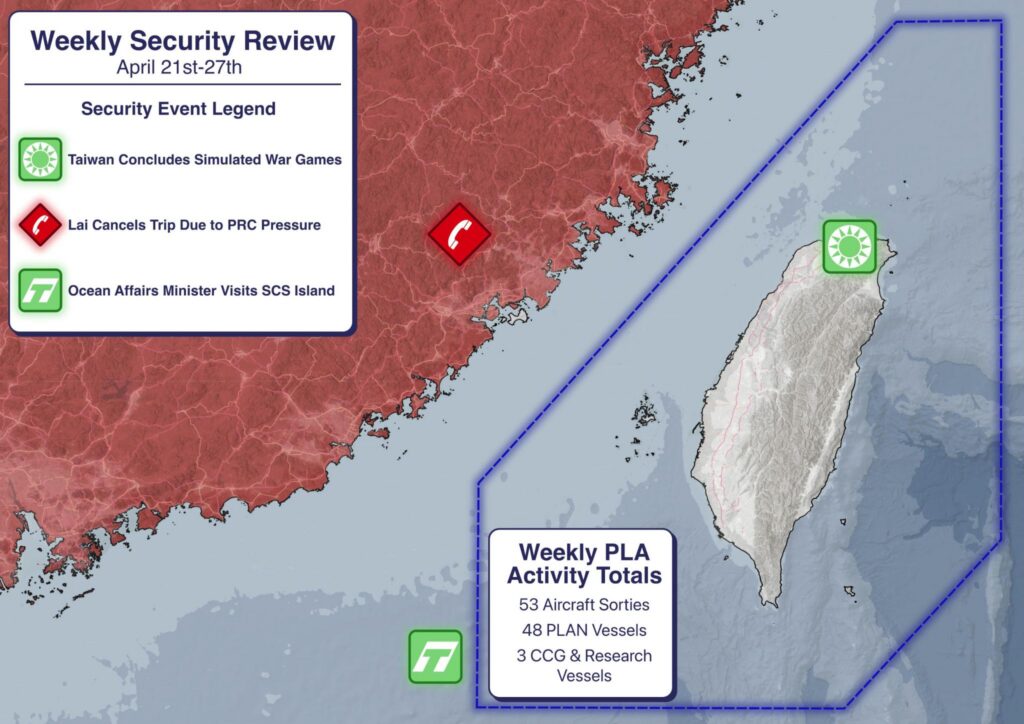
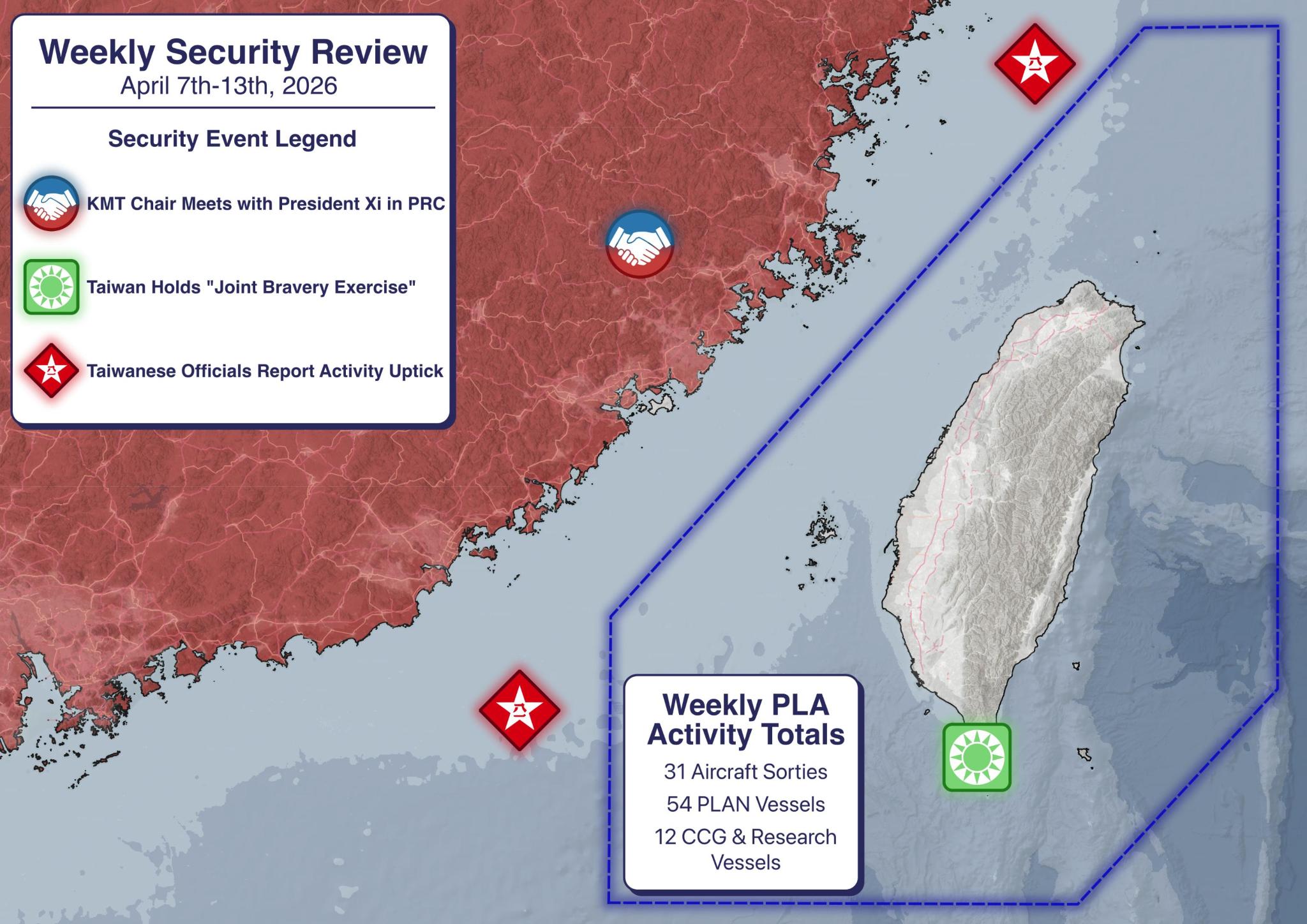
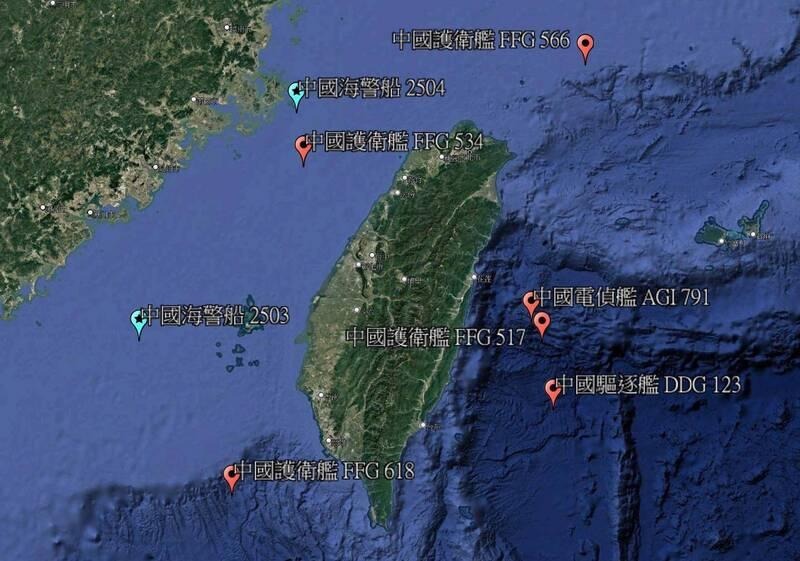
This week, Taiwanโ€™s opposition leaders plan a landmark visit to Beijing to meet with Chinaโ€™s President Xi Jinping, Taiwanโ€™s military conducts a live-fire TOW missile drill in eastern Taiwan, and lawmakers again fail to advance the special defense budget. 

KMT Chairwoman Accepts Invitation to Visit Beijing

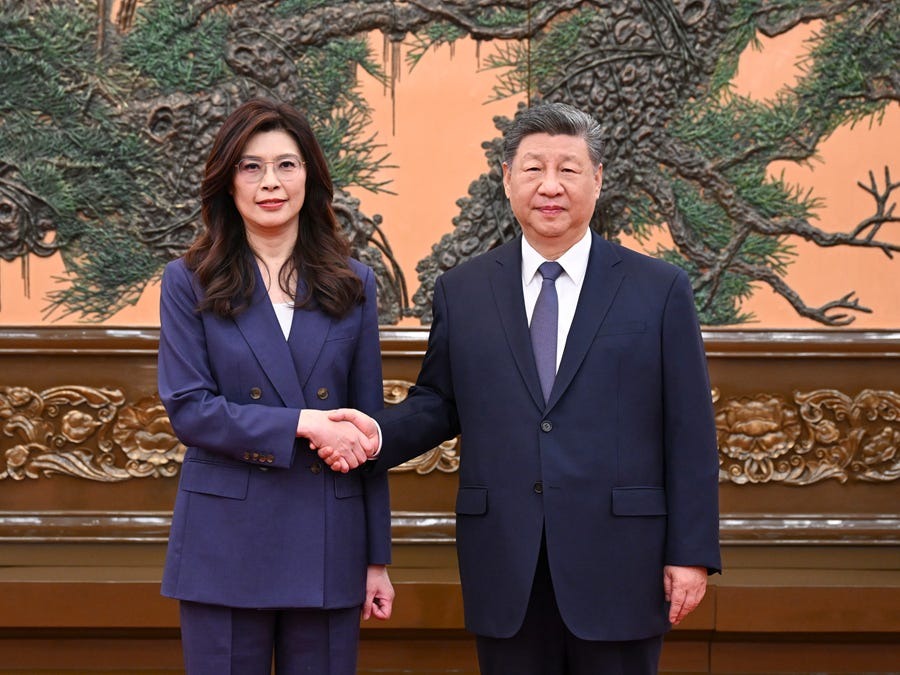
Kuomintang (KMT) Chairwoman Cheng Li-wun has announced that she has โ€œgladly acceptedโ€ an invitation from Chinese President Xi Jinping to lead a delegation to China from April 7 to 12. As part of the visit, she will visit Jiangsu and Shanghai before heading to Beijing and possibly meeting with President Xi. The invitation, which came from the Communist Party of China (CPC) Central Committee, comes after Cheng repeatedly expressed interest in visiting the mainland since taking office in November 2025. 

Speaking to reporters, Cheng says that the trip will demonstrate to Taiwan and the world that cross-strait relations are not destined for war, while stressing adherence to the “1992 Consensus” and opposition to Taiwan independence. The 1992 Consensus refers to a verbal understanding reached in 1992 between unofficial representatives of the KMT and CPC that there is โ€œone Chinaโ€ but with different interpretations of what that means. The visit will mark the first by a sitting KMT chair since Hung Hsiu-chu’s trip in 2016. Cheng framed the purpose of the visit as key to advancing KMT-CPC ties and peaceful cross-strait development. Details on delegation members and the exact agenda remain pending.

Many observers point to the timing of the visit, which is just weeks ahead of a planned Trump-Xi summit, and raises questions about potential U.S. reactions and domestic political risks for the KMT ahead of Taiwan’s local elections in the fall. Critics both from within and outside of the KMT have accused Cheng of being overly pro-China, but her party says they support the planned trip. 

Taiwan Conducts TOW Missile and Artillery Drills in Eastern Taiwan

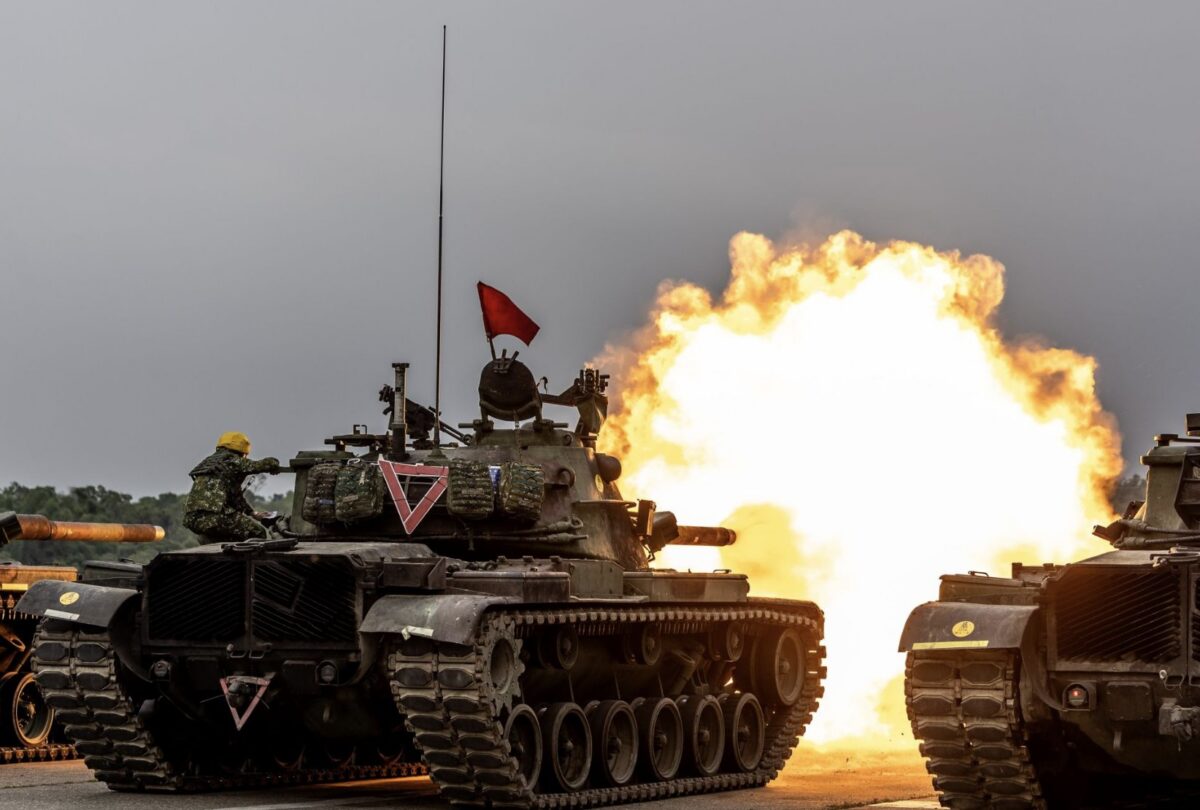
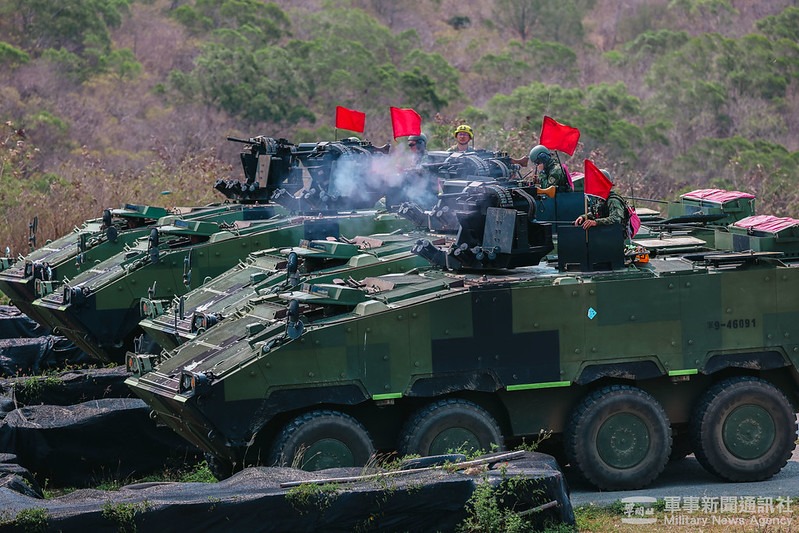
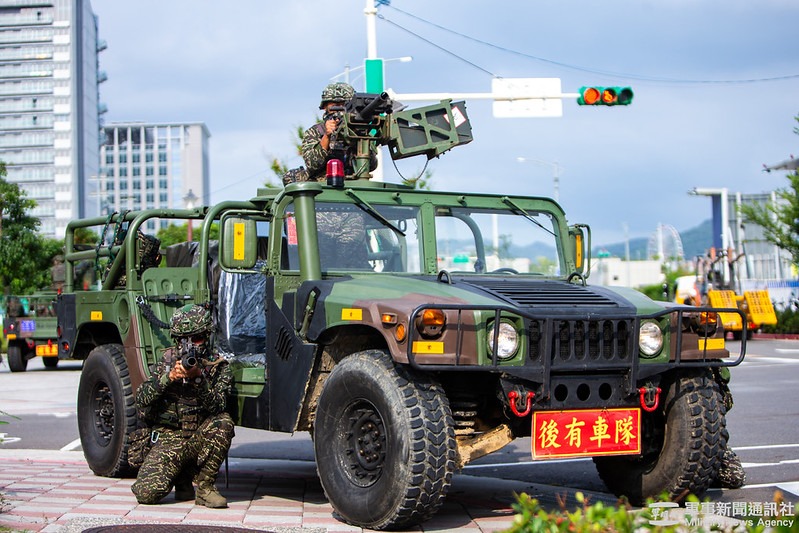
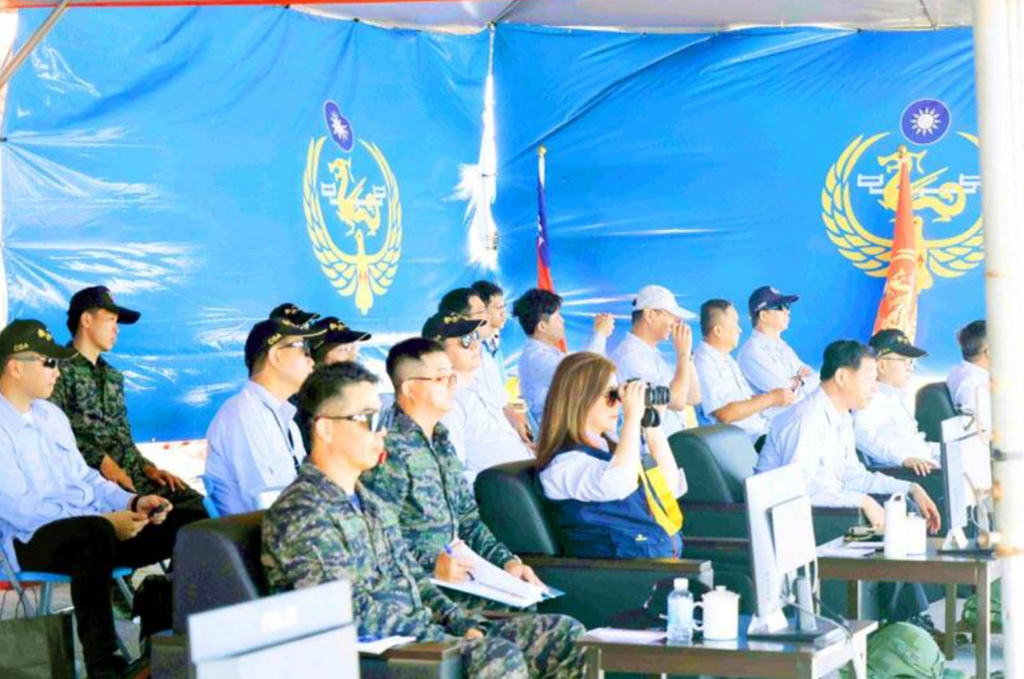
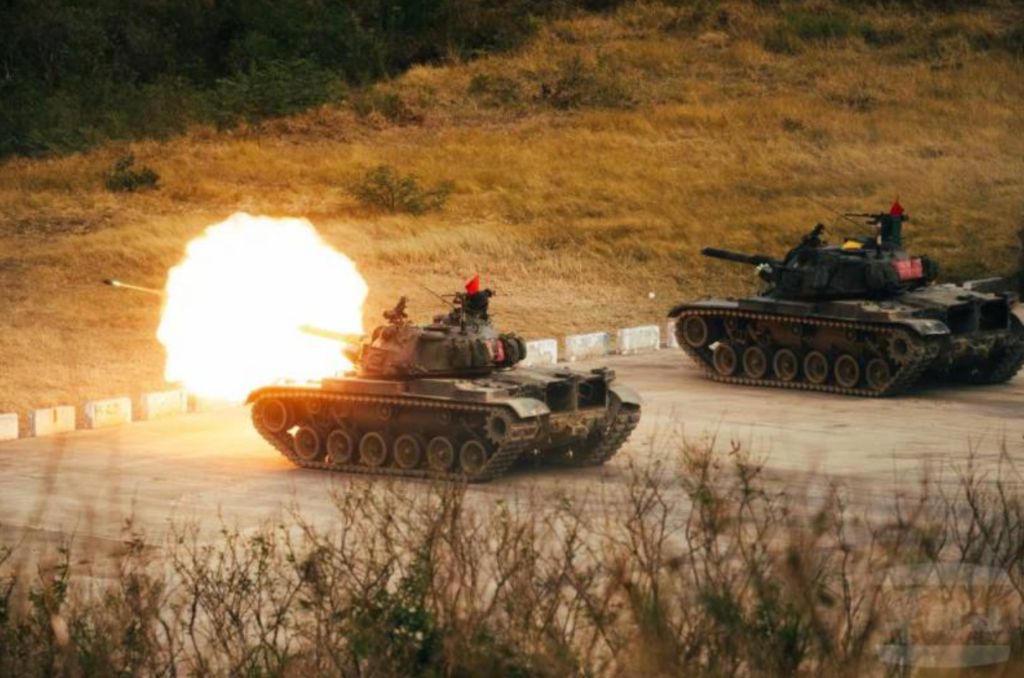
Taiwanโ€™s military this week conducted a series of live-fire drills featuring the newly introduced TOW-2B anti-armor missiles and various kinds of artillery. The exercises took place in eastern Taitung near Taimali Beach, and simulated coastal defense tactics against a Chinese amphibious assault. In total, there were two separate drills, with the  “Justice Exercise” featuring M60A3 tank guns, 155mm howitzers, and 120mm and 81mm mortars, while the โ€œSky Horse Exerciseโ€ featured TOW missiles. Both exercises had similar objectives, as military officials say the drills focus on intercepting a landing force approaching eastern Taiwan and testing the armyโ€™s ability to use anti-armor firepower to break up enemy forces at sea. It is the second artillery drill for the Armyโ€™s Huadong Defense Command since December, and Minister of National Defense Wellington Koo confirmed the presence of U.S. personnel at this weekโ€™s exercise. 

Budget Stalemate Continues with U.S. Granting Payment Extension for HIMARS

Taiwanโ€™s Legislative Yuan (LY) failed to make meaningful progress this week on passing a supplemental defense budget, prolonging the debate on funding for the U.S.-approved weapons sales until next month. The dispute remains centered on the budgetโ€™s size and scope, with the Lai administrationโ€™s version calling for $40 billion in spending, and opposition parties arguing for roughly $13 billion. 

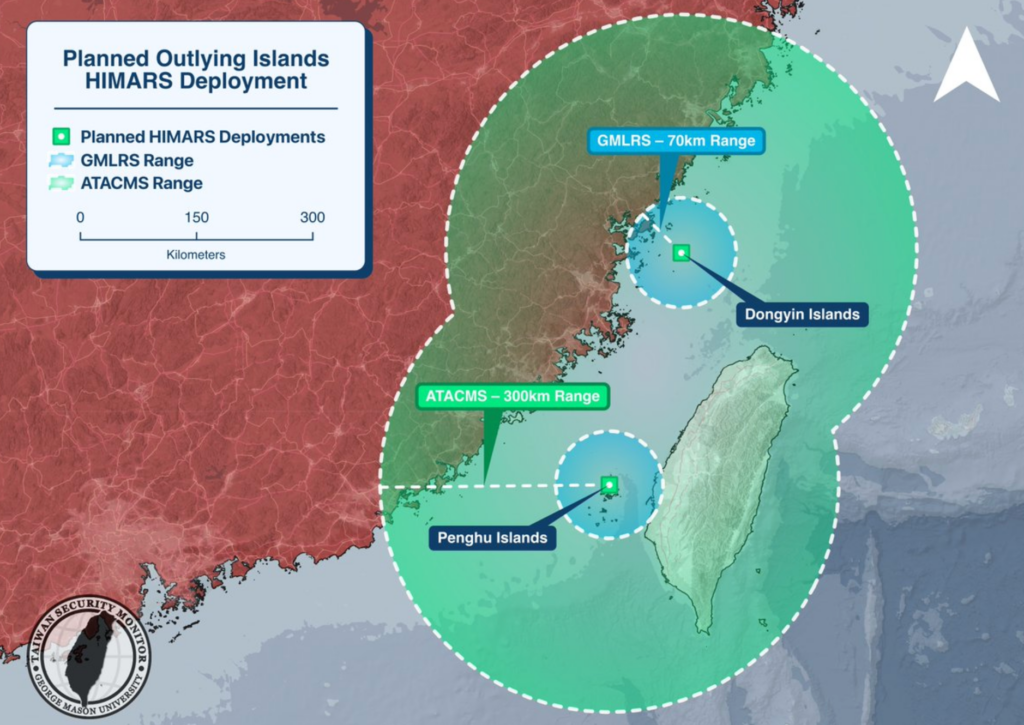
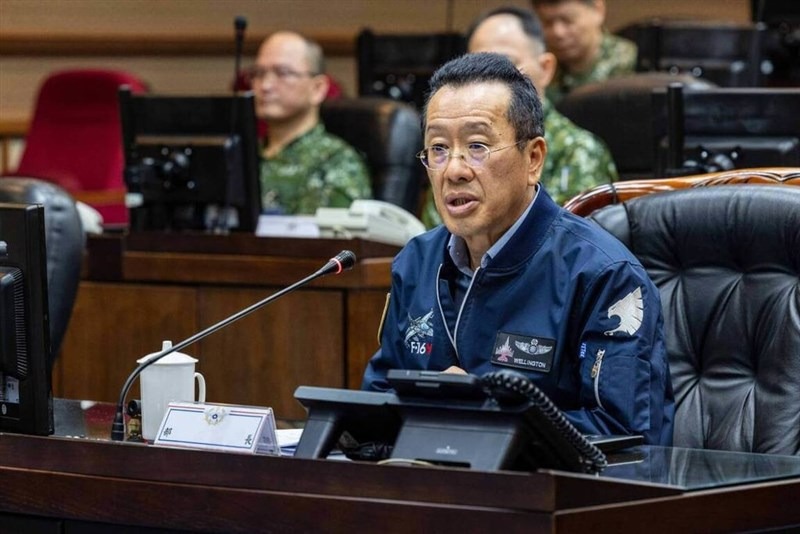
However, the debate comes at a time when the Ministry of National Defense (MND) is under pressure to sign agreements to begin paying for U.S. systems. Minister of National Defense Wellington Koo says the U.S. has agreed to extend the initial payment schedule until the end of May for 82 HIMARS systems and munitions, originally due on March 30 (today). In mid-March, the MND signed Letters of Offer and Acceptance (LOAs) for HIMARS and three other arms sales, but has not been able to make initial payments owing to the ongoing review of special defense budgets.

The MND says that time is of the essence, as further delays could affect payment deadlines for certain systems. Defense officials and U.S. lawmakers have continued to rally support for Taiwanese lawmakers to pass a supplemental defense budget, but debates on how much to spend have been stalled since November. 

Weekly Arms Update: 3/25/26

Author: Joseph Oโ€™Connor, Shikhar Chaturvedi, Danielle Kremer, & Wyeth Lindberg


This week: the MND disclosed official visits to F-16 and MQ-9B production facilities, the Legislative Yuan began multiple days of hearings to consider the special defense budgets, and Minister Koo discussed plans for drone procurement, alongside weekly awards and solicitations.

MND Announces Visits to U.S. F-16, MQ-9B Facilities

As of March 21, the first Taiwanese F-16 Block 70 has completed its Acceptance Check Flight at Lockheed Martin facilities in Greenville, South Carolina. These tests were attended by several Taiwanese officials, including, Deputy Minister of National Defense Hsu Szu-chien, Deputy Air Force Chief of Staff General Tian Zhongyi, and the Taiwanese Representative to the U.S., Alexander Yui. In an MND press release, they stated that this success means Lockheed will begin their deliveries to Taiwan.

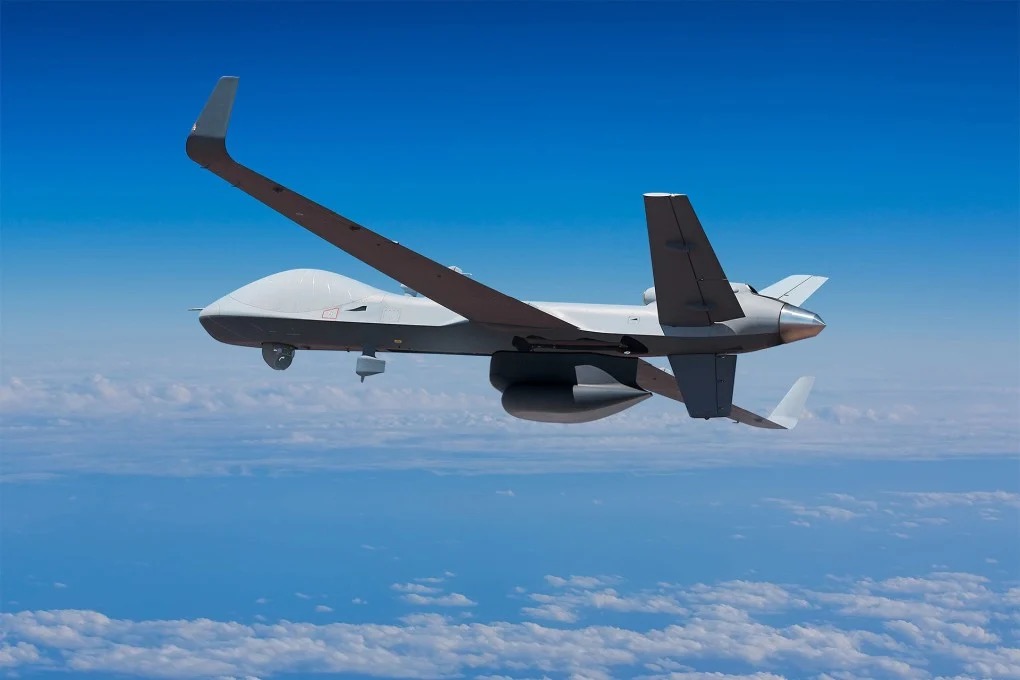
On March 21, the MND also confirmed that several Taiwanese officials attended a handover ceremony in the United States for two of the four MQ-9B SeaGuardian maritime surveillance drones purchased for NT$21.7 billion (US$674.02 million). However, the MND clarified that the two drones would stay in the United States for continued testing, with delivery expected in the third quarter of this year.

Monday LY Hearing Provides Updates on Budgets

On Monday, the Legislative Yuanโ€™s Foreign Affairs and National Defense Committee began formal consideration of three competing proposals for special defense budgets, submitted by the Lai administration, the Taiwan Peopleโ€™s Party (TPP), and the Kuomintang (KMT). Minister of National Defense Wellington Koo, alongside other officials, attended Mondayโ€™s question-and-answer session, reiterating that the administrationโ€™s budget is the most comprehensive. Koo also clarified that the first two MQ-9B SeaGuardians are expected to be delivered by the third quarter of the year and that the first F-16 Block 70 could arrive as early as September 2026.

Koo Discusses Plans for Drone Procurement


During a March 23 review in the Legislative Yuanโ€™s Foreign Affairs and National Defense Committee,the MND proposed procurement of more than 200,000 drones and 1,000-plus unmanned surface vessels. The proposal is best understood as an attempt to lock in a multi-year domestic unmanned systems production base. Minister Wellington Kooโ€™s main defense of the plan is that annual budgeting cannot generate the steady demand needed for firms to build production lines, lower costs, and incorporate iterative upgrades, whereas the Executive Yuanโ€™s eight-year special budget would allow procurement in batches as technology evolves. Koo and other Taiwanese officials are also tying the drone tranche to the creation of a โ€œnon-redโ€ supply chain, arguing that reliance on PRC-linked components creates cyber and operational risks. That logic aligns with the Executive Yuanโ€™s broader 2025-2030 drone industry plan, which seeks to expand and improve public-sector procurement, while deepening cooperation with U.S., European, and Japanese partners. Kooโ€™s proposed plan aims to build the domestic industrial base that Taiwan will need for longer-term drone cooperation with the U.S. and other partners.

Wednesday Special Budget Hearing and Updates

Today, March 25, the LYโ€™s Foreign Affairs and National Defense Committee re-convened for a markup session of special defense budget proposals, expected to continue into tomorrow, March 26. During this morningโ€™s meeting, the committee achieved consensus and passed several provisions, including those relating to procurement planning (taken from the KMT proposal) and authorities, but failed to reach consensus on provisions relating to legislative purpose, specific procurement items, and the topline budget amount.

Opposition legislators, including KMT Legislator Hsu Chiao-hsin, took issue specifically with the governmentโ€™s proposed budget items. Hsu accused some spending categories of being too vague or sometimes classified, arguing instead that opposition proposals such as from the KMT, already list known capabilities that Taiwan intends to purchase. DPP Legislator Puma Shen, backing the proposal, argued that less clear budget items provide flexibility in case of changes in price or schedule, which competing proposals would require an amendment for.

Weekly Awards/Solicitations

On Thursday, several bid solicitations and awards were announced:

The Army Command solicited bids for the purchase of one-day assault bags, personal carrying bags and multifunctional combat belts, worth NT$422.95 million (US$13.20 million).

The Army Logistics Command made a repeat solicitation of bids for Zero-annex specification editing and review equipment, worth NT$41.90 million (US$1.31 million).

The Naval Command and ROC Military Mission to the United States awarded the American Institute in Taiwan a NT$1.49 billion (US$46.65 million) contract for a second order of โ€œnaval spare parts.โ€ The contract is to be fulfilled in the Zuoying District of Kaohsiung City.

Additionally, the Naval Command and ROC Military Mission to the United States awarded the American Institute in Taiwan another NT$1.49 billion (US$46.65 million) contract for a second batch of โ€œaviation spare parts.โ€ The contract will also be fulfilled in the Zuoying District of Kaohsiung City.

On Tuesday, the Army Command solicited bids for the purchase of full-band handheld radios, worth NT$1.80 billion (US$56.38 million).

Weekly Security Review: 3/2/26

Author: Jaime Ocon


Welcome to the Weekly Security Review, where we highlight key military, security, and political developments around Taiwan in one straightforward summary!

This week, senior members of Taiwanโ€™s defense ministry traveled to the U.S. to inspect military aircraft, ADIZ activity in the Taiwan Strait continues to spark public discourse, and Chinaโ€™s Coast Guard steps up pressure near Kinmen and Dongsha Island. 

Vice Defense Minister Makes U.S. Trip, Showcases Updates on U.S. Systems. 

Taiwanโ€™s Ministry of National Defense (MND) announced on March 21 that Vice Minister of Defense Hsu Shih-chien led a delegation to the United States to inspect key procurement projects that are close to delivery. In a press release, the MND delegation says they witnessed the completion of testing for Taiwanโ€™s first F-16 Block 70 fighter jet at Lockheed Martinโ€™s production facility in Greenville, South Carolina. The testing took place on March 16, and alongside Vice Minister Hsu were Taiwanโ€™s Representative to the United States, Alexander Yui Tah-ray; Air Force Deputy Chief of Staff, Major General Tian Chung-yi; and Taiwanโ€™s Defense Mission Chief, Major General Wei Chung-hsing. The MND specified that the group observed the first Acceptance Check Flight (ACF) and that Lockheed Martin briefed the delegation on production progress. Officials at Lockheed say that the F-16 Block 70 production line is at full capacity and has assigned hundreds of staff to the program to ensure delivery remains on track. The MND says that after Taiwanโ€™s Block 70 aircraft receive factory acceptance, they will undergo final inspections by the U.S. government before delivery to Taiwan later this year.

The U.S. approved an $8 billion sale of F-16 fighter jets to Taiwan in 2019, a deal that would expand the countryโ€™s F-16 fleet to more than 200 aircraft, the largest in Asia. The deal, however, has continued to face delays due to production and software issues. As part of a broader modernization effort, Taiwan has already upgraded 141 of its older F-16A/B models to the advanced F-16V variant and is now awaiting delivery of 66 brand-new F-16Vs. Taiwanese officials say all aircraft will be delivered by 2028. The MND says it will continue to use existing Taiwanโ€“U.S. security cooperation mechanisms to accelerate the delivery of the fighter jets, which it says are important to Taiwanโ€™s air defense and deterrence capabilities.

During the same trip, the MND delegation also attended the handover ceremony for the first batch of MQ-9B SeaGuardian maritime surveillance drones. Taiwan purchased four MQ-9Bs from General Atomics Aeronautical Systems, Inc. in 2022, of which the U.S. is scheduled to deliver two aircraft in 2026 and two more in 2027. During the ceremony, Vice Minister Hsu observed a flight demonstration and also hopped into the driverโ€™s seat to test the UAVโ€™s capabilities. 

Taiwan ADIZ Activity Continues to Fluctuate After Lull

Taiwanโ€™s Ministry of National Defense reported 28 Peopleโ€™s Liberation Army (PLA) aircraft, including J-10, J-16 fighter jets, and KJ-500 command and control planes operating around the region on Tuesday (March 17). 21 of the aircraft crossed the median line of the Taiwan Strait and entered Taiwanโ€™s air defense identification zone (ADIZ). The MND says these aircraft were conducting joint air-sea training along PLAN vessels. The spike in activity comes as Taiwanโ€™s MND reported a small uptick in Chinese military activity around the island last Sunday (March 15), ending a lull that had analysts looking for answers. 

Interestingly enough, Sundayโ€™s ADIZ report sent shockwaves across social media after multiple media outlets began reporting that there was โ€œLarge Scale Chinese Military Activity Surrounding Taiwanโ€. Despite the MND reporting nothing indicating that it was surrounded, multiple accounts on X and Bluesky had a field day, reposting this false narrative. AI-generated maps based on previous military exercises in 2024 began to circulate, and within 12-24 hours, some posts had reached nearly 5 million engagements. A dangerous and concerning look into how misinformation around Taiwan can spread like wildfire. 

Our analysis and leadership team at TSM wrote a great article that goes into detail about what happened, which can be found here: https://tsm.schar.gmu.edu/from-16-aircraft-to-surrounded-fear-virality-and-the-misinformation-cascade-in-adiz-discourse/ 

Despite that, Minister of National Defense Wellington Koo acknowledged the recent lull in activity but cautioned against reading too much into it, emphasizing that Taiwanโ€™s armed forces need to remain on alert regardless. Koo told the Wall Street Journal that โ€œwe cannot rely on a single indicator like the absence of aircraft,โ€ pointing to daily Chinese naval patrols around the island as a sign of continued pressure. Some analysts believe the lull was linked either to the annual meeting of the PRCโ€™s National Peopleโ€™s Congress or to a broader diplomatic strategy ahead of a planned meeting between U.S. President Donald Trump and President Xi Jinping in late March. 

Coast Guard Activity Surges in Kinmen and Dongsha 

Taiwanโ€™s Coast Guard Administration (CGA) has reported a surge in China Coast Guard (CCG) ships entering restricted waters around Kinmen and Dongsha Island. On March 16th, 17th, 20th, and 23rd, multiple CCG vessels breached restricted waters off Kinmen in coordinated formations, prompting Taiwanโ€™s CGA to dispatch its own patrol boats. Taiwan says it conducted one-to-one shadowing of each Chinese vessel and issued repeated radio warnings in Chinese and English. 

A similar situation unfolded near Dongsha Island on March 18, when a China Coast Guard ship (hull number 3102) entered Taiwanโ€™s restricted waters after first being detected loitering just outside this area. Taiwanโ€™s CGA is accusing Beijing of deliberately switching off the AIS signal and using small but frequent probes to test Taiwanโ€™s detection and reaction capabilities. CGA officials say they will use high-tech surveillance and robust forward deployments to safeguard national sovereignty and maintain maritime security amid mounting gray-zone pressure.

For more information about the CCG’s activity around Taiwan, check out the China Coast Guard Incident Tracker on our website.

From 16 Aircraft to Surrounded: Fear, Virality, and the Misinformation Cascade in ADIZ Discourse

Authors: Jonathan Walberg, Noah Reed, & Ethan Connell


On March 15th, 2026, Politico published an article titled โ€œTaiwan reports large-scale Chinese military aircraft presence near island.โ€[i] This title exaggerated what was in actuality a relatively normal day of PLA activity around Taiwan. Nevertheless, the piece caught the eye of many observers on social media. Within hours, thousands of finance and Open-Source Intelligence (OSINT) accounts began to regurgitate the headline, without linking the article or explaining the nuance behind the report of โ€œlarge-scaleโ€ activity.[ii] These posts, which seemed to imply that China was preparing significant military action against Taiwan, accumulated tens of thousands of likes, and began trending on both Twitter/X and Bluesky. 

Essentially, we witnessed a game of telephone taking place on the internet. A single headline was rapidly shared, rephrased, and simplified across platforms, with each iteration shedding context and adding interpretation. Within hours, an observation about aircraft activity became a claim about encirclement, with accounts sharing posts that declared Taiwan as โ€œsurroundedโ€ by the Peopleโ€™s Liberation Army (PLA).

An AI-generated map that circulated on X/Bluesky during the wave of misinformation

This incident provides a useful window into how even relatively small actions by the PLA around Taiwan have the potential to significantly swing social media coverage of Taiwan by actors engaged in disinformation. In a crisis-prone environment such as Taiwanโ€™s, where China has carefully shaped the narrative environment for years through large exercises, even one article can cascade into a broader wave of false and misleading claims, using recycled visuals and improvised escalation narratives.[iii]

The Problem With ADIZ Reporting

Following two weeks of depressed PLA activity in and around Taiwanโ€™s Air Defense Identification Zone (ADIZ), Taiwanโ€™s MND reported that 26 Chinese aircraft were detected operating around Taiwan, with 16 aircraft entering its IZ[iv]. While this instance is indeed above 2026โ€™s daily average of 4.5, it is in fact only โ€œlarge-scaleโ€ if compared to the previous two weeks of little to no activity, something that the Politico article make[v] clear. However, when viewed holistically, March 14thโ€™s numbers are less significant, representing only the 8th largest ADIZ incursion of 2026. The eventโ€™s significance is further diminished due to the resumption of low aerial activity the following day, March 15th.[vi]

It is routine for news organizations outside Taiwan to report on PLA activity in Taiwanโ€™s ADIZ, especially when violation numbers seem to be abnormally high or low. During the recent period of lower activity, for example, many major news organizations published stories on the unusual lull.[vii]

Reporting on something as niche as Taiwanโ€™s ADIZ creates a structural vulnerability. Headlines often compress complex operational data into simplified, attention-grabbing phrases that lack important context. On social media, these headlines are frequently detached from the underlying reporting, leaving readers to infer meaning from incomplete signals.

This dynamic does not require deliberate manipulation. Headline framing can make routine activity appear more consequential than it is, creating openings for exaggerated interpretations. A similar pattern appears during PLA joint exercises, when maps of exercise zones or footage of missile launches circulate without context, prompting observers to interpret routine demonstrations as evidence of blockade preparations or imminent invasion.

The Misinformation Cascade Begins

The cascade began with a flurry of financial news accounts simply sharing the article title on social media, something they likely received from news wire services. The simplicity of the title, specifically the fact it could very easily be misconstrued as suggesting that China was preparing a military build-up, instantly attracted massive attention from OSINT accounts that simply aggregate the news headlines, usually in a way that exaggerates the severity of events.[viii]

What began as โ€œTaiwan reports large-scale Chinese military aircraft presence near islandโ€ became โ€œTAIWAN DETECTS MASSIVE CHINESE MILITARY PRESENCE SURROUNDING ISLANDโ€ and โ€œBREAKING; TAIWAN ON HIGH ALERT.โ€[ix] As these posts began to circulate, generating tens of thousands of likes and reposts, commentary accounts began to post uninformed analysis.[x] This fed into the algorithm and expanded the audience to circles outside of the โ€œOSINT communityโ€. Less than six hours after the publication of the original Politico article, the dominant discourse surrounding it became completely unrecognizable from its actual substance.

As the social media posts spread rapidly, some posts referencing the Politico report began to adopt the phrase โ€œTaiwan surrounded.โ€[xi]

This linguistic shift was not trivial. Describing aircraft and ships โ€œaround Taiwanโ€ conveys an operational snapshot: an observation about detected activity. Describing Taiwan as โ€œsurrounded,โ€ however, implies a fundamentally different military posture. The term suggests physical enclosure, coercive leverage, or even the early stages of blockade operations. The difference between these descriptions marks the point where an activity report becomes a strategic claim.

In many viral posts, the progression followed a familiar pattern: The original numbers were omitted, but the language of heightened military activity and encirclement remained. As the messaging grew stronger, the belief that we were seeing something larger beginning grew as a seemingly logical conclusion. At that moment, the misinformation cascade began.

The initial spread of the Politico headline was driven by rapid reposting across financial news and OSINT accounts, many of which likely received the story through news wire services. Each repost preserved the sense of urgency while shedding the context needed to interpret the underlying activity.

But repetition alone does not explain why the narrative gained traction. Ongoing global events, emotional responses such as fear, and the pressure to keep pace with breaking news all contributed to how the headline was interpreted. Together, these forces helped transform an activity report into something that appeared far more consequential.

Context Collapse and the Vulnerability of Breaking News

This transformation illustrates a recurring problem in the information environment surrounding security crises: context collapse.[xii] Technical military reporting often relies on specialized terminology, whose meaning depends heavily on operational context. As a result, phrases like โ€œlarge-scale activity,โ€ โ€œoperating near the island,โ€ or โ€œaround Taiwanโ€ can be easily misinterpreted when removed from the operational reporting framework used by defense institutions. This is especially relevant during the ongoing operations in the Middle East. With airstrikes, bombings, and naval fires filling up algorithms on social media, the public is hyper fixated on action, worried about the conflict spilling over with global consequences.

On media platforms that reward simplicity and emotional clarity, those phrases can quickly evolve into stronger claims. A surge becomes an escalation. Activity becomes encirclement. A snapshot becomes a strategic turning point.

Research on crisis communication shows that information environments characterized by uncertainty and urgency often degrade shared situational awareness.[xiii] In these environments, audiences rely increasingly on simplified narratives rather than technical explanations, making complex military developments easier to misinterpret or exaggerate.[xiv]

The Taiwan Strait is particularly vulnerable to this dynamic because even routine military movements carry geopolitical significance. For audiences with limited familiarity with PLA operational patterns, the difference between an activity spike and a strategic shift may not be obvious. As a result, ambiguity can easily be filled with worst-case interpretations.

Fear as a Carrier of Misinformation

One of the major factors fueling the spread of discussion around the activity was a sense of urgency and fear. What had begun as a description of aircraft counts was quickly processed as a signal of possible escalation. This shift mattered because it changed the role of the audience. Rather than evaluating a technical report, users were reacting to what appeared to be the early stages of a crisis.

Fear alters how individuals process information under uncertainty. Research on information diffusion shows that emotionally arousing content, particularly content that evokes anxiety, reduces the likelihood that individuals will pause to verify claims before sharing them.[xv] When the perceived stakes are high, the cost of inaction can feel greater than the risk of being wrong.[xvi] In this context, sharing becomes a precautionary behavior: a way of responding to a potential threat rather than confirming a verified fact.

This dynamic helps explain how the narrative evolved so quickly. As users encountered repeated claims that Taiwan was being โ€œsurrounded,โ€ the framing itself encouraged a particular interpretation of events, one in which time was limited and escalation plausible. Under those conditions, ambiguity is often resolved in the direction of worst-case assumptions.

The Taiwan Strait is especially susceptible to this process because it is already widely understood as a high-risk flashpoint.[xvii] Reports of increased military activity therefore do not enter a neutral information environment. They are received by audiences primed to expect crisis, making emotionally charged interpretations more intuitive and more difficult to dislodge.

Rather than distorting an already existing stable understanding of events, in this case, fear constructed a distorted understanding of events from first principles.

As the narrative spread, emotional reactions reinforced the interpretation that something larger was unfolding, even though the underlying data had not changed. By the time more precise context emerged, the initial framing had already taken hold.

The โ€œUse It or Lose Itโ€ Logic of Virality

The initial posts that circulated widely were not detailed analyses, but rapid reposts of the headline, often stripped of its original context. As the story began to trend, users encountered a familiar dilemma: whether to wait for additional information or to share immediately while the topic was gaining attention. In fast-moving situations, that window can close quickly. Waiting to verify information risks missing the moment when a story is most visible.

This dynamic creates what can be understood as a โ€œuse it or lose itโ€ logic. Information is most valuable when it is new and circulating widely. As a result, users are incentivized to share content as soon as they encounter it, even if the underlying details remain unclear. In the case of the Taiwan activity report, this pressure contributed to the rapid spread of simplified and, at times, misleading interpretations of the original article.

Research on information diffusion suggests that time pressure plays a significant role in reducing verification behavior. When individuals are required to make quick decisions about whether to share content, they rely more heavily on heuristic cues, such as the tone of a headline or the apparent urgency of a claim, rather than engaging in careful evaluation.[xviii] When the valence of the emotions is negative (fear or anger), and the arousal stronger, we see an even larger effect, effectively bypassing internal โ€™factcheckingโ€™ mechanisms.  In practice, this means that speed can substitute for accuracy in shaping what information circulates most widely.

In the hours following the Politico report, this mechanism was visible in how the story evolved. As more users shared increasingly simplified versions of the original claim, the narrative moved further away from the underlying data. Each iteration prioritized immediacy over precision, reinforcing a version of events that was easier to transmit but less accurate.

Importantly, this process does not require intentional deception. The users participating in the spread of the narrative are often responding rationally to platform incentives that reward speed, visibility, and engagement. The result, however, is an information environment in which early interpretations, rather than verified ones, play a disproportionate role in shaping collective understanding.

Visual Misinformation and the Power of the Map

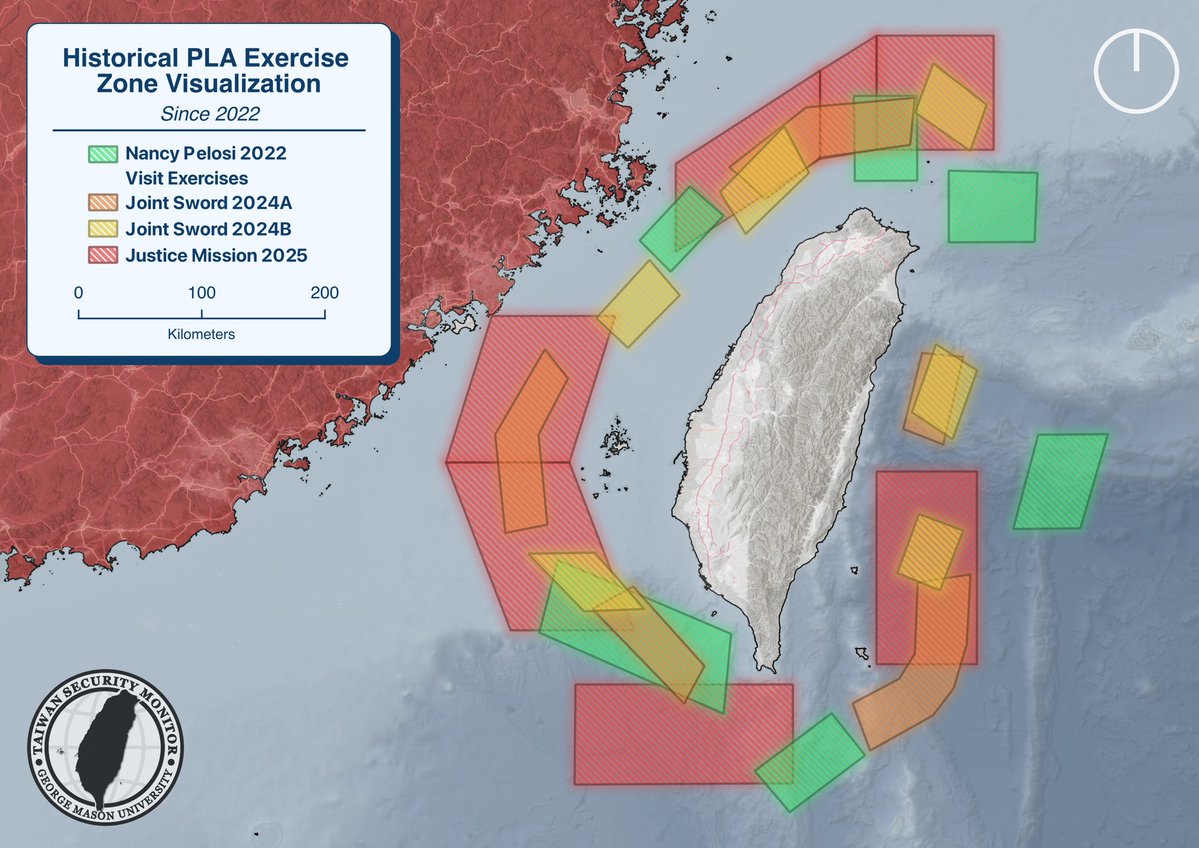
The misinformation surge surrounding the Taiwan activity report was further amplified by the circulation of a misleading map.

Images carry a particular authority online. A map, diagram, or chart often appears more credible than text because it looks technical and objective. For many readers, visual representation functions as evidence rather than interpretation.[xix]

In this case, users circulated a map that purported to show Taiwan surrounded by Chinese forces. The image appeared to provide visual confirmation of the encirclement narrative.[xx] However, the map was not current, instead containing information from a Chinese exercise in May of 2024 (Joint Sword 2024A).

Despite this discrepancy, the image spread widely because it aligned with the narrative already circulating online. Once paired with the phrase โ€œTaiwan surrounded,โ€ the map helped transform a contested claim into something that looked authoritative.

This illustrates the powerful role visual content plays in misinformation ecosystems. Textual claims invite debate. Images often suppress it.

Why Taiwan Is Particularly Vulnerable

The Taiwan information environment is especially susceptible to rapid misinformation cascades due to several reinforcing factors.

First, Chinaโ€™s activity around Taiwan is both real and visible. The PLA regularly conducts air and naval exercises that simulate encirclement. Because these activities are genuine, reports about them carry immediate credibility and are easily incorporated into alarmist interpretations. Because these activities are genuine, reports about them easily gain traction.

Second, many audiences lack the context needed to interpret these developments. Without familiarity with PLA operational patterns, even routine activity can appear extraordinary.

Third, these factors combine with a media environment that rewards simplification. With the Taiwan Strait being a flashpoint that many fixate on, often viewed through the lens of great-power rivalry, social media platforms reward provocative messaging. Complex operational data rarely goes viral; emotionally resonant narratives do.

Together, these factors create what might be described as a fear market: where worst-case interpretations consistently attract attention and engagement.

The Anatomy of a Misinformation Cascade

The episode surrounding the โ€œTaiwan surroundedโ€ narrative illustrates a broader pattern in contemporary disinformation dynamics.

The process often follows a recognizable sequence:

  1. A real event occurs.
  2. Initial reporting frames the event in simplified terms.
  3. Emotionally charged interpretations amplify the story.
  4. Users rapidly repost the information without verification.
  5. Speculative narratives accumulate around the original claim.
  6. Visual content reinforces the narrativeโ€™s apparent credibility.
  7. The story stabilizes as a widely accepted, but inaccurate, account.

Importantly, this sequence does not require deliberate fabrication. The most effective misinformation often begins with something that is true. What changes is the interpretation.

Precision as Resilience

The lesson from this episode is not that analysts should dismiss reports of PLA activity or treat social-media reactions as irrelevant. Instead, it highlights the importance of maintaining precision in the way military developments are described and interpreted. In the Taiwan information environment, the difference between โ€œincreased PLA activityโ€ and โ€œTaiwan is surroundedโ€ is not a matter of rhetorical nuance. It represents the boundary between analysis and alarmism.

Once that boundary is crossed, the information environment becomes difficult to correct. Viral narratives spread faster than careful explanations, and emotionally compelling interpretations often outcompete technical accuracy.

Precision therefore becomes a form of resilience. Analysts, journalists, and policymakers who communicate clearly about military developments help prevent routine operational activity from being misinterpreted as strategic escalation.

The recent surge of misinformation surrounding the Taiwan activity report demonstrates how quickly ambiguity can be converted into certainty online. It also serves as a reminder that in crisis-prone environments, the first casualty is often not truth itself, but proportion.


[i] https://www.politico.com/news/2026/03/15/taiwan-reports-large-scale-chinese-military-aircraft-presence-near-island-00829219

[ii] https://x.com/unusual_whales/status/2033235867616383090?s=20

[iii] https://tsm.schar.gmu.edu/justice-mission-2025-the-narrative-battle-inside-chinas-latest-taiwan-exercise/

[iv] https://www.mnd.gov.tw/en/news/plaact/86327

[v] https://www.politico.com/news/2026/03/15/taiwan-reports-large-scale-chinese-military-aircraft-presence-near-island-00829219?utm_medium=twitter&utm_source=dlvr.it

[vi] https://www.mnd.gov.tw/en/news/plaact/86330

[vii] https://www.cnn.com/2026/03/12/asia/china-taiwan-buzzing-mystery-intl-hnk, https://www.bbc.com/zhongwen/articles/c2lr8ejq0w8o/simp

[viii] https://x.com/rawsalerts/status/2033282084282695857?s=20, https://x.com/Defence_Index/status/2033172908277891415?s=20, https://x.com/Globalsurv/status/2033265245582413860?s=20

[ix] https://x.com/SpencerHakimian/status/2033282256962208210?s=20, https://x.com/Globalsurv/status/2033257539291242981?s=20

[x] https://x.com/krassenstein/status/2033284541788324217?s=20, https://x.com/HotSotin/status/2033292605811798043?s=20

[xi] https://x.com/GlobalIJournal/status/2033362180351852786?s=20, https://x.com/drhossamsamy65/status/2033270501947081180?s=20 , https://x.com/PrimeH12995/status/2033572921365647430?s=20

[xii] Brandtzaeg, Petter Bae, and Marika Lรผders. “Time collapse in social media: Extending the context collapse.” Social Media+ Society 4, no. 1 (2018): 2056305118763349.

[xiii] Hilberts, Sonya, Mark Govers, Elena Petelos, and Silvia Evers. “The impact of misinformation on social media in the context of natural disasters: Narrative review.” JMIR infodemiology 5 (2025): e70413.

[xiv] Shahbazi, Maryam, and Deborah Bunker. “Social media trust: Fighting misinformation in the time of crisis.” International Journal of Information Management 77 (2024): 102780

[xv] Stieglitz, Stefan, and Linh Dang-Xuan. “Emotions and information diffusion in social mediaโ€”sentiment of microblogs and sharing behavior.” Journal of management information systems 29, no. 4 (2013): 217-248.

[xvi] Ecker, Ullrich KH, Stephan Lewandowsky, John Cook, Philipp Schmid, Lisa K. Fazio, Nadia Brashier, Panayiota Kendeou, Emily K. Vraga, and Michelle A. Amazeen. “The psychological drivers of misinformation belief and its resistance to correction.” Nature Reviews Psychology 1, no. 1 (2022): 13-29., Marcus, George E., W. Russell Neuman, and Michael MacKuen. Affective intelligence and political judgment. University of Chicago Press, 2000.

[xvii] https://www.bloomberg.com/news/articles/2026-02-10/the-10-trillion-fight-modeling-a-us-china-war-over-taiwan

[xviii] Talwar, Shalini, Amandeep Dhir, Dilraj Singh, Gurnam Singh Virk, and Jari Salo. “Sharing of fake news on social media: Application of the honeycomb framework and the third-person effect hypothesis.” Journal of Retailing and Consumer Services 57 (2020): 102197

[xix] Rama, Daniele, Tiziano Piccardi, Miriam Redi, and Rossano Schifanella. “A large scale study of reader interactions with images on Wikipedia.” EPJ Data Science 11, no. 1 (2022): 1.

[xx] https://x.com/WealthWatcherCo/status/2033280246254895138?s=20

Weekly Security Review: 3/16/26

Author: Jaime Ocon


Welcome to the Weekly Security Review, where we highlight key military, security, and political developments around Taiwan in one straightforward summary!

This week, Taiwanโ€™s army conducts a new kind of exercise, a lack of ADIZ activity around Taiwan raises suspicion, and a supplemental defense budget inches closer to being passed.

Army Wraps Up Inaugural CTC 2.0 Combat Readiness Drills

Taiwan’s Army has wrapped up a new kind of military exercise called “CTC 2.0” (Combat Training Center rotation 2.0). The Ministry of National Defense (MND) says the inaugural drills are a significant upgrade to its existing combat readiness exercise and are modeled after U.S. Army training. The first-ever rotation involved the 542nd, 584th, and 586th Combined Arms Brigades, along with the 39th Chemical Corps and 52nd Engineer Group. The goal of these exercises, per military officials, is to simulate uninterrupted high-intensity operations to improve the combat endurance of Taiwanโ€™s troops. The military simulated live-fire scenarios using an opposing force, creating mock fires within an integrated engagement system. These live-fire scenarios put pressure on units to coordinate combined arms tactics and forced officers to issue quick orders using the Military Decision Making Process (MDMP). Soldiers taking part in the drills were also tested on how they conducted logistics, with some units even performing maintenance and swapping engines on the fly. 

Since 2023, Taiwan has been making great strides to increase the realism of its military exercises, and the new CTC 2.0 is a continuation of those efforts. These drills were extended from 5 days/4 nights to 10 days/9 nights, and included one-year conscripts alongside the active volunteer force. Units that fail the drills must complete the entire exercise again. Engineers who took part in CTC 2.0 say this iteration helped them improve their ability to rapidly deploy mines, obstacles, and field fortifications under pressure across different terrains. A large number of armor crewmembers, however, say the drills are physically and mentally demanding, due to the 24-hour cycle having no predictable rest periods. Battalion commanders say the biggest challenge was issuing orders under pressure and under consistently changing battlefield conditions. 

Suspicious ADIZ Activity Around Taiwan Raises Eyebrows  

Itโ€™s been an interesting two weeks for Taiwan, which has since reported a sharp uptick in Chinese military activity around its airspace on Sunday, ending a rare 10-day lull in flights that have left analysts and observers around the world looking for answers. Regardless, Taiwanโ€™s MND says it spotted 26 PLA military aircraft operating in the region, with 16 crossing the median line of the Taiwan Strait or entering Taiwanโ€™s air-defense identification zone (ADIZ). Seven Chinese naval vessels were also observed maneuvering in the surrounding waters. 

From February 27 to March 11, the MND reported zero Peopleโ€™s Liberation Army Air Force (PLAAF) sorties on 11 of 13 days, being the longest pause since 2021. Beijing offered no public comment, and Taiwanโ€™s Minister of National Defense, Wellington Koo, has cautioned against reading too much into the โ€œde-escalation.โ€ Koo went on to tell reporters that Chinese naval patrols โ€œstill surround us daily.โ€ Analysts in Taipei and Washington have floated a variety of competing theories, ranging from internal leadership disruptions due to recent PLA purges to political calculations ahead of an anticipated U.S.โ€“China summit. Some analysts have highlighted possible fuel shortages and new training formats as another possibility, but one thing is for sure: no one knows exactly why. Some observers now say that the resurgence of flights suggests the lull was tactical rather than strategic, as with the Two Sessions finished, aircraft are now starting to return.

Taiwan Security Monitor put out its own explanation for the lull in activity on March 7. You can read the full article here: 

Taiwanโ€™s Legislature Sends All Supplemental Budget Proposals to Committee Review

Taiwan’s Legislative Yuan (LY) has agreed to send all three versions of a supplemental defense budget draft to the various committees for review. The competing proposals includes the Lai administrationโ€™s NT$1.25 trillion (US$40 billion) request, a proposal by the Taiwan Peopleโ€™s Party (TPP) worth NT$400 billion (US$12.7 billion), and a third budget by the Kuomintang (KMT) worth NT$380 billion (US$11.93 billion)   Days later, the LY agreed to allow the Cabinet to sign Letters of Offer and Acceptance (LOA) for four U.S. weapons systems. Three of those systems, Paladin self-propelled howitzers, TOW-2B, and Javelin anti-armor missiles, had a deadline of March 15. A fourth LOA, to be signed for 82 High Mobility Artillery Rocket Systems (HIMARS) and munitions, has a March 26 deadline. The next step is for the Cabinet to inform the Legislature of the estimated procurement timelines for these systems. The decision to push the budget forward comes just days after the KMT said it could also support the TPPโ€™s special defense budget proposal. KMT legislator Lo Ting-wei said the plans are similar enough that the versions could be merged into a unified โ€œblue-whiteโ€ budget reflecting cooperation between the parties. 

The budget dispute has intensified after the U.S. announced a US$11 billion arms sale to Taiwan in December. Over 30 American lawmakers took to social media and sent a bipartisan letter to LY leaders, urging approval of a supplemental budget. The KMT and TPP both support increasing defense spending, but are more concerned about oversight mechanisms and specific funding details. The KMTโ€™s version requires receipt of LOAs before releasing funds and mandates delivery by 2028, while the TPP would fund only five of the eight U.S. arms sale items. The KMT and TPP oppose the idea of the DPP receiving a โ€œblank checkโ€ for President Laiโ€™s administration. The DPP has continued to release more information clarifying what they would purchase, including funds for a domestic air defense network (T-Dome) and indigenous missile production. 

All Quiet in the Taiwan Strait? Explaining the Recent Drop in PLA Aircraft Activity Around Taiwan

Authors: Noah Reed, Jonathan Walberg, Ethan Connell, & Joe Oโ€™Connor


From February 27th to March 5th, Taiwanโ€™s Ministry of National Defense (MND) reported no Peopleโ€™s Liberation Army aircraft operating in the airspace near Taiwanโ€™s Air Defense Identification Zone (ADIZ), an unusually long pause in activity that drew significant attention among regional observers. No supply flights, no repositioning of aircraft, and not even any training exercises.  While long pauses in ADIZ violations have occurred in the past, it has become extremely rare in recent years for Taiwanโ€™s military to detect no aircraft operating in the nearby airspace outside the ADIZ for a prolonged period. The reason for this is quite simple: ADIZ violations are almost always directed at Taiwan, while activity outside Taiwanโ€™s ADIZ could involve routine training flights or transits between coastal airbases. Thus, it is more common for the PRC to halt incursions into Taiwanโ€™s ADIZ than to reduce aviation activity in the Eastern Theater Command writ large over a long period of time.

This pause naturally sparked speculation, however many popular theories are as of yet unsupported by observable patterns and regional events. Observers have forwarded several possible explanations, to include the ongoing operations in Iran, the upcoming summit between President Trump and Xi, an inability to operate routinely following a series of major officer purges, and domestic politics in Taiwan. Below, we parse through the most prominent suggested theories and examine if they hold up to historical trends and further scrutiny. As our central argument suggests, it remains too early to make definitive judgments given the available data. Instead, we focus on understanding the factors behind several of the leading explanations for this break from pattern.

I: Domestic Explanations and Leadership Struggles

Two domestic events in the PRC could reasonably explain the dive in PLA activity in February. First, this week marked the beginning of the โ€œTwo Sessions,โ€ an annual meeting of the PRCโ€™s National Peopleโ€™s Congress (NPC).[i] Historically, this event coincided with lower ADIZ violations, with a notable exception of 2025.[ii] The heightened level of activity seen during 2025โ€™s NPC meeting relative to prior years could be explained by the higher cross-Strait tension at the time, with the PLA holding its Strait Thunder-2025Aย joint exercise around Taiwan less than a month later.

Second, the end of the Spring Festival and the beginning of the Lantern Festival in the PRC could play some part in the lower activity. The Spring Festival has empirically propelled lower reported ADIZ numbers from late January into February over the last couple of years.[iii] Still, it is difficult to discern if the holidays alone drive these trends, or if it is merely one element of a broader rationale.

Finally, it is worth addressing the rumors that the PLA is simply incapable of conducting aerial activity around Taiwan due to recent turmoil in its leadership. This appears to be a less convincing explanation. After all, PLAN activity around Taiwan remains somewhat consistent, and the PLA and China Coast Guard (CCG) remain active in the Senkaku Islands and the South China Sea. Moreover, it is not clear why the removal of senior leadership would cause the PLA to be incapable of flying aircraft around Taiwan, as such activity has become routine, even mundane, for several years. It also cannot explain why several waves of aerial activity occurred around Taiwan in February after the leadership investigations took place.

Overall, the National Peopleโ€™s Congress, as well as Spring/Lantern festivals, have historically contributed to lower numbers of ADIZ and airspace violations. However, it is rare for these events to coincide with total stoppages in incursions.

II: Trumpโ€“Xi Meeting and the โ€œBest Behaviorโ€ Hypothesis

Another explanation is that the pause reflects a temporary โ€œbest behaviorโ€ or truce period ahead of a pending meeting between Donald Trump and Xi Jinping later this spring.[iv] Under this interpretation, Beijing may be attempting to avoid incidents or tensions that could complicate or even cancel the meeting.[v] This suggests that China would reduce visible military pressure around Taiwan to create a more stable atmosphere prior to the meeting.

While plausible, the explanation doesnโ€™t fit the observed pattern of activity.

First, the lull extended beyond just a halt in ADIZ incursions, but rather to all aircraft activity in the area, where regular flights and movements occur with training flights and movements between coastal bases. If the goal were to signal intent to Washington regarding Taiwan, Beijing could easily continue routine training flights in these areas while avoiding breaching Taiwanโ€™s ADIZ. A complete halt of flights in the area goes beyond just signaling that Beijing doesnโ€™t want to โ€˜rock the boat.โ€™ It also assumes that Washington views the ADIZ as the principal outlet of PRC signaling over Taiwan, something that cannot necessarily be accepted at face value.

Second, the logic of a pre-summit truce, while plausible, would require a much longer pause in operations. This would become more plausible if the lull had continued. Further, it would commit the PLA to maintaining a break for a period following the summit, as a resumption of regular patrols would risk creating the impression that the summit had failed. In practice, maintaining the appearance of diplomatic restraint would likely require months of reduced activity, which is unlikely given the PLAโ€™s ongoing pressure campaign that has seen few pauses since 2022.

 Finally, the broader geopolitical context makes the argument less convincing. Some analysts frame ADIZ incursions as a signaling mechanism directed at Washington, meaning that temporarily halting them could itself be a signal, a tacit gesture of restraint ahead of a summit. But even under this logic, the timing is difficult to reconcile with current events. The United States is presently engaged in an escalating conflict with Iran involving large-scale strikes and the possibility of wider regional escalation.[vi] In that environment, it is not obvious why Beijing would view the suspension of routine PLA sorties near Taiwan as a necessary diplomatic signal. If Beijing is prepared to pursue high-level diplomacy with Washington while the United States is conducting major military operations elsewhere, it is difficult to see why the symbolic value of turning off routine Taiwan-related flights would suddenly become decisive.

Put simply, a snapshot of the rest of the world makes the idea that Beijing is shelving routine Taiwan-related air activity purely to preserve summit optics less convincing.

III: Signaling to Taiwan

Yet another explanation being advanced is that Beijing is signaling its lack of concern over Taiwanโ€™s ongoing special defense budget debate. However, the timeline of PLA activity does not support this interpretation. The debate has been ongoing for months, yet PLA air activity remained elevated throughout that period.[vii] For example, Taiwanโ€™s Ministry of National Defense reported 19 PLA aircraft operating around Taiwan on January 29, just days after the Taiwan Peopleโ€™s Party unveiled its alternative special budget proposal. Activity continued shortly afterward, with 32 PLA aircraft detected on February 12, two days after Lai publicly urged the Legislative Yuan to pass the proposal during a press conference. Similarly, 22 PLA aircraft were detected on February 26, the day after Taiwanโ€™s legislature agreed to send multiple budget proposals to committee review. These patterns suggest that PLA air activity has continued regardless of developments in Taiwanโ€™s defense budget debate.

The PRC is likely to react to developments in Taiwanโ€™s special defense budget proposals as they move through the Legislative Yuan. Beijing has repeatedly framed major Taiwanese defense initiatives as provocations, often responding with diplomatic pressure or military signaling. The PLAโ€™s most recent exercise, Justice-Mission 2025A, reflects this pattern.[viii] Much of the iconography and messaging released before and during the exercise framed the drills in punitive terms, portraying them as a warning to Taipei. In that sense, the exercise reinforced the perception that advances in Taiwanโ€™s defense budgeting process can trigger demonstrative military responses from Beijing.

Others advance this as rewarding Lai for his statements during a Spring Festival event where he referred to โ€œMainland Chinaโ€ instead of just โ€œChina,โ€ a term that the PRC prefers.[ix] This reference, while not necessarily insignificant in meaning, is unlikely to prompt Beijing to depart three years of policy and โ€œrewardโ€ the Lai administration by giving them time to breathe over a difference in terminology.

IV: Middle East and Fuel Hypothesis, Regional activity

One external explanation for the Eastern Theater Commandโ€™s pause in flight activity is that Beijing is temporarily conserving aviation fuel amid uncertainty about the ongoing conflict in the Middle East and potential supply disruptions. Sustained air operations require significant fuel resources, and the PLA may reduce nonessential sorties if leadership anticipates a prolonged price increase or broader market volatility.

However, the fuel-constraint explanation presents two significant challenges:

First, China has invested decades in developing strategic petroleum stockpiles to mitigate supply shocks. Public estimates indicate that Beijing maintains hundreds of millions of barrels in state strategic reserves, supplemented by commercial storage.[x] Recent planning documents and reports further suggest that China continues to expand these undisclosed strategic holdings, rather than signaling scarcity.[xi] Therefore, if the PLA were experiencing immediate operational constraints due to fuel availability, it would indicate a far more acute, system-wide stress than current stockpiling trends imply.

Second, if fuel conservation were the primary factor, a broader reduction in activity would be expected across all PLA operating areas, rather than a distinct, localized pause in aircraft activity detected around Taiwan. Chinese military activity in other regions, however, appeared to remain consistent with typical patterns.

For example, in the South China Sea, the PLAโ€™s Southern Theater Command publicly released footage of naval and air units conducting a readiness patrol around Scarborough Shoal on February 28.[xii] The patrol involved coordinated use of early warning aircraft, anti-submarine aircraft, fighters, and bombers, accompanied by messaging that forces remain โ€œon high alertโ€ and prepared to take countermeasures. A subsequent Weibo post by the Southern Theater Command highlighted a PLAAF unit undergoing โ€œrigorous combat training,โ€ with a follow-on Global Times report stating that these patrols and exercises have continued โ€œsince Februaryโ€ and are explicitly linked to responses to external โ€œjoint patrolโ€ activity.[xiii] This reinforces that PRC operational signaling in the south has not paused during this period.

Japanese public reporting over the past week indicates continued and routine activity around the Senkaku Islands. In its March 1, 2026, update, Japanโ€™s Ministry of Foreign Affairs notes that Chinese government vessels, mainly from the China Coast Guard, have continued to enter Japanโ€™s contiguous zone near the Senkakus almost daily.[xiv] On February 28th, Japanโ€™s Joint Staff reported that two Peopleโ€™s Liberation Army (PLA) Y-9 intelligence, surveillance, and reconnaissance (ISR) aircraft flew from the East China Sea, passed between Okinawa and Miyako, and continued into the Pacific as far as the Amami island chain, then reversed course and returned, prompting Japan Air Self-Defense Force (JASDF) scrambles.[xv] Overall, Japanโ€™s official statements and recent Joint Staff reports indicate that PRC operations in the East China Sea remain active, even as aviation patterns near Taiwan fluctuate.

V. Preparing for an Invasion or Major Exercise

A more dramatic explanation is that the pause reflects preparations for a major PLA exercise. Others have posited that it could possibly be the โ€˜calmโ€™ before an invasion or move on one of Taiwanโ€™s outlying islands. Under this interpretation, the halt in routine aviation activity signifies an operational pause while forces reposition, conduct planning, or prepare for a larger coordinated operation.

It is true that large exercises or operations are sometimes preceded by short-term changes in routine activity, particularly if units are redeploying, conducting maintenance, or consolidating forces in preparation for a larger event.

However, there was little evidence during the pause to support the idea that it reflected imminent large-scale operations. Even a preparation for a theater-level exercise would likely generate additional changes and disruptions in observable patterns, including major changes in naval deployments, unusual airbase activity, logistical movements, and more. Many of these indicators are regularly detected through open-source monitoring and satellite imagery. At present, there are no clear signs of these types of preparatory activities occurring on a scale that would suggest a major operation is imminent.

More broadly, if the PLA were preparing a large exercise around Taiwan, it is not obvious why routine aviation activity across the Eastern Theater Command would need to halt. Training flights and patrols would normally continue alongside preparations unless airspace was being cleared for a specific operation, something that would likely be accompanied by other visible signals.

For these reasons, while the possibility of future exercises should never be discounted given the PLAโ€™s recent pattern of demonstrations around Taiwan, the current pause alone is not strong evidence that a major operation is imminent.

Taken together, the available evidence suggests that the brief pause in PLA aviation activity around Taiwan was unlikely to be driven by any single factor. Domestic political events in China, including the NPC โ€œTwo Sessionsโ€ and the seasonal slowdown associated with the Spring Festival period, likely contributed to a temporary reduction in operational tempo. At the same time, explanations centered on diplomatic signaling, energy constraints, or preparations for major military operations remain less consistent with observed patterns of activity both around Taiwan and in other regions.

The resumption of PLA flights shortly after this lull reinforces a broader pattern that has characterized Chinese military pressure around Taiwan in recent years: cyclical activity. Periods of heightened sorties are often followed by short pauses before returning to baseline levels. Rather than indicating a change in Beijingโ€™s strategy, the episode likely reflects the routine variability inherent in sustained military operations.

The more important analytical question is not why the PLA paused for several days, but how Beijing calibrates these cycles of pressure. Short interruptions in activity can create the perception of sudden shifts in intent, even when the underlying strategy remains unchanged.


[i] https://asiasociety.org/policy-institute/what-watch-chinas-two-sessions-2026

[ii] PLA Tracker: https://docs.google.com/spreadsheets/d/1qbfYF0VgDBJoFZN5elpZwNTiKZ4nvCUcs5a7oYwm52g/edit?gid=905433190#gid=905433190

[iii] https://chinadrew.substack.com/p/the-pla-has-stopped-flying-aircraft?triedRedirect=true&_src_ref=t.co

[iv] https://www.reuters.com/business/aerospace-defense/chinese-military-flights-around-taiwan-fall-trump-xi-meeting-may-be-factor-2026-03-05/

[v] https://www.taipeitimes.com/News/taiwan/archives/2026/03/05/2003853320

[vi] https://www.war.gov/Spotlights/Operation-Epic-Fury/

[vii] PLA Tracker: https://docs.google.com/spreadsheets/d/1qbfYF0VgDBJoFZN5elpZwNTiKZ4nvCUcs5a7oYwm52g/edit?gid=905433190#gid=905433190

[viii] https://tsm.schar.gmu.edu/justice-mission-2025-the-narrative-battle-inside-chinas-latest-taiwan-exercise/

[ix] https://chinadrew.substack.com/p/the-pla-has-stopped-flying-aircraft?triedRedirect=true&_src_ref=t.co

[x] https://www.eia.gov/international/analysis/country/chn

[xi] https://www.reuters.com/business/energy/china-targets-steady-oil-output-more-gas-stockpiling-five-year-plan-2026-03-05

[xii] https://www.globaltimes.cn/page/202603/1355963.shtml

[xiii] https://weibo.com/7468777622?tabtype=album&uid=7468777622&index=0; https://www.globaltimes.cn/page/202603/1356043.shtml; https://www.globaltimes.cn/page/202603/1355963.shtml

[xiv] https://www.mofa.go.jp/files/100857530.pdf; https://www.mofa.go.jp/region/page23e_000021.html

[xv] https://www.mod.go.jp/js/pdf/2026/p20260302_01.pdf

Weekly Security Review: 2/23/26

Author: Jaime Ocon


Welcome to the Weekly Security Review, where we highlight key military, security, and political developments around Taiwan in one straightforward summary!

This week, Taiwanโ€™s military reveals a strategic reserve force, missile drills are set to debut in eastern Taitung, an Australian frigate transits the Taiwan Strait, and China conducts a combat patrol in the middle of the Lunar New Year. 

601st Army Aviation Revealed as Strategic Reserve Force

An unnamed military official quoted by the Liberty Times revealed that the 601st Army Aviation Brigade will serve as one of the countryโ€™s strategic reserve units during wartime. The comments were made after the Military News Agency posted a video showing the brigade conducting combat readiness training during the Lunar New Year Holiday. The Ministry of National Defense (MND) added that the 601st is a standby rapid response force for Taiwanโ€™s Northern Command. During a conflict, this unit would be tasked with defending key installations in northern Taiwan, conducting counterterrorism operations at government facilities, and supporting disaster relief efforts. The MND says the brigade can quickly respond to enemy decapitation attempts or special operations infiltrations. 

Stationed roughly 30 miles away in Taoyuan City, the 601st centers around a fleet of roughly 30 AH-64E Apache attack helicopters, 15 UH-60M Blackhawk utility helicopters, and 13 OH-58D Kiowa multipurpose helicopters. They support broader operations within Taiwanโ€™s 6th Army Corps, which is responsible for all of northern Taiwan. The MND says the 601st provides the military with precise strike capabilities, high mobility, and a flexible force composition, making it an indispensable air combat asset within Taiwanโ€™s armed forces’ joint operations framework.

The 601st Brigade is not the only strategic reserve force under the MND. Recently, the Marine Corpsโ€™ 66th Brigade has also adopted a similar role, taking responsibility for the defense of the capital, Taipei. On top of that, the MND has approved the transfer of the 66th Brigade’s wartime operational command from the 6th Army Corps to the General Staff Headquarters. In theory, this command transfer should improve efficiency and shorten the command chain in providing orders to soldiers on the ground. It also means that during wartime, the brigade is not bound by the command of any single combat zone (North, Central, Southern, etc.) and can support various frontlines across Taiwan. 

Military to Debut Sky Horse TOW Missile Drills in Eastern Taitung

Sources within Taiwan’s army say they will hold live-fire shooting drills along the east coast of Taitung in March, the first time in three decades. The annual drills, known as the โ€œSky Horseโ€ exercise (ๅคฉ้ฆฌๆ“ๆผ”), will focus on using anti-armor missiles and heavy artillery to strike targets at sea. Sources quoted by the Taipei Times say this year, โ€œ[t]he scenario simulates Chinese forces breaking through Taiwanโ€™s sea and air defenses, with amphibious fleets preparing to land along the east coast.โ€ The report goes on to describe that โ€œ[g]round forces would then employ heavy firepower in coastal interception operations to block an assault on eastern Taiwan.โ€

This drill usually takes place in the spring and summer and features dozens of Humvees equipped with TOW missiles parked on the shoreline as soldiers conduct several rounds of target practice on the west coast of southern Taiwan, but that changed last year. In August 2025, the military conducted similar live-fire drills for the first time in central Taiwan along Taichungโ€™s Dajia River, with the MND focusing on realism and location-specific training. The shift to eastern Taiwan is apparently also part of this effort. The main focus of this yearโ€™s exercise would be to test new TOW-2B Radio Frequency systems, 1,700 of which were recently acquired from the U.S., and so the MND is eager to implement these weapon systems into their training structure. 

Itโ€™s also important to add that this drill is quite a spectacle and draws a fair bit of pressure as dozens of media with cameras are broadcasting the shooting drill live, so every shot is scrutinized quite heavily. Last year, an early round of training saw 10 successful hits out of 17 shots, prompting a massive debate online about the effectiveness of Taiwanโ€™s training. However, the military later explained that four of the missiles were defective and that later rounds showed a higher hit rate. 

Australian Navy Ship Transits Through Taiwan Strait 

An Australian Anzac-class frigate, HMAS Toowoomba (FFH 156), conducted a routine transit of the Taiwan Strait, according to a government source. In a report from Reuters, government officials from Australia said the transit was part of a โ€œRegional Presence Deployment in the Indo-Pacific region,” and that “all interactions with foreign ships and aircraft were safe and professional.โ€ According to a Liberty Times report, Toowoomba‘s embarked MH-60 Seahawk helicopter was warned by Taiwanese authorities after crossing the Strait’s median line. 

In response, Chinese state media claimed that the PLA tracked, monitored, and shadowed the Australian vessel throughout its transit. Taiwanโ€™s Ministry of National Defense, not confirming that the transit occurred,  stated that it would not proactively disclose the movements of aircraft or ships from friendly partner countries. While U.S. Taiwan Strait transits are relatively routine, other countries, including the United Kingdom, France, and New Zealand, have increasingly conducted similar operations. For a full list of Taiwan Strait transits, see our Taiwan Strait Transit Tracker.

Lunar New Year Activity 

Taiwanโ€™s MND reported that it had detected 14 Peopleโ€™s Liberation Army Air Force (PLAAF) aircraft operating in the region as part of a Joint Combat Readiness Patrol on 19 February. 10 of those aircraft crossed the Taiwanese side of the median line and/or Air Defense Identification Zone (ADIZ). Among the group, the MND identified a mix of J-10, J-11, and J-16 fighter jets as well as KJ-500 early warning aircraft coordinating with PLA naval vessels. The MND says that regardless of the PLA using the pretext of a โ€œjoint combat readiness patrol,โ€ the operation still harasses the air and seas around Taiwan. In response, Taiwanโ€™s military employed joint intelligence, surveillance, and reconnaissance measures to maintain situational awareness and dispatched aircraft, naval vessels, and missile systems. 

The patrol came on the 3rd day of the Lunar New Year holiday, and there was no reported PLA activity on the first two days. For comprehensive data regarding PLA activity around Taiwan, check out the PLA Activity Center on our website.

Taiwanโ€™s NT$1.25 Trillion Question: Comparing the DPP and TPP Defense Budget Plans

Authors: Sydney Boerner & Joe Oโ€™Connor


Introduction

On November 19, 2025, Taiwanese President Lai Ching-te officially announced his administrationโ€™s proposal for a NT$1.25 trillion (US$40 billion) special defense budget through a press conference and an editorial in the Washington Post. The proposal, formally titled the Draft Special Act on Procurement for Enhancing Defense Resilience and Asymmetric Capabilities, or the National Defense Resilience Act, is supported by the Ministry of National Defense (MND) and emphasizes “Resilience” (้ŸŒๆ€ง), framing security as the whole of societyโ€™s ability and capacity to withstand and recover from external pressures.

On January 26, 2026, the Taiwan Peopleโ€™s Party (TPP), an opposition party allied with the Kuomintang (KMT), introduced an alternative proposal titled the Draft Special Act for Procurement of Plans to Safeguard National Security and Strengthen Asymmetric Warfare Capabilities. The proposal emphasizes “Safeguard” (ไฟ่ก›), highlighting the stateโ€™s responsibility to protect territorial integrity through established hardware rather than a whole-of-society framework. It sets a ceiling of NT$400 billion (US$12.69 billion), approximately one-third of the Lai administrationโ€™s proposal, but still larger than the Tsai administrationโ€™s 10% year-over-year increase in 2021 of NT$42.1 billion (US$1.51 billion). Prior to this proposal, the KMT/TPP majority in the LY successfully blocked placing the DPP proposal on the agenda multiple times, effectively rendering it dead on arrival until this alternative was announced.

Both proposals remain actively under review in the Legislative Yuan (LY), and most importantly, are multi-year funding packages in addition to yearly โ€œbaseโ€ defense budgets. Their current status allows for comparisons between the proposals with respect to funding levels and oversight mechanisms. As of the time of writing, the KMT has also stated that they will be releasing a third budget proposal of their own, but information about it has not been released so far.

General Budget Comparison

The two proposals reflect different governance approaches and political priorities. The DPP emphasizes long-term flexibility, broader strategic objectives, and standard oversight, while the TPP emphasizes legislative control, fiscal transparency, and strict procedural accountability.

As stated above, the primary difference between the proposals is the topline ceiling of appropriations, with the TPP proposal setting a ceiling of NT$400 billion, roughly 32 percent of the DPPโ€™s proposed NT$1.25 trillion. Both proposals share the same eight-year timeline from 2026 to 2033. The DPP proposal authorizes an eight-year lump sum with inter-category transfers and rollover of unspent funds, allowing year-over-year budgetary flexibility. In contrast, the TPP proposal requires an annual release vote on funds, prohibits inter-category transfers, and mandates that any unspent funds be returned to the National Treasury rather than rolled over, framing these requirements as measures of fiscal transparency and legislative accountability.

Oversight, reporting, and procurement procedures also differ between the proposals. The DPP proposal relies on standard oversight via the LY Foreign Affairs and National Defense Committee, records unit prices in a classified annex, and handles price increases through internal review under U.S. Foreign Military Sales (FMS) procedures. The proposal is exempt from the Public Debt Act, which enforces a 50% debt-to-GDP spending cap for all budgets. Additionally, it follows constitutional reporting standards, wherein the President is not required to report directly or answer questions to the LY โ€“ an issue that has recently sparked a minor constitutional crisis. Procurement may include emergency purchases from domestic suppliers or friendly third nations, and the proposal establishes links to NATO spending targets of 3.3 percent of GDP in 2026 and 5 percent by 2030 within standard procurement cycles.

In contrast, the TPP proposal grants line-item veto authority to the LY Foreign Affairs and National Defense Committee, requires public disclosure of unit prices, and mandates a re-vote if any item price increases by more than 5 percent. The proposal mandates the President deliver a โ€œNational Defense Report” before the LY and respond to questions, in line with the recently amended Law on the Exercise of Offices and Powers of the Legislative Yuan; the constitutionality of this action is disputed and in 2024, the Constitutional Court heard arguments on the issue. The proposal is subject to the Public Debt Actโ€™s spending ceilings; procurement is restricted to U.S. FMS sales (with a 30-day congressional notification period); and spending focuses exclusively on hardware, in accordance with existing U.S. notifications.

Hardware and Weapons Systems Procurement

Both proposals maintain key artillery and missile capabilities, but they differ in priorities, scope, supporting systems, and integration across operational domains. The DPP proposal develops a broad, multi-domain capability that reflects the MNDโ€™s seven major objectives. In contrast, the TPP proposal prioritizes a narrower set of newly announced procurement programs within strict budget caps, with reduced integration and supporting systems, reflecting a focus on immediate operational needs and legislative oversight.

Building on the differences in governance and political priorities, the proposals also differ in their approach to hardware procurement. The DPP proposal is designed to strengthen seven major defense objectives through special provisions, including:

  • โ€œA multi-layered air interception networkโ€
  • โ€œCommand and control and decision supportโ€
  • โ€œMulti-layered weakening”
  • โ€œLong-range precision strikeโ€
  • โ€œStrengthening combat resilienceโ€
  • โ€œEnhancing military capacityโ€
  • โ€œDefense driving economic benefitsโ€

Procurement items include:

  • โ€œPrecision artilleryโ€
  • โ€œLong-range precision strike missilesโ€
  • โ€œUnmanned vehicles and their countermeasures systemsโ€
  • โ€œAir defense, anti-ballistic missile and anti-armor missilesโ€
  • โ€œAI-assisted and C5ISR systemsโ€
  • โ€œEnhancing sustained combat capacity equipmentโ€
  • โ€œEquipment and systems jointly developed and procured by Taiwan and the United Statesโ€

In terms of precision artillery, the DPP procurement plan includes 60 M109A7 Paladin self-propelled howitzers with 4,080 precision-guided munitions, 60 M992A3 ammunition vehicles, and 12 M88A2 Hercules recovery vehicles. Long-range precision strike missile capabilities include 82 M142 High Mobility Artillery Rocket System (HIMARS) multiple-launch rocket launcher systems, 1,203 Guided Multiple Launch Rocket System (GMLRS) pods, and 420 Army Tactical Missile System (ATACMS) missiles. Unmanned vehicles and countermeasures include 1,554 ALTIUS-700M loitering munitions and 478 ALTIUS-600ISR surveillance drones, in addition to more than 200,000 drones of various types and 1,000 unmanned surface vessels. Air defense, anti-ballistic, and anti-armor capabilities include 1,050 FGM-148 Javelin anti-armor missiles and 70 launchers, as well as 1,545 BGM-71F TOW-2B anti-armor missiles and 24 launchers. AI-assisted and C5ISR systems include artificial intelligence decision-support systems, tactical communication networks, and rapid intelligence-sharing kits. To strengthen operational sustainability, the DPP procurement plan establishes strategic stockpiles of ammunition, including 105mm and 120mm tank rounds, 30mm autocannon rounds, and 155mm artillery and grenade munitions. The proposal also calls for establishing domestic production lines for other combat equipment, including chemical protective masks, night-vision devices, armored vehicles, and mobile barrier equipment. Finally, the DPPโ€™s proposal includes the procurement of systems jointly developed with the United States to acquire emerging technologies, enhance operational resilience, and strengthen asymmetric warfare capabilities.

In contrast, the TPP proposal adopts a narrower procurement framework centered on a defined set of high-priority, primarily ground-based, strike and anti-armor systems subject to explicit fiscal ceilings. Rather than pursuing a comprehensive, multi-domain modernization effort, the proposal emphasizes targeted investments in immediately deliverable capabilities, strict budget caps, and phased legislative oversight under the total NT$400 billion ceiling. It omits broader initiatives related to integrated air and missile defense expansion, large-scale unmanned fleets, AI-assisted C5ISR architecture, strategic stockpiling, domestic industrial expansion, and wide-ranging joint development programs, reflecting a more limited scope focused on core denial capabilities.

Regarding procurement items, the TPP plan maintains the MNDโ€™s plans for 60 M109A7 Paladin self-propelled howitzers, including the accompanying 4,080 PGMs, 60 ammunition vehicles, and 12 recovery vehicles, but caps the total at NT$126.7 billion. It also keeps plans for 82 M142 HIMARS systems with 1,203 GMLRS pods and 420 ATACMS, also capped at NT$127.6 billion.  Lastly, the TPP plan keeps the proposed procurement of 1,050 Javelin and 1,545 TOW-2B anti-tank missiles, totaling NT$11.8 billion and NT$11.1 billion, respectively. This is alongside a separate anti-armor unmanned aerial missile program, which is assumed to be ALTIUS systems, capped at NT$34.7 billion. An additional NT$88.1 billion is reserved for other urgently needed items deliverable within three to five years, provided they are individually specified and do not duplicate annual defense programs.

 DPP/MND ProposalTPP Proposal
“Precision artilleryโ€60 M109A7 Paladin self-propelled howitzers w/ 4,080 precision-guided munitionsIncluded, capped at NT$126.7 billion
60 M992A3 ammunition vehicles
12 M88A2 Hercules recovery vehicles
“Long-range precision strike missilesโ€82 M142 HIMARS multiple-launch rocket launcher systemsIncluded, capped at NT$127.6 billion
1,203 Guided Multiple Launch Rocket System pods
420 ATACMS missiles
โ€œUnmanned vehicles and their countermeasures systemsโ€1,554 ALTIUS-700M loitering munitionsOnly ALTIUS systems included, capped at NT$34.7 billion
478 ALTIUS-600ISR surveillance drones
200,000+ drones
1,000+ unmanned surface vessels
โ€œAir defense, anti-ballistic missile and anti-armor missilesโ€1,050 FGM-148 Javelin anti-armor missiles w/ 70 launchersIncluded, capped at NT$11.8 billion
1,545 BGM-71F TOW-2B anti-armor missiles w/ 24 launchersIncluded, capped at NT$11.1 billion
โ€œAI-assisted and C5ISR systemsโ€AI decision-support systemsNone
Tactical communications networks
Rapid intelligence-sharing kits
“Enhancing sustained combat capacity equipmentโ€Domestic production lines and stockpiles for 105mm & 120mm tank rounds, 30mm autocannon rounds, 155mm artillery & grenade munitionsNone
Domestic production lines for chemical protective masks, night-vision goggles, and armored vehicles, and mobile barrier equipment
โ€œEquipment and systems jointly developed and procured by Taiwan and the United Statesโ€Included, unknown quantityNone
Infrastructure and Technology

In addition to hardware and weapons systems procurement, the DPP proposal emphasizes investments in infrastructure and integrated technology. Funding is included for โ€œtactical mission networks,โ€ which link units across dispersed battlefields, enable real-time data sharing, and integrate AI decision-support systems to assist operational commanders. The proposal also strengthens digital resilience by establishing redundant, protected communication networks to ensure command and control functions remain operational under contested or degraded conditions. Strategic communications capabilities are expanded across terrestrial, aerial, and satellite networks to maintain secure and continuous information flow. Early warning systems incorporate unmanned vehicles and sensor platforms to detect potential threats and transmit real-time intelligence. Hardened basing initiatives improve the protection of key command facilities, including shielding against missile strikes and electromagnetic pulse effects. These elements support the DPPโ€™s operational objectives of command, control, and decision support and, in particular, enhancing operational resilience across the defense system.

On the other hand, the TPP proposal adopts a narrower approach focused on immediately deliverable capabilities and does not fund any of the above programs. The TPP proposal emphasizes platform-centric and hardware-focused defense measures rather than multi-domain technological integration. While it provides rapid acquisition of ground-based strike and anti-armor systems, it does not include the networked architecture, sensor integration or protected command infrastructure envisioned in the DPP proposal.

Personnel and Sustainment

Beyond infrastructure and technology, the two proposals also differ in their approach to personnel and sustainment, focusing on the support required to operate and maintain procured systems. The DPP proposal includes training tied to the operation of artillery, missile, and unmanned systems, but does not fund separate training units or simulation centers. Life-cycle support is provided within procurement categories and may cover pre-paid technical support, repair kits, and system-specific overhauls. Spare parts are included only as required for the acquired equipment, without establishing centralized pools for aircraft, armored vehicles, or naval engine turbines. Repair depots and maintenance infrastructure are referenced in connection with equipment sustainment, with no dedicated funding for depots, hardened workshops, or automated repair facilities. Strategic ammunition is purchased alongside the weapons systems, rather than as a separately authorized stockpile. Industrial base support is limited to domestic production and development associated with specific procured systems, with no independent funding for broader defense industrial expansion or research and development.

In contrast, the TPP proposal provides only the minimal sustainment necessary to operate the procured systems. Training, life-cycle support, spare parts, repair depots, strategic ammunitions, and industrial base development are largely omitted or limited to what is immediately required for the specific equipment acquisitions, included as part of FMS cases. Broader sustainment measures, including depot construction, centralized parts pools, or strategic stockpiles, remain the responsibility of the regular annual defense budget. Industrial base engagement is confined to the basic procurement compliance and cooperative requirements, without separate funding for domestic production capacity. In practice, the TPP proposal prioritizes rapid acquisition and legislative oversight over embedded operational support. In contrast, the DPP proposal incorporates limited sustainment elements to ensure ongoing operational readiness of the procured systems.

Conclusion

The major differences between the two special defense budgets center around flexibility and holistic spending, as opposed to narrower and targeted procurements of established systems. The inclusion of funding for newly announced HIMARS and Javelin sales from December in the TPP proposal indicates at least some level of good-faith bargaining for weapons, apart from Paladins, that are asymmetric in nature.  Increased oversight provisions are beneficial for open-source monitoring, such as our work, but conflict with the Lai administrationโ€™s preferences, and constitutional issues surrounding Lai himself reporting to the LY. It is clear that those provisions, more than anything else, will be one of the biggest budget battles in the near future.

As of the time of writing, the LY is set to reconvene on February 24, with Speaker Han Kuo-yu indicating that the competing special defense budget proposals will be the โ€œvery firstโ€ items to be considered by the legislature. It is assumed that other proposals will emerge, or the two proposals will change, and we await the outcome of the LYโ€™s deliberations.

Weekly Security Review: 2/16/26

Author: Jaime Ocon


Welcome to the Weekly Security Review, where we highlight key military, security, and political developments around Taiwan in one straightforward summary!

This week, President Lai urges the opposition to pass a $40B special budget, the military considers a live-fire test of ATACMS, and Chinaโ€™s Coast Guard breaches Taiwanโ€™s restricted waters in three separate incidents. 

President Lai Holds Press Conference on Special Defense Budget 

Taiwanโ€™s President, Lai Ching-te, held a snap press conference on Wednesday, 11 February, to explain the rationale behind the countryโ€™s record NT$1.25 trillion (US$40 billion) supplemental defense budget. A spending package that was presented to the Legislative Yuan (LY) in December but has since been blocked more than 10 times by the opposition Taiwan Peopleโ€™s Party (TPP) and Kuomintang (KMT).  The press conference began with a plea from President Lai: โ€œNational defense cannot wait. Our safety cannot wait. Support for our troops cannot wait.โ€ Lai went on to urge the public to look at what other countries are doing to ensure their security. โ€œIndo-Pacific neighbors have also increased defense spending in reaction to Chinaโ€™s mounting military aggressionโ€ Lai added, saying that โ€œTaiwan cannot fallโ€. Laiโ€™s complete speech can be found here.

Also addressing the news conference was Minister of National Defense Wellington Koo, as well as Vice President Hsiao-Bi Khim and members of the Joint Chiefs of Staff. Minister Koo explained that the budget delay risks a “rupture” in the joint line of defense against China. “In the Indo-Pacific region, especially among the countries in the first island chain, Taiwan plays a critical and almost destined role,” Koo said. At the press conference,Koo repeated that โ€œTaiwan and the U.S. have continued to have intensive talks about what weapons Taiwan needs.โ€

The press conference comes after months of infighting between the DPP-backed Lai administration and the opposition Kuomintang (KMT) and Taiwan Peopleโ€™s Party (TPP) on the passage of a record-breaking supplemental defense budget.  The โ€œSpecial Act for the Procurement Program to Strengthen Defense Resilience and Asymmetric Capabilitiesโ€ is worth NT$1.25 trillion (US$40 billion) and would fund various U.S. weapon systems and equipment. A complete breakdown of approved U.S. systems can be found here

The opposition continues to delay and oppose the bill due to a lack of oversight and reservations about handing over a โ€œblank checkโ€ to President Lai. The DPP, however, says the KMT and TPPโ€™s demands are unconstitutional, citing a prior ruling that found requiring the President to provide real-time responses to lawmakersโ€™ questions to be unlawful. Recently, 37 U.S. senators and representatives signed a bipartisan letter, addressed to Taiwanโ€™s opposition party leaders in the KMT and TPP, urging politicians there to sign the deal. The letter included praise for Taiwanโ€™s recent military reforms but also worries about sustaining that momentum. “Nevertheless, we fear that without significant increases in Taiwan’s defense spending at levels reflected in President Lai’s proposed special budget, this progress will be insufficient,” the letter said. Taiwanโ€™s parliament, meanwhile, returns from winter recess at the end of February. 

Military Reportedly Prepping Rare ATACMS Live-Fire Test in Late 2026

Taiwanโ€™s military could be gearing up to conduct a rare live-fire test of the Army Tactical Missile System (ATACMS) in the weeks following Augustโ€™s Han Kuang military exercises, according to Liberty Times.

Every year in the summer, Taiwanโ€™s armed forces conduct live-fire missile tests to ensure the quality of their weapons and also conduct target practice with munitions approaching their expiration date. Last May was the first time that Taiwan conducted a live-fire test of recently delivered HIMARS, firing more than 30 Guided Multiple Launch Rocket Systems (GMLRS) pods. Other munitions like PAC-2 interceptors, Thunderbolt-2000 MLRS rockets, and Land Sword-2 missiles were also fired. 

Military officials quoted in the report say that they are looking to verify the performance of recently delivered ATACMS missiles, which can reach targets up to 300 km away. Taiwan has received the first batch of 64 ATACMS missiles in November 2024, originally from a deal notified in 2020. In December 2025, the U.S. approved an additional 420 ATACMS missiles as part of a sale of 82 additional HIMARS systems and munitions. There is, however, no contract or set delivery time for these munitions. Other systems like the Altius-700M loitering munitions might also be incorporated into the annual drill, but Taiwanโ€™s Ministry of National Defense has yet to comment on the future tests. 

TSM recently released its January Taiwan Arms Sales Backlog report, which includes a public repository of all publicly announced arms sales, including ATACMS. You can check that out here:

China Steps Up Maritime Pressure With Multiple Coast Guard Intrusions Near Taiwan

It was a busy week for Taiwanโ€™s Coast Guard Administration (CGA) as they saw three separate incidents involving Chinese Coast Guard ships breaching restricted waters near Kinmen. The intrusions are tied for the most in a single week, involving the same Chinese ships with hull nos. 14603, 14529, 14609, and 14530. The CGA said it deployed its own vessels to shadow and intercept Chinaโ€™s Coast Guard ships, as well as issued radio warnings. Each incident averaged roughly two hours of CCG ships breaching Kinmen’s restricted waters. This marks the seventh total incursion into Kinmenโ€™s waters for 2026. 

Taiwanโ€™s CGA has been trying to match Chinaโ€™s Coast Guard presence in the seas around the Taiwan Strait and has embarked on an ambitious ship-building initiative to combat Chinaโ€™s grey-zone tactics. Also this week, Taiwan accepted delivery of its newest Anping-class offshore patrol vessel, the Lanyu (่˜ญๅถผ่‰ฆ), the 11th vessel of its type. The ship is equipped for law enforcement, firefighting, and search-and-rescue missions but can also be fitted with Hsiung Feng II and III anti-ship missiles if needed during a conflict.

Weekly Security Review: 2/9/26

Author: Jaime Ocon


Welcome to the Weekly Security Review, where we highlight key military, security, and political developments around Taiwan in one straightforward summary!

This week, Washington eyes new air defense upgrades for Taiwan, conscripts gear up for enhanced training, talks of a joint U.S.-Taiwan firepower center heat up, and the Navyโ€™s modernization plan raises a big question: How many ships are too many?

FT: U.S. Set to Approve Huge Air Defense Package to Taiwan

A report on Friday, 6 February, from the Financial Times revealed that the U.S. is preparing a set of four new arms packages for Taiwan, including Patriot missiles and launchers, potentially worth up to $20 billion. The prospective deal is also expected to include additional National Advanced Surface-to-Air Missile Systems (NASAMS), as well as two other unknown sales. This comes after the U.S. already approved a US$11 billion arms package, but funding for that deal (part of a special defense budget) is currently stalled in the Legislative Yuan by opposition parties. All eyes are now on the Trump administration and whether or not the proposed sale will be announced to Congress before or after Trumpโ€™s trip to China in April. Beijing has warned that any sort of arms deal could derail President Donald Trumpโ€™s planned state visit, with Chinese President Xi Jinping personally urging the U.S. to handle Taiwan arms sales โ€œwith prudence.โ€

While more willingness from the U.S. to provide defense equipment to Taiwan is great for the countryโ€™s defense, it could potentially put Taipei in a difficult position if it is unable to pay on time or at all. Senators Jim Risch (R-ID) and Jeanne Shaheen (D-NH) are among a handful of U.S. lawmakers who have criticised the stalled budget and are putting pressure on Taiwanโ€™s political parties to cooperate and fund the islandโ€™s security. The Legislative Yuan, meanwhile,  is on winter break until the end of February. 

Taiwan Announces Reorganization of Conscripts Units and Training 

Taiwanโ€™s Executive Yuan (EY) released a policy report with a detailed overview of major defense reforms, including a change to conscript training. According to the report, starting this year, conscripts will not only be reorganized into battalion-level units but also grouped into combined-arms brigades when conducting the annual Lien Yung live-fire exercise. One of the main goals for the military is to โ€œenhance joint counter-force strike capabilities,โ€ which is why conscript units will move beyond static defense. Traditionally, once conscripts completed basic training, they would serve as support for the main volunteer force, helping to provide logistics. They will now train alongside main combat units equipped with systems like new M1A2T Abrams tanks and Clouded Leopard infantry fighting vehicles. A number of brigades are planned, which include: 

  • 109th Infantry Brigade (่™Ž่บ้ƒจ้šŠ) โ€“ guarding the Taoyuan Plateau and the northern gateway to Greater Taipei.
  • 249th Infantry Brigade (้พ่™Ž้ƒจ้šŠ) โ€“ defending Zhunanโ€™s beach and the Hsinchu Science Park area.
  • 101st Infantry Brigade (ๅ …ๆฏ…้ƒจ้šŠ) โ€“ securing deep inland areas of Taiwanโ€™s central region.
  • 137th Infantry Brigade (ๅ—ๅจ้ƒจ้šŠ) and 117th Infantry Brigade (ๆตท้ตฌ้ƒจ้šŠ) โ€“ responsible for guarding the cities of Tainan and Kaohsiung.

While the move is a step in the right direction in terms of the planned quality of training, there are several obstacles and potential roadblocks. The main concern is training capacity and feasibility. According to Chieh Chung, a strategic studies professor at Tamkang University, the advanced 13-week base-level field training could only be properly conducted at two large facilities โ€“ Hukou in Hsinchu, northwestern Taiwan, and Baihe in Tainan, southern Taiwan. There is also the concern of a lack of trainers, as without adequate training, this risks labelling units as combat-ready when they might be lacking in quality. 


Rumors of a U.S.-Taiwan Joint Firepower Coordination Center Circulate

Some interesting news came out this week about the possibility of a U.S.-Taiwan Joint Firepower Coordination Center (JFCC). In a span of 2 weeks, Taipei-based United Daily News and the U.S. outlet Defense News have run similar stories claiming that both countries are working to set up a mechanism and procedure to coordinate precision strikes. To be very clear, this has not been confirmed by either side. Taiwanโ€™s MND says details regarding the cooperation center are “inconvenient to disclose,” but confirmed that Taiwan has “institutionalized” and “deepened” cooperation with the U.S. military to enhance its defense capabilities. This is significant for several reasons, but we need to first understand where Taiwan stands in terms of its U.S. defense procurement. 

Taiwanโ€™s military has been trying to stockpile and produce a variety of precision-guided munitions and support equipment to boost its strike and defense capabilities. Military sources say that Taiwan still has more than 1,000 missiles pending delivery, which include PAC-3 MSE, AMRAAMs, the shore-based Harpoon Coastal Defense System (HCDS), and ATACMS. On top of that, if the MND can secure full funding in its supplemental special defense budget, Taiwan can acquire over 200,000 UAVs, 100,000 USVs, and thousands of other domestically produced missiles. 

A major obstacle for Taiwan is creating a robust and capable C4ISR (Command, Control, Communications, Computers, Intelligence, Surveillance, and Reconnaissance) system. For decades, Taiwan continued to procure expensive โ€œlegacyโ€ platforms that have questionable survivability and largely neglected improved sensor and software capabilities. Taiwan does not have many satellites, and local reporting shows that it has a mediocre grasp of its maritime domain. This is where the JFCC could help fill the gap needed for effective strike operations, with the MND already stating the center โ€œwill be able to effectively coordinate firepower deployment across different service branches, thereby maximizing operational effectivenessโ€. 

According to military sources, the General Staff Headquartersโ€™ Operations and Planning Office (J-3) will be responsible for allocating and managing upcoming assets and has already begun preparatory work to help establish the JFCC. Included in the US$40 billion supplemental budget are plans to invest nearly US$3.1 million to upgrade the Joint Operations Command, Joint Emergency Response, and distributed command centers, with an additional US$316,000 allocated to the Intelligence Division. 

Assuming that the most recent package of HIMARS approved in December 2025 is fulfilled, Taiwan will be the second largest operator of those systems behind the U.S. With local media already teasing possible deployments of the system in the outlying islands of Penghu, and more โ€œfirepowerโ€ units being created, Taiwanโ€™s next challenge will be to upgrade its infrastructure to support this new hardware.

Navy Eager to Start Massive Modernization Program

Taiwan is planning a major naval modernization centered on six new ship programs between roughly 2027 and 2040. Below is a public list of planned vessels with their production schedule and estimated cost.

  • 1 submarine rescue ship (2027โ€“2032, ~NT$13.2bn)
  • 1 next-generation fast combat support ship, Panshih class (2027โ€“2033, ~NT$17.2bn)
  • 5 next-generation light frigates (anti-submarine warfare variant) (2028โ€“2040, ~NT$125bn)
  • 5 next-generation light frigates (air defense variant) (2028โ€“2040, ~NT$125bn)
  • 2 rescue ships (2027โ€“2034, ~NT$21.8bn)
  • 1 additional Yushan-class dock landing ship (2028โ€“2034, ~NT$13.4bn)

The much-anticipated light frigates were scaled down from the original 4,500-ton concept to 2,500 tons and are meant to strengthen badly needed anti-air and anti-submarine capabilities in the face of threats from the Peopleโ€™s Liberation Army Navy, Air Force, and Rocket Force. Currently, around 60 percent of Taiwanโ€™s main surface fleet is nearing 30 years old, with some ships passing 50 years in service. This is why the Navy says modernization and phasing out aging platforms should be the countryโ€™s priority. 

However, Taiwan faces a dilemma, as the military needs to decide how it will balance the daily gray-zone pressure brought by Chinese Coast Guard vessels and naval vessels, as well as the worst-case invasion scenario. The ROCN has already started to replace legacy vessels and introduce smaller Tuo Chiangโ€“class โ€œcarrier killersโ€ that rely on โ€œshoot-and-scootโ€ tactics with Hsiung Feng III missiles. Taiwanโ€™s Coast Guard Administration has also made headway in beefing up its fleet with plans unveiled in September 2025 to add 12 new 2,000-ton class cutters and 28 new smaller boats. Some critics argue that investing in unmanned vessels armed with loitering munitions could offer cheaper, more survivable firepower. The MND says that the modernization plan is in line with the countryโ€™s combat needs and threats it faces today.