Authors: Jaime Ocon & Danielle Kremer
Welcome to the Weekly Security Review, where we highlight key military, security, and political developments around Taiwan in one straightforward summary!
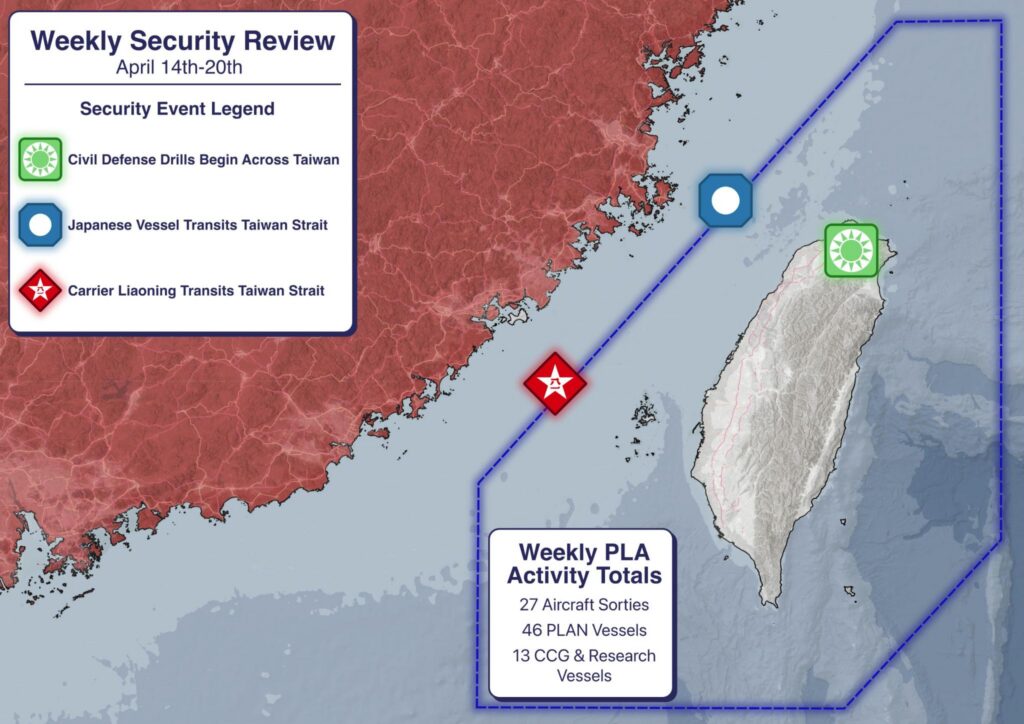
This week, Taipei holds civil defense drills, China’s Liaoning passes through the Taiwan Strait, and Japan sends a destroyer through the strait ahead of Balikatan.
Taiwan Holds Civil Defense Drills Alongside Computerized Han Kuang Exercise
Taiwan recently held a civil defense drill aimed at improving the island’s broader wartime preparedness. The drill, which was conducted alongside the Han Kuang 42 computer-simulated wargames, was the first ever run by the government’s Central Joint Emergency Operations Center. Officials say that the drill was designed to test how different departments would coordinate during a crisis, with the aim of improving emergency response and command-system performance. The exercises were observed by American Institute in Taiwan (AIT) Director Raymond Greene, Interior Minister Liu Shyh-fang, and National Security Council Deputy Secretary-General Lin Fei-fan. All three officials underscored the importance of a whole-of-society resilience, with Greene adding that this was “a significant step forward” for Taiwan’s resilience efforts. Taiwan’s national security officials have said the exercises are meant to unify central and local government, civilian forces, hospitals, shelters, transport systems, and communications networks. The civil defense drills will end on Tuesday, April 21.

The urban resilience exercises come as Taiwan is in the middle of computer-simulated wargames, and as it prepares for live-fire drills in July and August. Observers at the civil defense drill say Taiwan is no longer treating civil defense as a separate or symbolic effort, but as a core part of deterrence and wartime endurance. Many lawmakers from the ruling Democratic Progressive Party (DPP) have tried to shape civil defense reforms to be seen not only as domestic policy, but as part of a wider effort to convince outsiders that the island can absorb pressure and continue functioning under threat.
Earlier last week, the South China Morning Post ran a story criticizing Taiwan’s civil defense preparedness, citing scholars who say Taiwan is lagging behind in its military modernization. They say recent wargames held at National Chengchi University show this widening “resilience gap” could lead to public panic during a crisis. The simulation modelled a scenario in 2030 where global alliances shift, and Taiwan faces severe energy and social disruptions from a potential Chinese blockade. Results from the two-day event show Taiwan has focused heavily on military hardware but neglected social and critical infrastructure resilience, calling existing drills like the annual Wan An air raid exercise “too romantic” and fragmented for real threats.
China’s Liaoning Aircraft Passes Through Taiwan Strait
China’s Liaoning aircraft carrier (CV-16) passed through the Taiwan Strait on April 20, according to Taiwan’s Ministry of National Defense (MND). The MND said it monitored the ship closely throughout the transit and released an image showing carrier-based fighters and helicopters on the flight deck. Officials and local media are emphasizing the visibility of the carrier’s full air wing as a sign of normalized activity.
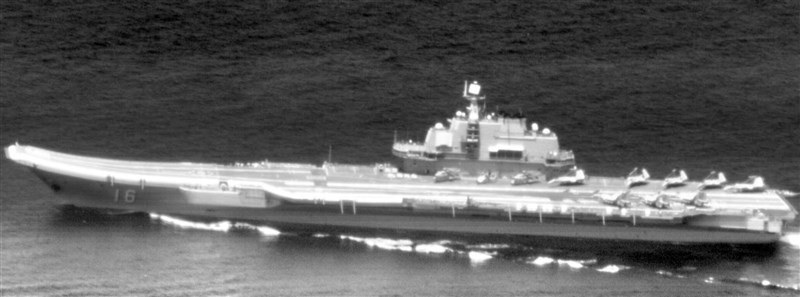
At the same time, in a statement, China’s Eastern Theater Command said one of its carrier groups had sailed from waters near the Ryukyu Islands into the western Pacific for training and drills. Chinese military officials say the drills are meant to test long-range combat capabilities.
Taiwanese commentators say the Liaoning’s transit is especially notable because it comes amid intensified Chinese military activity around Taiwan and broader efforts to normalize PLA Navy operations in contested areas. They are highlighting a concerning trend where China feels more comfortable moving high-value naval assets through one of the region’s most sensitive waterways.
Japan Sends Destroyer Through Taiwan Strait Ahead of Balikatan Drills
Japan’s destroyer JS Ikazuchi (DD-107) transited the Taiwan Strait on April 17, drawing sharp criticism from China as a “deliberate provocation”. Beijing is specifically upset about the timing of the transit, as it falls on the anniversary of the 1895 Treaty of Shimonoseki that ceded Taiwan to Japan. The nearly 14-hour passage is seen to many in Taipei as a signal of Tokyo’s growing willingness to assert freedom of navigation and link Taiwan Strait security to wider regional concerns. Despite Beijing stepping up patrols and coercion, partners like the United States and the Philippines are seeing Japan’s latest move as an optimistic sign that it is willing to do more in contested waters.
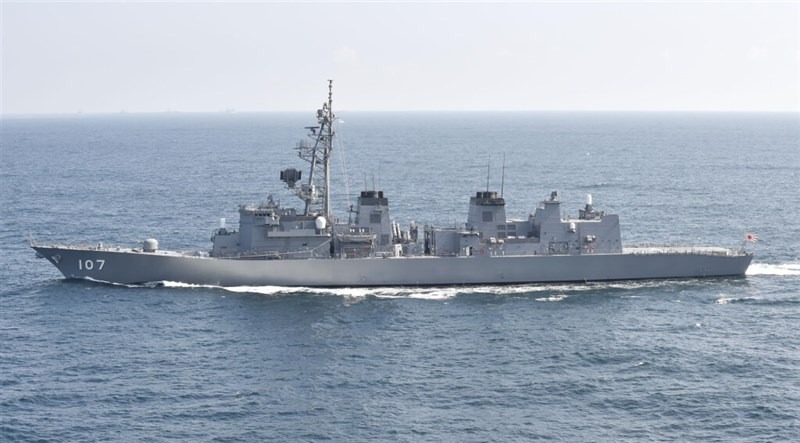
The transit falls on the same week as Japan joins the U.S.-Philippines Balikatan exercise for the first time as a full participant. The Japan Self-Defense Force has deployed the Ikazuchi, helicopter destroyer JS Ise, transport ship JS Shimokita, Type 88 anti-ship missiles, and over 1,400 troops to northern Luzon, a strategic hotspot near Taiwan. The three-week drill, running April 20 to May 8, focuses on maritime security, coastal defense, amphibious operations, and integrated fires. Officials at the opening ceremony of Balikatan say this year’s drill highlights deepened trilateral alignment to counter threats across the South China Sea and Taiwan Strait.