Taiwan Security Monitor

Weekly PRC Media Review: 11/21/25

Author: Ethan Connell


Hereโ€™s the latest edition of the TSM PRC State Media Tracker. Each Friday, we highlight key excerpts from Chinaโ€™s state media organs, such as the Ministry of Foreign Affairs, the Ministry of National Defense, and the Taiwan Affairs Office, all below!

Ministry of Foreign Affairs Statement on Japanese Intervention in the Taiwan Strait

19 November 2025

Mao Ning: Looking back at history, it is not difficult to see that launching external aggression under the pretext of a so-called โ€œsurvival crisisโ€ or โ€œself-defenseโ€ was a typical tactic of Japanese militarism. In 1931, whether Japan could โ€œsecure Manchuriaโ€ was framed as a matter โ€œthreatening Japanโ€™s survival,โ€ and Japan used this as an excuse to launch the September 18th Incident and occupy Northeast China. Later, Japan claimed that the โ€œGreater East Asia Co-Prosperity Sphereโ€ was a โ€œwar for Japanโ€™s survival,โ€ spreading its war of aggression across Asia. Even โ€œwhether to attack Pearl Harborโ€ was once regarded as a question that โ€œthreatened Japanโ€™s survival,โ€ which ultimately lit the fuse of the Pacific War.

The alarm has already sounded, and tragedy must not be allowed to repeat itself. On the occasion of the 80th anniversary of the victory of the Chinese Peopleโ€™s War of Resistance Against Japanese Aggression and the World Anti-Fascist War, the international community must remain highly vigilant and firmly resist any attempt to revive militarism, in order to safeguard the post-war international order and uphold world peace.

Taiwan Affairs Office Statement on Supply Chain Coordination with the US Under the “Taiwan Model”

19 November 2025

Zhu Fenglian: The so-called โ€œTaiwan modelโ€ is nothing more than a โ€œkowtowing-to-America model,โ€ a fig leaf for selling out Taiwan. It will inevitably lead to the outflow of capital, technology, and talent to the U.S., severely damaging the development of Taiwanโ€™s industries. The so-called โ€œTaiwanโ€“U.S. supply chain cooperationโ€ is nothing but the U.S. openly plundering and monopolizing Taiwanโ€™s advantageous industries. From โ€œsharing fiftyโ€“fiftyโ€ to โ€œtaking everything,โ€ Taiwanโ€™s core industrial advantages will be completely lost, and the islandโ€™s employment, investment, and development momentum will suffer devastating blows.

More and more facts are making the people of Taiwan realize that the U.S. always pursues โ€œAmerica First.โ€ The DPP authorities, currying favor with the U.S. at the expense of the well-being of the people and the islandโ€™s economic prospects, will ultimately be unable to escape the fate of Taiwan being squeezed dry by the U.S. We sternly warn the DPP authorities: sacrificing the foundations of Taiwanโ€™s industrial development and the welfare of its people for the selfish interests of one party will be condemned.

Taiwan Affairs Office Statement on Punishment for “Taiwan Independence Diehards”

19 November 2025

Zhu Fenglian: The โ€œTaiwan independenceโ€ diehards who engage in wrongdoing fully deserve punishment and will inevitably face severe consequences. Faced with the unsheathing of the sword to punish independence-seeking forces, the DPP authorities and the โ€œTaiwan independenceโ€ diehards have panicked, attempting to shift blame and divert attention.

The DPP authoritiesโ€™ provocations in seeking โ€œTaiwan independenceโ€ are the root cause of tension and turbulence in cross-Strait relations. The โ€œTaiwan independenceโ€ diehards are the vanguard cultivated by the DPP for pursuing separatism. Only by adhering to the one-China principle and the 1992 Consensus, firmly opposing โ€œTaiwan independence,โ€ and resolutely punishing the diehard independence elements can peace and stability across the Taiwan Strait be genuinely safeguarded, and the interests and well-being of Taiwan compatriots be effectively protected.

Taiwan Affairs Office Statement on Cash Rewards for Taiwanese Influencers

19 November 2025

Zhu Fenglian: Wen Ziyu and Chen Boyuan have long published and spread statements advocating โ€œresisting China and protecting Taiwanโ€ and โ€œrelying on the U.S. to seek independence,โ€ inciting separatism. They have aggressively attacked and smeared mainland policies benefiting Taiwan and its people, bullied and persecuted mainland spouses in Taiwan and Taiwan compatriots who support peaceful cross-Strait relations, and acted as enforcers and accomplices of โ€œTaiwan independence.โ€ They have aided wrongdoing and created a malign influence. The public security authoritiesโ€™ issuance of a wanted notice and reward for information on their criminal acts is a concrete step taken in accordance with the law to punish crimes of splitting the country or inciting secession. It is a righteous response to the strong public demand on both sides of the Strait to punish separatist activities. The reward measures in the notice will be implemented by public security authorities in accordance with relevant laws and regulations.

The mainstream public opinion in Taiwan favors peace, development, exchanges, and cooperation. The extremely small number of โ€œTaiwan independenceโ€ diehards, enforcers, and accomplices are destructive troublemakers whose misdeeds have caused deep resentment among the vast majority of people in Taiwan, who support punishing them in accordance with the law. These punitive measures are directed only at the diehard โ€œTaiwan independenceโ€ elements and their enforcers or accomplices, and do not involve the broad masses of people in Taiwan. We hope compatriots on both sides of the Strait will actively provide information on relevant illegal activities and resolutely oppose all forms of separatist conduct.

Ministry of Foreign Affairs Statement on Japanese Military Rearmament

21 November 2025

Mao Ning: Japan has been continually โ€œloosening restraints on itselfโ€ and expanding its military capabilities. Its defense budget has risen for thirteen consecutive years, and the new security laws lifted the ban on collective self-defense. Japan revised the โ€œThree Principles on Arms Exportsโ€ into the โ€œThree Principles on Transfer of Defense Equipment and Technology,โ€ continually relaxing restrictions on arms exports and even beginning to export lethal weapons. Japan claims to seek a world free of nuclear weapons, yet it is vigorously strengthening cooperation on โ€œextended deterrence,โ€ and is even seeking to revise the โ€œThree Non-Nuclear Principlesโ€โ€”not possessing, not producing, and not introducing nuclear weaponsโ€”in order to pave the way for โ€œnuclear sharingโ€ arrangements. These trends show that Japan is breaking away from its exclusively defensive posture and accelerating its โ€œrearmament.โ€ One cannot help but ask: What exactly is Japan trying to do?

If Japan intends to return to the old path of militarism, abandon its commitment to peaceful development, and undermine the post-war international order, the Chinese people will not accept it, the international community will not allow it, and it will ultimately end in failure.
Weekly Taiwan Arms Sales Tracker: 11/19/25

Author: Joe O’Connor


See this weekโ€™s Taiwan Arms Tracker update, covering news relating to arms sales, indigenous production, and defense procurement in Taiwan, all below!

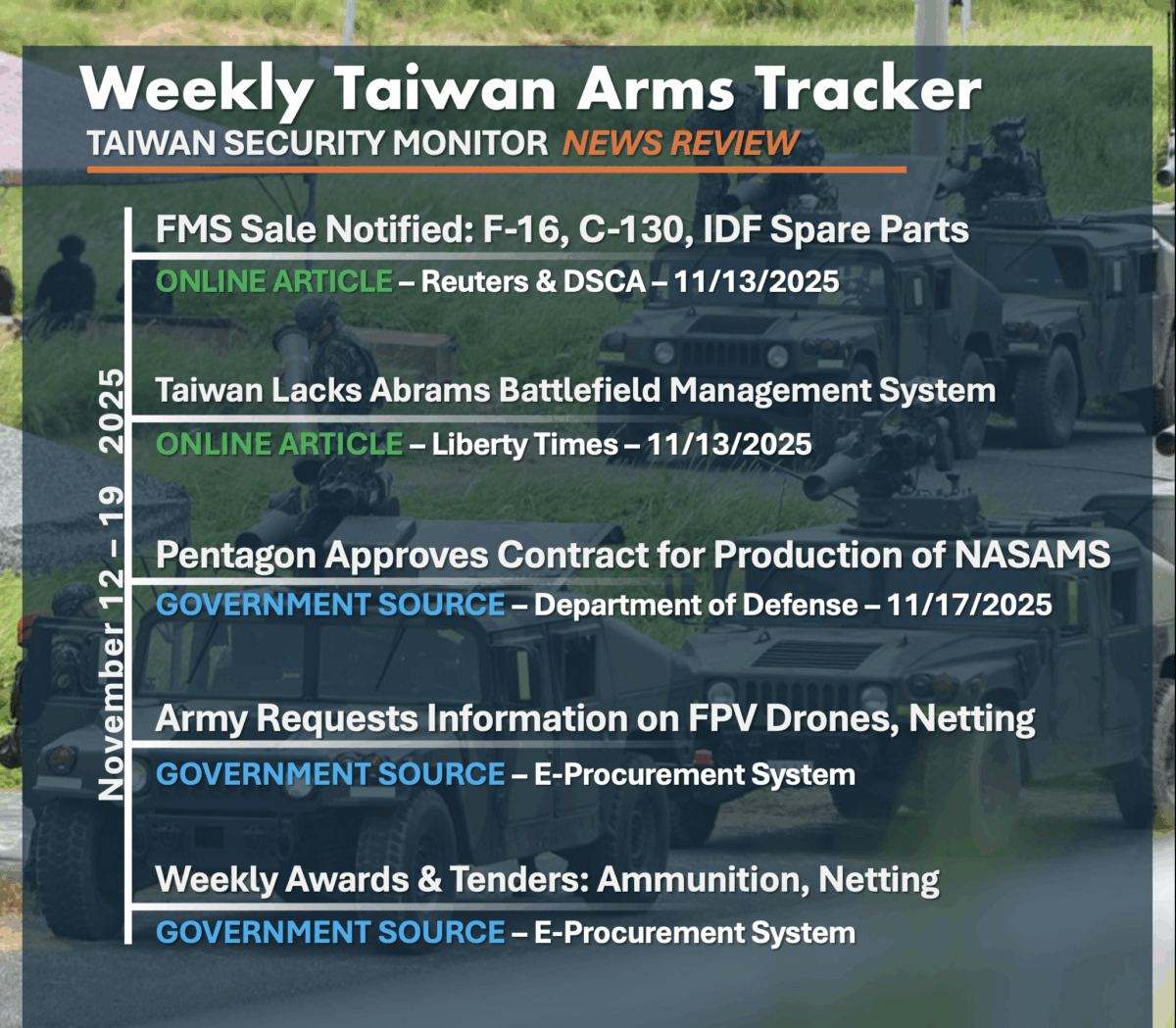
FMS Sale Notified: F-16, C-130, IDF Spare Parts

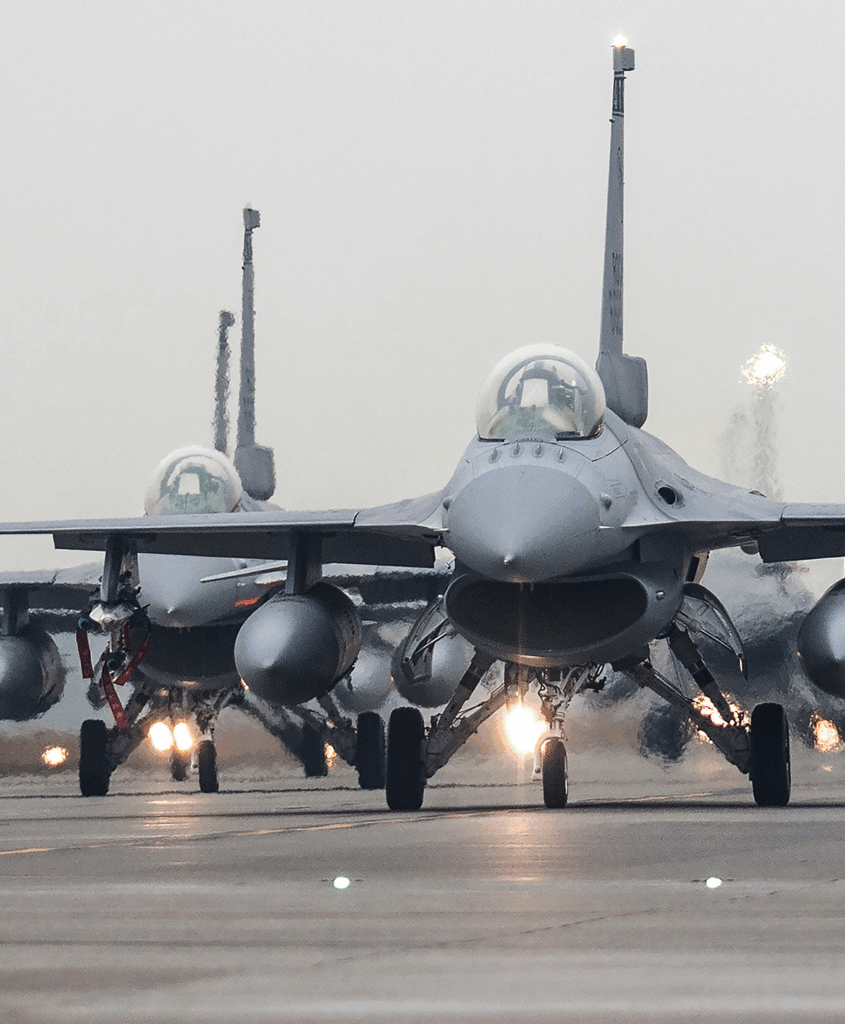
Today, the U.S. Defense Security Cooperation Agency notified Congress of a new possible sale to Taiwan worth US$330 million (NT$10.28 billion) for non-standard spare parts for use in F-16, C-130, and Indigenous Defense Fighter (IDF) aircraft. The last FMS sale to Taiwan was in December 2024 (329 days ago), of Mk 75 76-mm gun mounts.

SOURCE: Reuters and Defense Security Cooperation Agency

Taiwan Lacks Abrams Battlefield Management System

On Thursday, LY Foreign Affairs and National Defense Committee chairperson Wang Dingyu revealed that the Army did not purchase the US-made Battlefield Management System (BMS) for use in the Abrams. This has forced commanders to use voice commands as well as the complete retraining of tank crews, until a suitable alternative can be developed.

SOURCE: Fang Wei-li, Liberty Times

Pentagon Approves Contract for Production of NASAMS

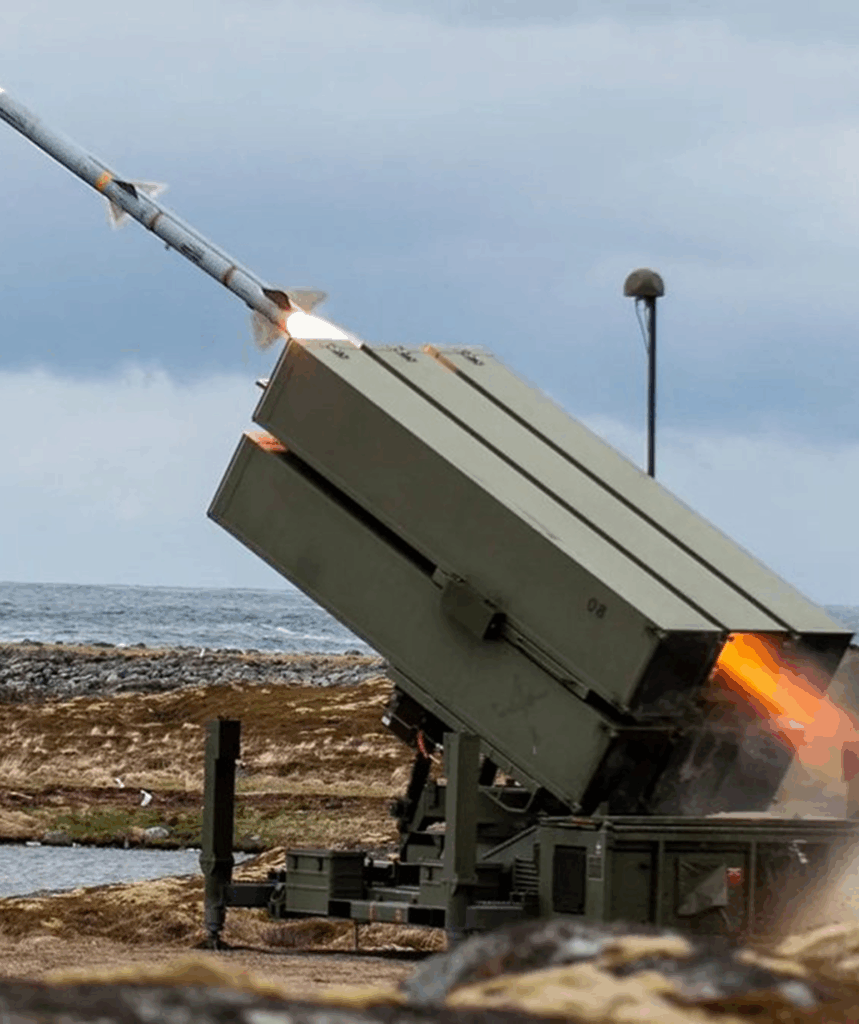
On Monday, the U.S. Army awarded a $698.95 million (NT$21.8 billion) contract to Raytheon to produce NASAMS fire units for Taiwan. The contract forms part of a $1.16 billion FMS case approved in October 2024, which is currently backlogged. According to the announcement, work is expected to be completed by spring 2031.

SOURCE: U.S. Department of Defense

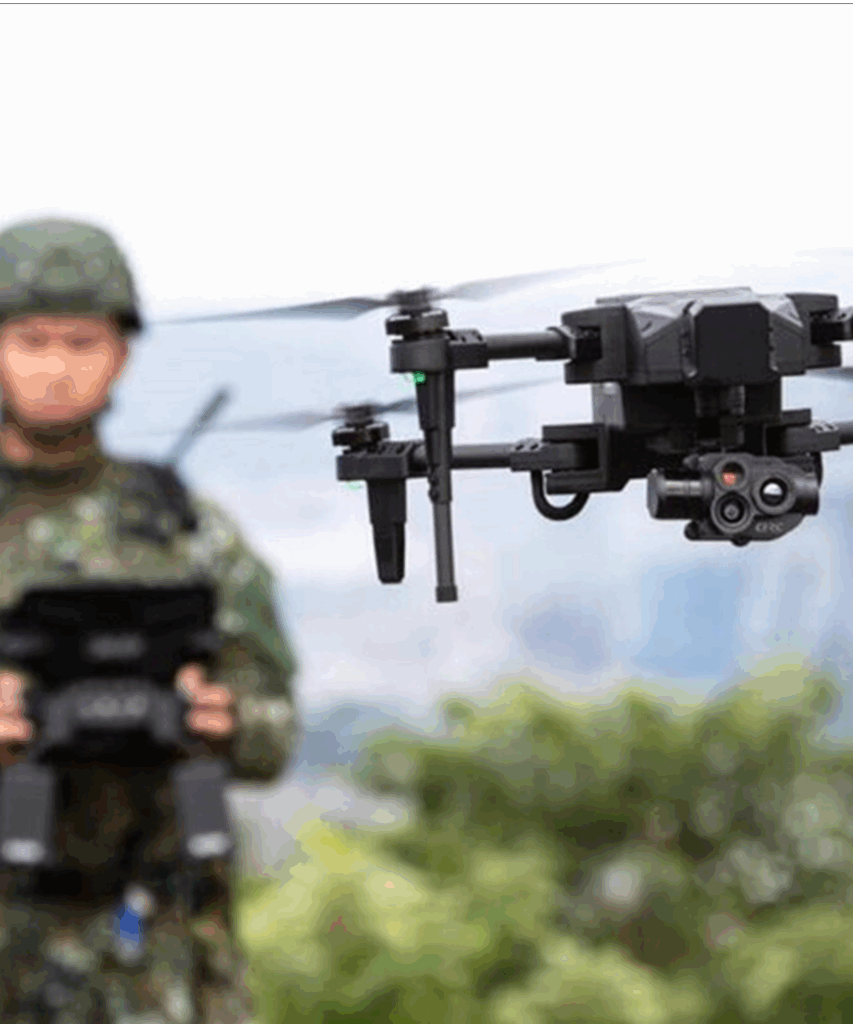
Army Requests Information on FPV Drones, Netting

On Monday, the Army made requests for information (RFIs) on several potential purchases:

โ€ขDrone protective netting (3,170), made of nylon and 6 x 30 m.

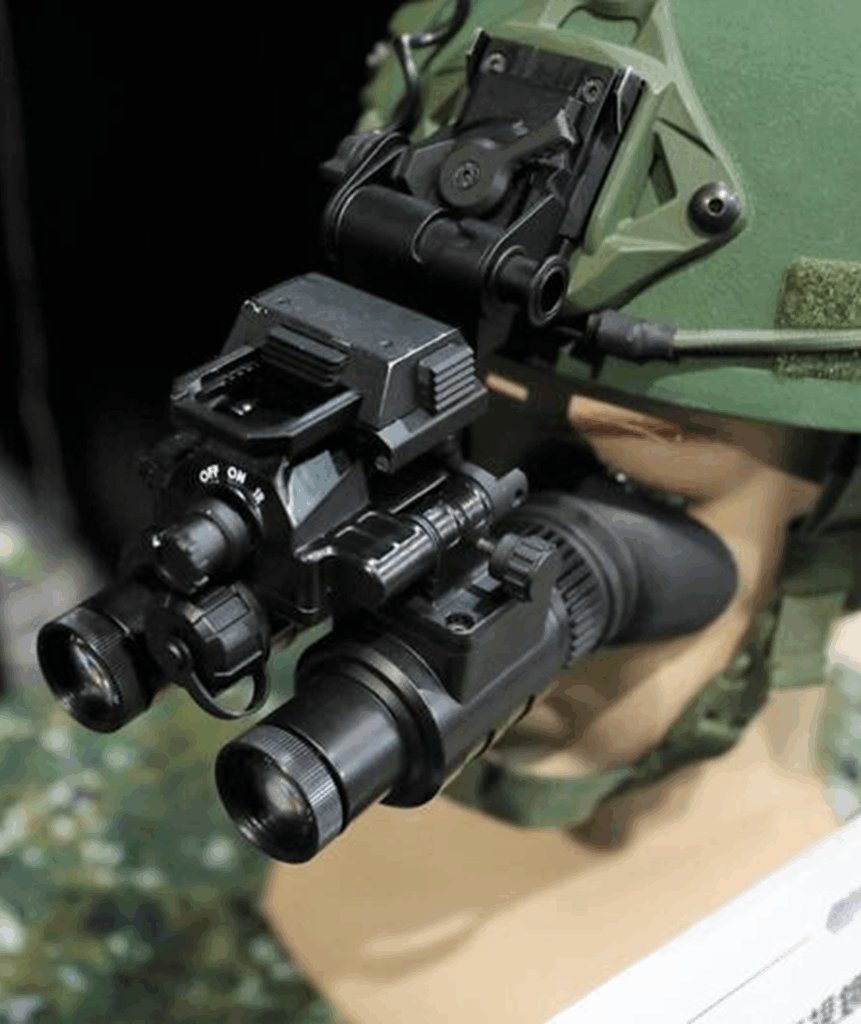
โ€ขFPV night-vision drones (370), between 7-10 inches wide, less than 1 kg, must not use parts from China, and must be subject to inspection.

SOURCE: Taiwanese Government E-Procurement System

Weekly Awards & Tenders: Ammunition, Netting

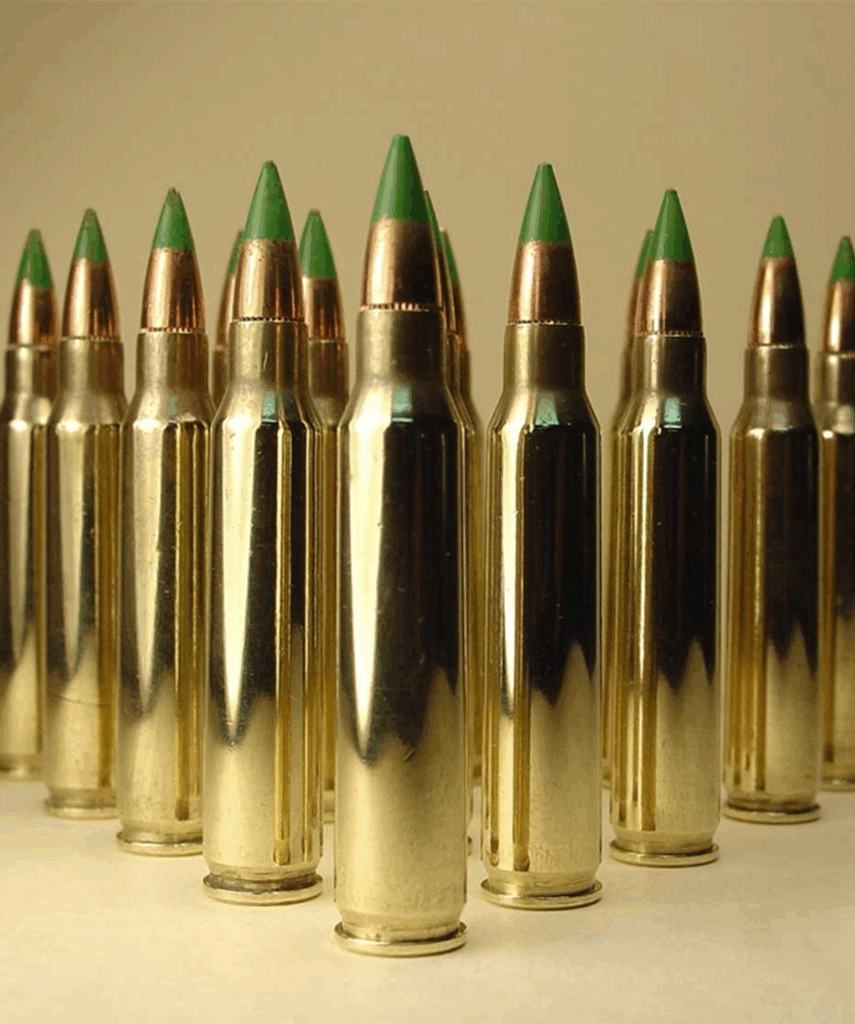
โ€ขOn Friday, the Armaments Bureau solicited bids for a first tranche of 7.62-mm and 5.56-mm blank cartridges, as well as 5.56-mm and 9-mm bullets, worth NT$1.51 billion (US$48.37 million).

โ€ขAlso, on Friday, the Air Force Maintenance Command solicited bids for camouflage netting, worth NT$34.26 million (US$1.10 million).

SOURCE: Taiwanese Government E-Procurement System

Visualization: Philippines MQ-9A Deployment

Author: Chris Dayton


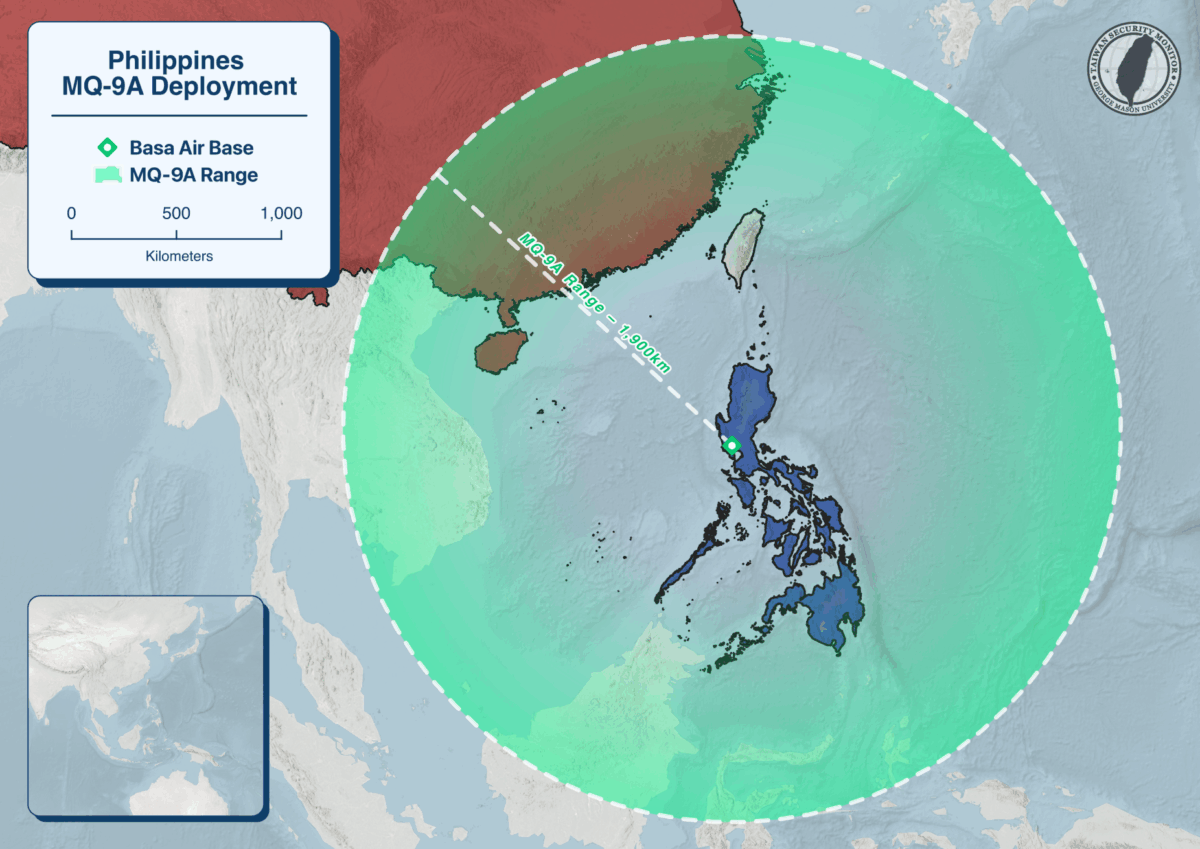
Per Aaron-Matthew Lariosa, the U.S. Marine Corps temporarily deployed a unit of MQ-9A drones to Basa Air Base in the Philippines beginning in 2024, supporting Philippine intelligence collection in the South China Sea and providing surveillance assistance of maritime threats.

Above is our visualization of Marine Unmanned Aerial Vehicle Squadron (VMU) 1’s deployment and the MQ-9A’s operational range:

    Taiwan Arms Sale Backlog, October 2025 Update

    Delays Mount for F-16s, Torpedoes

    By Eric Gomez

    The backlog of US arms sales notified to Congress slightly worsened in October 2025, as senior Lai administration officials admitted to new delays while under questioning by lawmakers in the Legislative Yuan (LY). A summit between Donald Trump and Xi Jinping did not result in any significant changes to US policy toward Taiwan, which suggests that future arms sales remain on the table. A new โ€œT-Domeโ€ initiative for air and missile defense, announced by President Lai, offers hints as to what Taiwan wants to prioritize; however, no new arms sales were notified to Congress in October.

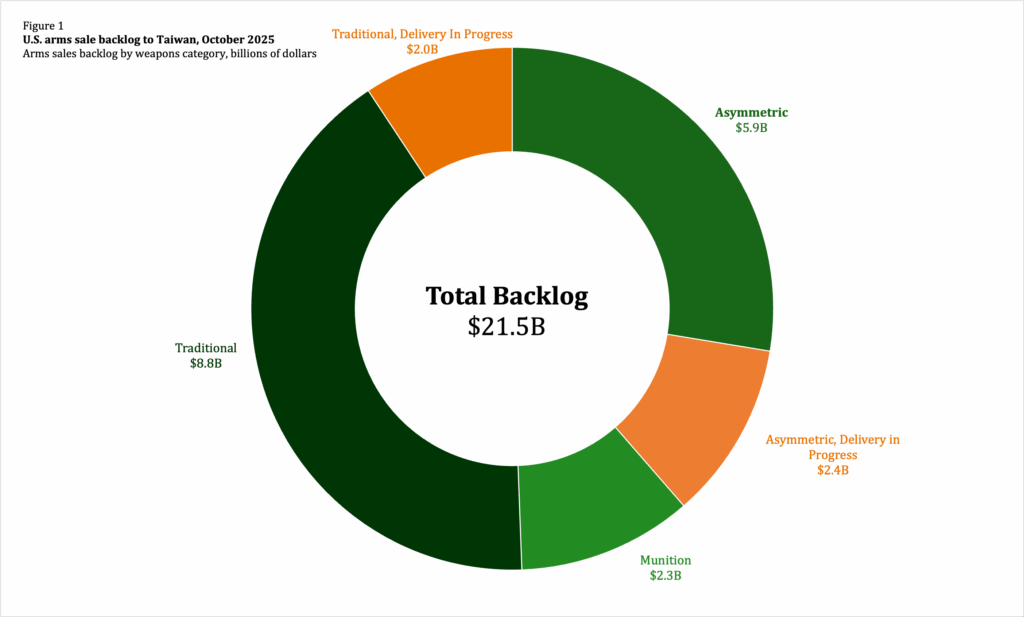
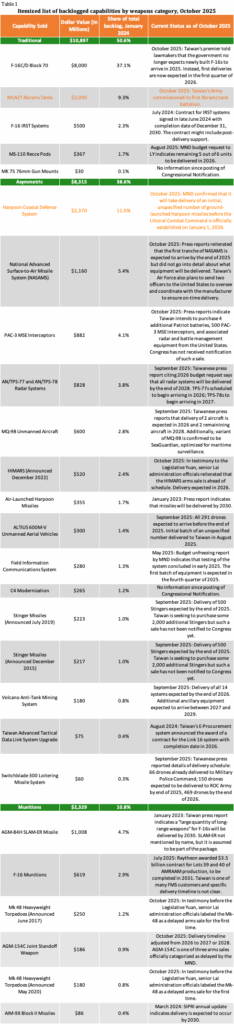
    We assess the Taiwan arms sale backlog to be unchanged from September 2025. The topline dollar value of the backlog remains $21.54 billion, though in-progress deliveries of Abrams tanks and Harpoon Coastal Defense Systems mean the true dollar value is lower than the topline. Figure 1 illustrates the breakdown of the backlog between asymmetric weapons, traditional weapons, and munitions. Table 1 provides an itemized list of all arms sales in the backlog, including the most up-to-date information on their status.

    New Information about Delayed Arms Sales

    Senior Lai administration officials revealed new information about several delayed arms sales after being questioned by members of the LY this month.

    As Taiwan Security Monitor has previously reported, Taiwan has yet to receive its first newly built F-16 Block 70/72 fighter aircraft, despite the first one rolling off the assembly line in March 2025. The delivery timeline for the first aircraft has been nudged back several times, but until October, press reports consistently said that deliveries were expected to begin before the end of the year. In June 2025, the Air Force Chief of Staff told the LY that he was โ€œoptimisticโ€ that at least 10 F-16s would arrive in Taiwan by the end of 2025.

    This month, Premier Cho Jung-tai informed lawmakers that 10 F-16s will be assembled by the end of the year; however, they will not begin arriving in Taiwan until sometime in 2026. Moreover, Cho did not specify when full delivery would take place. To put this new timeline in context, in June 2024 Minister of National Defense Wellington Koo testified to lawmakers that he anticipated taking delivery of the first aircraft in the fourth quarter of 2024, with full delivery of 66 aircraft occurring by the end of 2026.

    The same press report on Choโ€™s comments to lawmakers mentioned two other delayed arms sales: the AGM-154C glide bomb and Mk-48 heavyweight torpedoes. The AGM-154C has long been one of the most egregious delayed arms sales in the backlog. Congress received notification of the sale of 50 AGM-154Cs in June 2017. However, a contract to produce the weapons was not finalized until February 2024, almost seven years later. The MND releases periodic updates to the LY on the status of arms sales, and the AGM-154C has been considered a delayed sale in those reports since at least March 2024.

    Mk-48 heavyweight torpedoes, however, are a new addition to the category of delayed arms sales. MND has been very tight-lipped about the Mk-48s, which are intended to arm Taiwanโ€™s new, indigenously produced submarine, which is also experiencing mounting delays in undergoing sea trials. The first Mk-48 sale was notified to Congress simultaneously with the AGM-154C sale, and a second notification for torpedoes was issued in May 2020. Prior to October 2025, the last update on the torpedoes came in September 2025, when press reports said that Taiwan would receive 14 torpedoes in 2027 and 10 in 2028 (this falls short of the 46 torpedoes notified to Congress).

    In early November, the most recent version of the MND report to the LY on arms sale delivery status was publicly released; however, Taiwan Security Monitor has not yet finished translating it. Based on previous versions of this report, the most recent version should have more detailed delivery timelines for the three arms sales that MND considers delayed. We will post a full translation of this report once it is available and include more information about delivery delays in the November 2025 monthly update. 

    โ€œT-Domeโ€ Shines Spotlight on Air and Missile Defense

    Another significant development in October 2025 was President Laiโ€™s announcement in his National Day speech that Taiwan would begin work on a โ€œT-Domeโ€ system to improve its air and missile defense capabilities.

    While details about โ€œT-Domeโ€ are still scarce, its name references Israelโ€™s โ€œIron Domeโ€ systemโ€”a layered missile defense system that utilizes a variety of sensors and interceptors to intercept threats ranging from simple, unguided rockets to medium-range ballistic missiles. The air and missile threat facing Taiwan has important differences from that facing Israel, but that is a discussion for another time. For arms sales, Taiwan will likely lean more heavily on the United States to bolster its air defense capabilities.

    There are already indications that Taiwan is considering significant purchases of US air defense systems. The MND has requested funding to purchase nearly 2,000 additional Stinger missiles on top of 500 that are supposed to arrive in Taiwan by the end of this year. The 2026 defense budget submitted to the LY a few months ago included a phase two of NASAMS procurement that would add nine more batteries and over 300 missiles to the three batteries and 123 missiles notified to Congress last year. Finally, in October 2025, press reports indicated that Taiwan is considering a large purchase of four additional Patriot batteries and up to 500 interceptors.

    To be clear, none of the above arms sales have been notified to Congress yet, and until they are, they should be considered hypothetical rather than real. However, it is positive that Taiwan is willing to make significant investments in asymmetric air defense capabilities. The key variable in this discussion is what happens to the special five-year procurement budget that is up for consideration in the LY. Taiwan and the United States are likely waiting for the special budget issue to work itself out before any new arms sales move further down the process of being notified to Congress, as Taiwan needs to have funding lined up for an arms sale before it can move ahead with signing a Letter of Offer and Acceptance (LOA), which details a payment and delivery schedule. Congressional notification precedes LOA signature.

    Conclusion

    The October 2025 data reinforces a now-familiar pattern: Taiwanโ€™s arms sale backlog is not growing, but existing delays are becoming more severe and visible. The slippage of major programs, such as the F-16s, AGM-154C glide bombs, and now the Mk-48 torpedoes, highlights persistent bottlenecks in U.S. production capacity and the long timelines required to move weapons from notification to delivery. At the same time, emerging initiatives such as President Laiโ€™s โ€œT-Domeโ€ concept signal where Taiwan intends to invest next, particularly in layered air and missile defense.

    Whether these potential purchases meaningfully reshape the backlog will depend on the fate of Taiwanโ€™s five-year special procurement budget and the ability of both Washington and Taipei to align funding, contracting, and delivery schedules. Novemberโ€™s release of updated MND reporting should clarify how far timelines have slipped, and whether progress toward new air defense systems offsets mounting delays in legacy programs.

    Weekly PRC Media Review: 11/14/25

    Author: Ethan Connell


    Hereโ€™s the latest edition of the TSM PRC State Media Tracker. Each Friday, we highlight key excerpts from Chinaโ€™s state media organs, such as the Ministry of Foreign Affairs, the Ministry of National Defense, and the Taiwan Affairs Office, all below!

    Taiwan Affairs Office Statement on “Expectations for the Period After Reunification”

    5 November 2025

    Zhang Han: Resolving the Taiwan question and achieving the complete reunification of the motherland is the common aspiration of all sons and daughters of the Chinese nation. National reunification is the historical conclusion of the development of cross-Strait relations. Everything we do to promote cross-Strait relations is aimed at strengthening kinship ties and enhancing the well-being of compatriots on both sides, and at fulfilling their shared desire for a better life. Completing national reunification is a just causeโ€”beneficial in the present, advantageous for generations to come, and bringing enduring blessings far into the future.

    On October 25, at the conference commemorating the 80th anniversary of Taiwanโ€™s restoration, Wang Huning, member of the CPC Politburo Standing Committee and Chairman of the CPPCC National Committee, stated that after peaceful reunification, with the strong support of the motherland, Taiwan will enjoy โ€œseven areas of improvementโ€: โ€” better economic development, โ€” better guarantees for energy and resources, โ€” better infrastructure construction, โ€” better security, โ€” better external exchanges, โ€” better livelihood and welfare for Taiwan compatriots, and โ€” better spiritual and cultural life.

    Taiwan Affairs Office Statement on Jilin-1 Satellite Imagery Released of Taiwan

    11 November 2025

    Zhang Han: Taiwan is a treasured island of the motherland. As the mainlandโ€™s scientific and technological capabilities continue to improve, we are able to measure our land more precisely, safeguard our homeland more securely, and embrace the future with greater confidence. As many netizens have said, this is truly a โ€œbirdโ€™s-eye view of home.โ€

    Whether it is the majestic Great Wall or the beautiful Sun Moon Lake, the towering skylines of Shanghai or the bustling Port of Taipei โ€” they are all part of the motherlandโ€™s magnificent rivers and mountains, and together form the beautiful home of the Chinese nation. We sincerely welcome more Taiwan compatriots to visit the mainland, to witness its grand landscapes and vibrant development, and to feel the warmth of home.

    Taiwan Affairs Office Statement on the Criminal Investigation into Puma Shen (Shen Po-yang)

    11 November 2025

    Zhang Han: Taiwan is a part of China, and โ€œTaiwan independenceโ€ is an act of splitting the country and betraying the nation. The public security authoritiesโ€™ decision to open a case and investigate Shen Po-yang for allegedly committing the crime of secession, and to pursue his criminal responsibility in accordance with the law, is reasonable and lawful. It is a concrete action to implement the Opinion on Punishing Stubborn โ€˜Taiwan Independenceโ€™ Elements for the Crimes of Splitting the Country and Inciting Splitting the Country in Accordance with the Law, and a just and necessary measure to oppose โ€œTaiwan independenceโ€ separatism and safeguard national unity.

    This judicial and law-enforcement action targets only a very small number of โ€œTaiwan independenceโ€ diehards whose words and deeds are egregious and whose separatist activities are rampant. It does not target and does not involve the broad mass of Taiwan compatriots. The Democratic Progressive Party authorities deliberately blur the distinction between the general public and a tiny number of โ€œTaiwan independenceโ€ diehards in order to intimidate the people โ€” revealing their own guilty conscience and fear.

    Ministry of Foreign Affairs Statement on Visit to Taiwan by Fijian Ambassador to the UN

    6 November 2025

    Mao Ning: China has always firmly opposed any form of official interaction between countries that have diplomatic relations with China and the Taiwan region. The Fijian officialโ€™s visit to Taiwan seriously violates Fijiโ€™s political commitment to the One-China principle. China expresses strong dissatisfaction over this and has lodged stern representations with Fiji. The despicable actions of the Taiwan authorities will not succeed.

    Taiwan Affairs Office Statement on Japanese Involvement in a Taiwan Scenario

    12 November 2025

    Chen Binhua: There is only one China in the world, and Taiwan is part of China. The egregious remarks concerning Taiwan made openly by a Japanese leader in the Diet seriously violate the one-China principle and constitute a blatant interference in Chinaโ€™s internal affairs. We express strong dissatisfaction and firm opposition to this. The Ministry of Foreign Affairs has lodged solemn representations and strong protests with the Japanese side.

    Japan bears historical guilt toward the Chinese people on the Taiwan issue and committed countless crimes during its 50 years of colonial rule and enslavement of Taiwan. Eighty years ago, we defeated the Japanese aggressors, recovered Taiwan, and ended Japanโ€™s occupation and plunder. Eighty years later, anyone who dares to challenge Chinaโ€™s core interests or attempts to obstruct the great cause of Chinaโ€™s reunification will find that the Chinese government, the Chinese people, and the Chinese military will never agree and will never tolerate it.

    Japan should deeply reflect on its history, learn from past lessons, adhere to the one-China principle and the spirit of the four political documents between China and Japan, honor its political commitments on the Taiwan question, and handle Taiwan-related issues with the utmost prudence. The Democratic Progressive Party (DPP) authorities are also sternly warned: any attempt to rely on external forces to split Taiwan from China is doomed to fail.

    Taiwan Affairs Office Statement on the Commissioning of the Fujian

    12 November 2025

    Chen Binhua: From the Liaoning to the Shandong and now to the Fujian, the arrival of the โ€œthree-carrier eraโ€ is a major achievement in Chinaโ€™s national defense and military development, and a solid step forward for the Peopleโ€™s Liberation Army on its path toward becoming a world-class military. Chinese people at home and abroad all feel proud and honored by this. As the Peopleโ€™s Navy grows stronger and sails further into the deep blue, it will more powerfully safeguard the motherlandโ€™s vast maritime borders, defend national sovereignty and territorial integrity, and defeat any forces or plots attempting to invade or divide Chinaโ€™s sacred territory.

    Taiwan Affairs Office Statement on the US-Taiwan Relationship

    12 November 2025

    Chen Binhua: In recent days, many foreign media outlets, experts, and scholars have criticized the Lai Ching-te (William Lai) authorities for their reckless provocations and repeated attempts to seek โ€œTaiwan independence.โ€ This shows that more and more people are seeing their true nature as โ€œpeace saboteursโ€ and โ€œtroublemakers,โ€ and that the dream of โ€œrelying on external forces to pursue independenceโ€ is nothing but a futile fantasy.

    The future of Taiwan, the safety and well-being of the people in Taiwan, lie in the peaceful development of cross-Strait relations and the realization of national reunification. We hope that the broad mass of Taiwan compatriots will clearly recognize the extreme danger and harm of the Lai Ching-te authoritiesโ€™ stubborn adherence to the separatist path of โ€œTaiwan independence,โ€ resolutely oppose โ€œTaiwan independenceโ€ and external interference, and work together with us to bring cross-Strait relations back onto the path of peaceful development, genuinely safeguarding peace and stability across the Taiwan Strait and their own safety and well-being.

    Taiwan Affairs Office Statement on Reunification with Taiwan

    12 November 2025

    Chen Binhua: The historical process of Chinaโ€™s reunification cannot be stopped. โ€œTaiwan independenceโ€ is a dead end, and confrontation leads nowhere. Only by advancing cross-Strait relations toward the complete reunification of the motherland can lasting peace across the Taiwan Strait be ensured and enduring well-being for the Chinese nation be achieved.

    We are willing, on the common political foundation of upholding the one-China principle and opposing โ€œTaiwan independence,โ€ to work together with all political parties, organizations, and representative figures in Taiwan to conduct extensive and in-depth democratic consultations on cross-Strait relations and Taiwanโ€™s future โ€” to seek peace across the Taiwan Strait, to seek well-being for our compatriots, and to seek rejuvenation for the Chinese nation. We hope that all political parties and people from all walks of life on the island will recognize the trend of history, uphold the great national interest, and join us in safeguarding peace and stability in the Taiwan Strait, working hand in hand to open a bright new chapter of national rejuvenation and the reunification of the motherland.

    Taiwan Affairs Office Statement on Cross-Strait Communication

    12 November 2025

    Chen Binhua: The โ€œ1992 Consensusโ€ is the political foundation for the development of cross-Strait relations and the anchor of peace and stability in the Taiwan Strait. It was precisely on the basis of the โ€œ1992 Consensusโ€ that the two sides of the Strait began consultations and negotiations, signed a series of agreements, and reached numerous consensuses, which effectively promoted economic well-being on both sides and strongly safeguarded peace and stability across the Strait.

    The historical tide of national reunification and rejuvenation is surging forward. The earlier the Taiwan question is resolved and the motherland is reunified, the more favorable it will be for Taiwanโ€™s development and for improving the lives of Taiwan compatriots. People on both sides of the Strait are Chinese โ€” members of one family bound by blood. We have the ability and the wisdom to properly handle our own family affairs and firmly hold the destiny of the Chinese nation in our own hands.

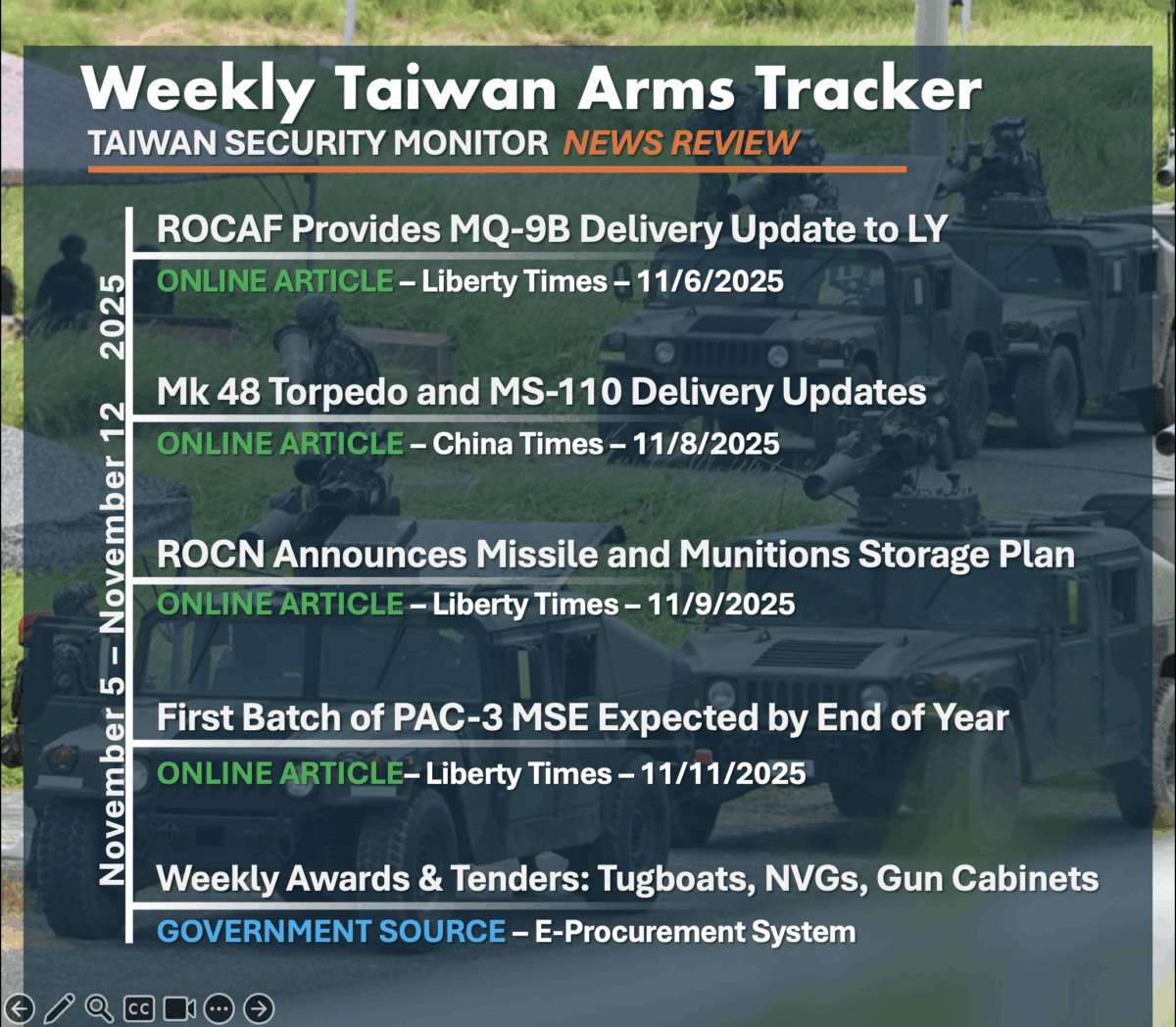
    Weekly Taiwan Arms Tracker: 11/12/25

    Author: Joe O’Connor

    Contributing Researchers: Eric Gomez, Jaime Ocon, Reed Bishop, Sean Dilallo


    See this weekโ€™s Taiwan Arms Tracker update, covering news relating to arms sales, indigenous production, and defense procurement in Taiwan, all below!

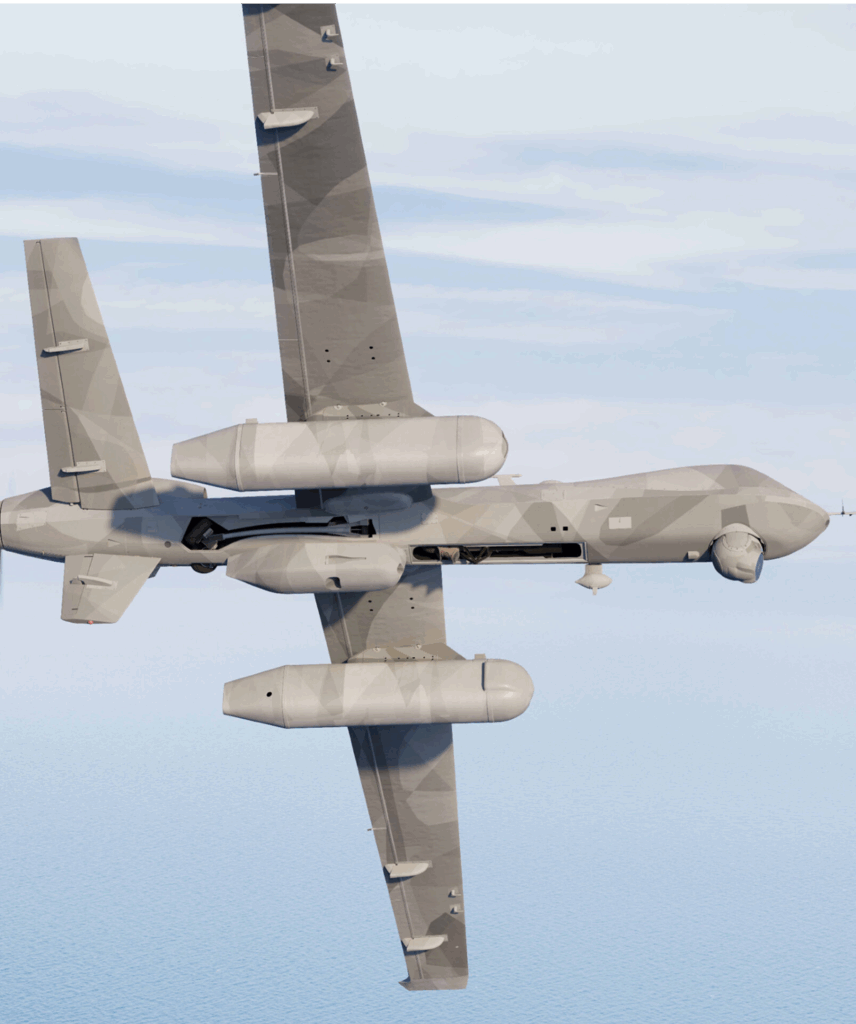
    ROCAF Provides MQ-9B Delivery Update to LY

    In an LY hearing on Thursday, Air Force Chief of Staff Lt. Gen. Lee Ching-jan stated that the first 2 aircraft are expected to be delivered in the third quarter of 2026. In response to questions from KMT lawmakers, Lee reported that US end-user restrictions do not apply to telemetry and intelligence data collected by the drones, with data going to Taiwanese ground stations at Chiayi and Hualien Air Bases.

    SOURCE: Fang Wei-li, Liberty Times

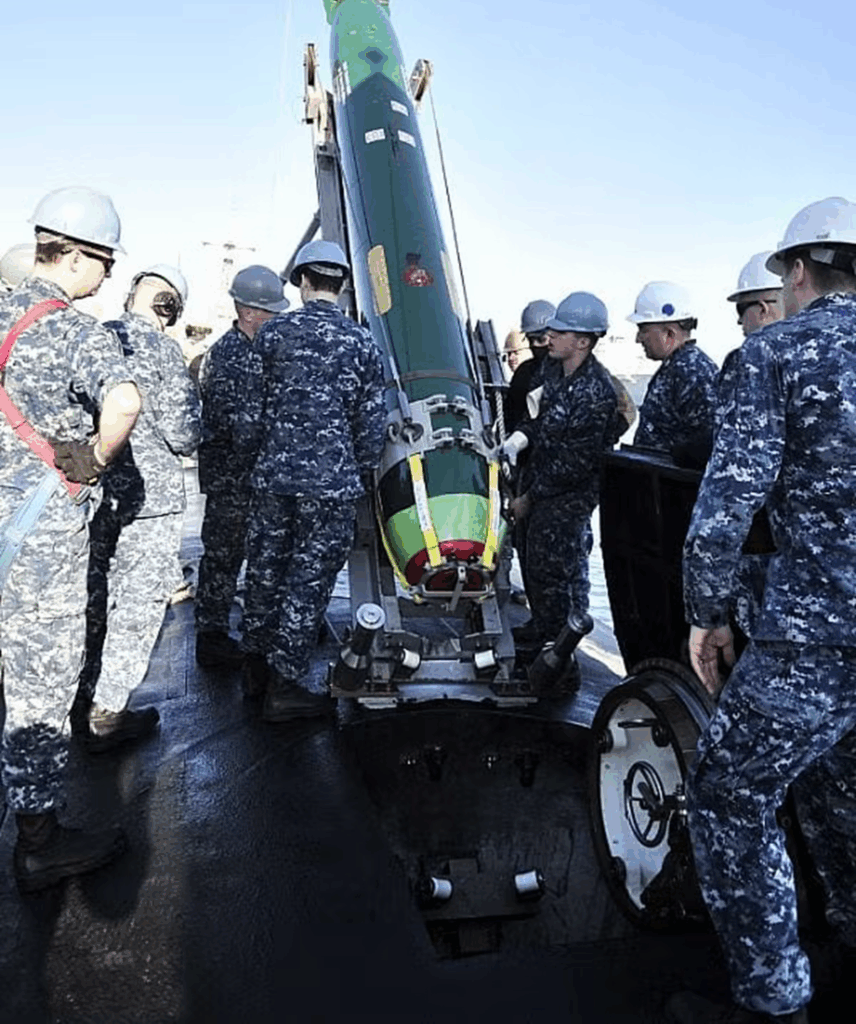
    Mk 48 Torpedo and MS-110 Delivery Updates

    After last weekโ€™s LY delay report, Navy Chief of Staff Vice Adm. Chiu Chun-jung clarified that the delivery timeline of Mk 48 torpedoes has slipped from 2026 to 2028 and that closeout has slipped to 2030. Maj. Gen. Huang Wen-chi, Director of the MND Strategic Planning Department, also stated that delivery of 6 MS-110 reconnaissance pods will begin in batches before the end of the year.

    SOURCE: Liu Yujie, China Times

    ROCN Announces Missile and Munitions Storage Plan

    In its recent military investment budget, the ROCN has allocated NT$9.88 billion (US$639.66 million) for 2026-2029 for munition storage construction and renovation, via dispersed stockpiles and prepositioning. Only NT$30.97 million (US$1.0 million) will be appropriated for 2026, while the majority will be spent on construction during 2027-29.

    SOURCE: Tu Ju-min, Liberty Times

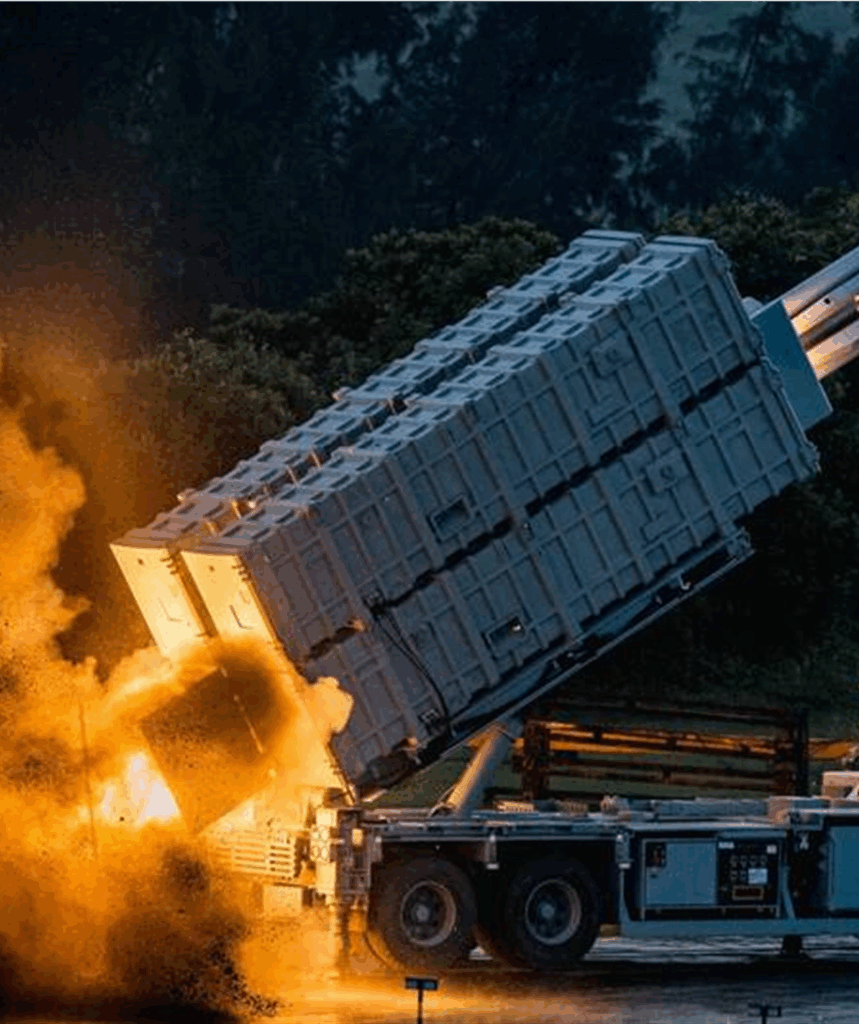
    First Batch of PAC-3 MSE Expected by End of Year

    As a part of the proposed โ€œT-Domeโ€ air defense network announced by the Lai administration, it was announced Tuesday that batches of the PAC-3 Missile Segment Enhancement (MSE) will begin arriving in Taiwan by the end of this year, with completion in 2027. The MND is budgeting in the future for an additional 4 Patriot systems and more than 500 more PAC-3 MSEs to supplement.

    SOURCE: Tu Ju-min, Liberty Times

    Weekly Awards & Tenders: Tugboats, NVGs, Gun Cabinets

    โ€ขOn Tuesday, Naval Command solicited bids for procurement of new harbor tugboats, worth NT$807.57 million (US$26.08 million).

    โ€ขAlso on Tuesday, the Armaments Bureauโ€™s Factory 205 awarded a NT$357.75 million (US$11.55 million) contract for procurement of T112 single-rifle storage cabinets.

    โ€ขOn Wednesday, the ROC Defense Mission to the US awarded a NT$122.99 million (US$3.97 million) contract to the AIT for production of helicopter night-vision goggles.

    SOURCE: Taiwanese Government E-Procurement System

    Visualization: Brahmos Missile Deployment

    Author:ย Chris Dayton, Ethan Connell


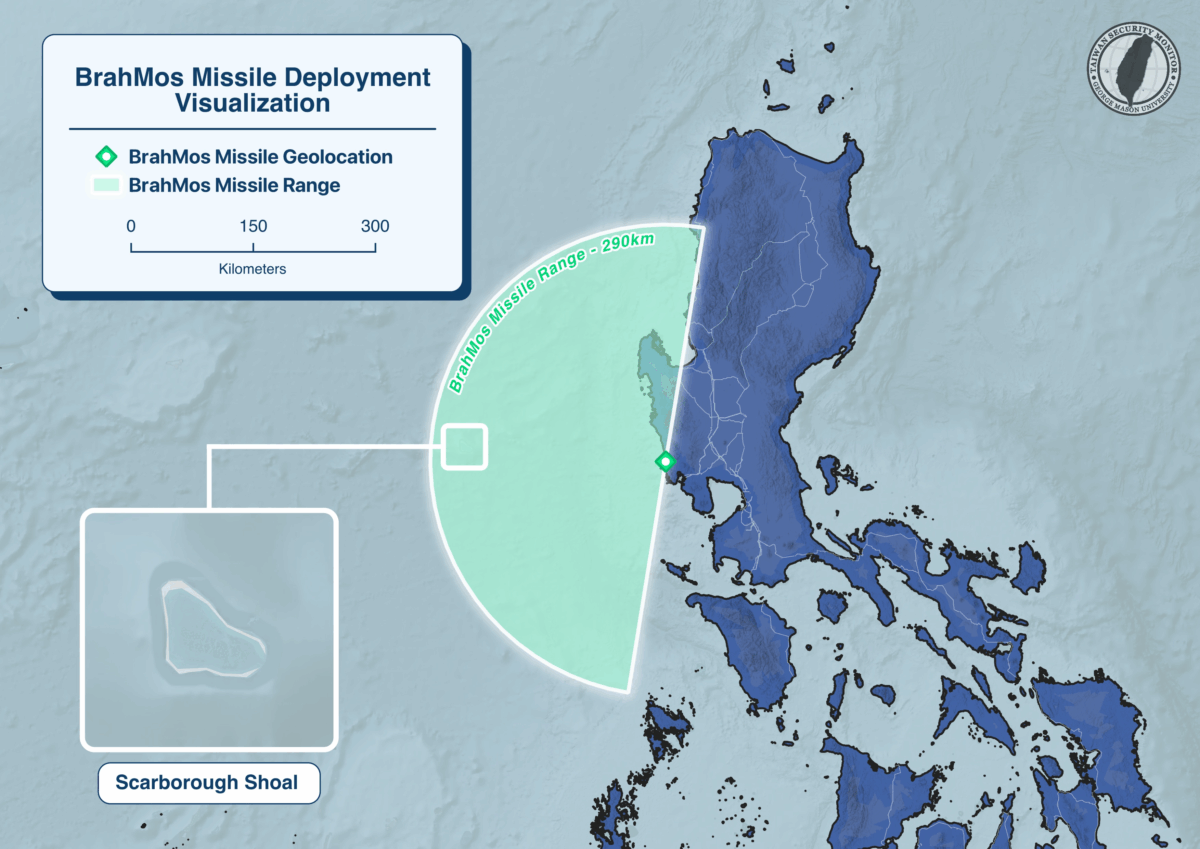
    The Philippine Marine Corps publicly unveiled its BrahMos cruise missile coastal defense system at a Marine Corps Coastal Defense Regiment facility in Zambales.

    Above is our visualization of the BrahMos system’s deployment site and reported operational range.

    Weekly PRC Media Roundup: 11/7/25

    Author: Ethan Connell


    Hereโ€™s the latest edition of the TSM PRC State Media Tracker. Each Friday, we highlight key excerpts from Chinaโ€™s state media organs, such as the Ministry of Foreign Affairs, the Ministry of National Defense, and the Taiwan Affairs Office, all below!

    Taiwan Affairs Office Statement on Lai Ching-teโ€™s โ€œreckless leadership styleโ€

    29 October 2025

    Peng Qingโ€™en: China has noted an increasing number of foreign experts, scholars, and international commentators expressing concern over the situation in the Taiwan Strait, and openly criticizing Lai Ching-teโ€™s โ€œTaiwan independenceโ€ provocations. The current complex and severe situation in the Taiwan Strait stems fundamentally from the Lai administrationโ€™s refusal to acknowledge the โ€œ1992 Consensus,โ€ which embodies the one-China principle, and its stubborn adherence to a separatist โ€œTaiwan independenceโ€ stance while continuously colluding with external forces to provoke and seek independence. Lai Ching-te is an out-and-out โ€œdestroyer of cross-strait peace,โ€ a โ€œcreator of crisis in the Taiwan Strait,โ€ and a true โ€œtroublemaker.โ€

    The Taiwan issue is purely Chinaโ€™s internal affair, and resolving it is a matter for the Chinese people on both sides of the Strait. I hope that the broad masses of Taiwan compatriots will clearly recognize the grave and destructive harm of the DPP authoritiesโ€™ stubborn โ€œTaiwan independenceโ€ line, firmly oppose separatism and external interference, and work together with the mainland to bring cross-strait relations back onto the path of peaceful developmentโ€”thus safeguarding peace and stability in the Taiwan Strait and ensuring their own security and well-being.

    Taiwan Affairs Office Statement on Amendments to the โ€œTen National Security Lawsโ€

    29 October 2025

    Peng Qingโ€™en: The Lai administration, stubbornly clinging to its โ€œTaiwan independenceโ€ separatist stance, is rushing to push through these so-called โ€œlegal amendmentsโ€ in an attempt to use unjust laws to carry out unjust actsโ€”further creating โ€œgreen terrorโ€ and a โ€œchilling effect,โ€ heightening cross-strait confrontation, and paving the way for a โ€œTaiwan independence dictatorship.โ€

    Peace, development, exchange, and cooperation represent the mainstream public opinion in Taiwan. The Lai administration, however, disregards the peopleโ€™s livelihood and public sentiment, continually deepens divisions within Taiwan society, and gravely undermines cross-strait relationsโ€”causing heightened tension and instability in the Taiwan Strait. All such regressive and misguided actions will be opposed and are destined to fail.

    Taiwan Affairs Office Statement on the “80th Anniversary of Taiwanโ€™s Restoration”

    29 October 2025

    Peng Qingโ€™en: General Secretary Xi Jinping has pointed out that โ€œpeaceful reunification and one country, two systemsโ€ is the best way to realize national reunification. It embodies the broad-mindedness and inclusiveness of Chinese wisdom, fully taking into account Taiwanโ€™s current realities while being conducive to the long-term stability and peace of Taiwan after reunification.

    Peaceful reunification would create tremendous opportunities for Taiwanโ€™s economic and social development and bring tangible benefits to the vast number of Taiwan compatriots. The mainland, with its large population, broad market, and strong industries, can fully accommodate goods and enterprises from Taiwan. By leveraging the mainlandโ€™s vast market and economies of scale, together with Taiwanโ€™s own technological characteristics and talent advantages, Taiwanโ€™s economy would gain new vitality.

    With cross-strait connectivity achieved in all respects, Taiwanโ€™s energy and resource security would be strengthened, and its infrastructure development would advance. Sharing public services and public resources across the Strait would bring greater convenience to the daily lives of Taiwan compatriots, allowing them to share in the fruits of Chinese-style modernization. Under the inheritance and nourishment of Chinese culture, the creativity of Taiwan compatriots would be fully unleashed, and their cultural and spiritual life would become richer and more colorful. With a strong motherland as backing, Taiwanโ€™s security and development interests would be fully safeguarded; Taiwan compatriots would stand taller and act with greater confidence on the international stageโ€”living with greater safety and dignity.

    Visualization: Taiwan Military Theatre Command

    Authors: Chris Dayton, Noah Reed


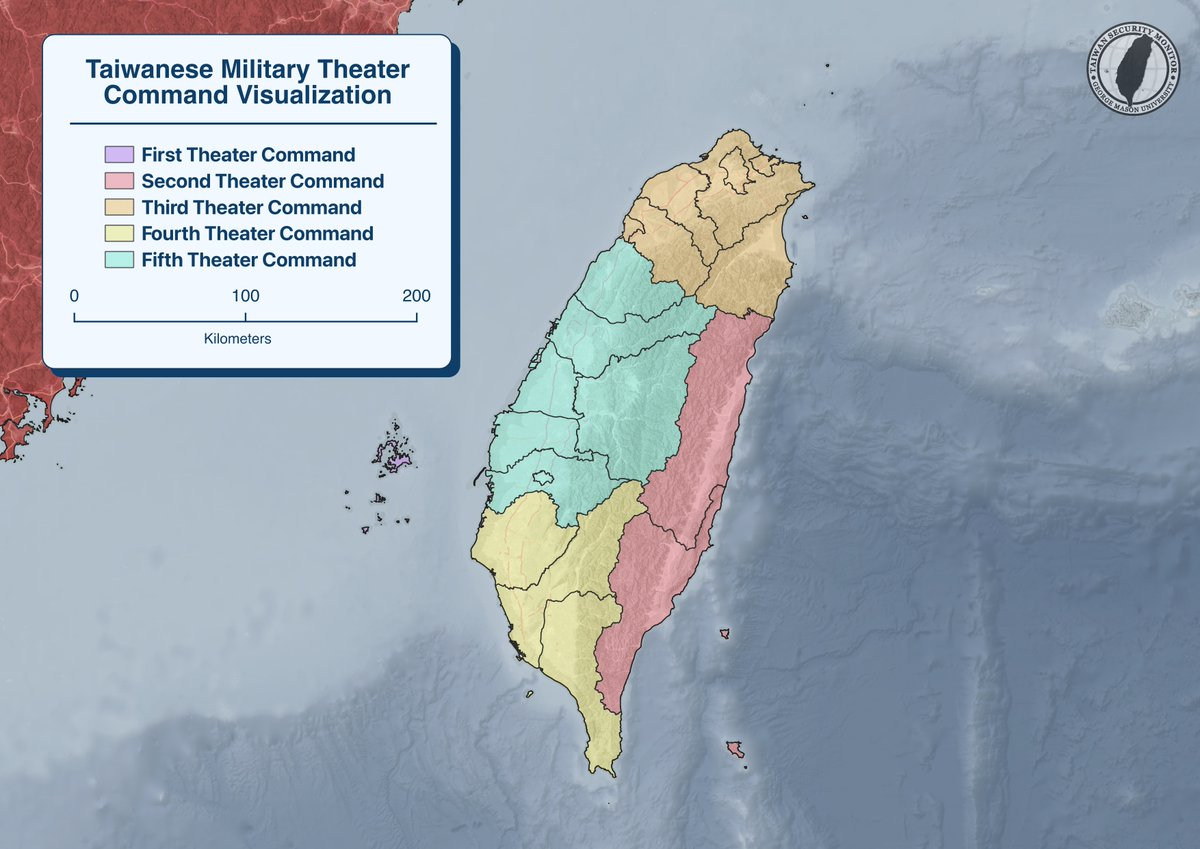
    In 2021, Taiwan’s military reorganized its command structure into several “operational zones” (ไฝœๆˆฐๅ€), also often called “operational theaters” . These zones represent the integrated command of Taiwan’s different armed services.

    Recently, Taiwan’s MND announced each command will have an integrated UAV battalion by 2026. Our visualization shows the breakdown of each command’s territorial jurisdiction.

    Taiwan, want to stop the gray-zone? Put your money where your mouth is.

    Author: Jonathan Walberg


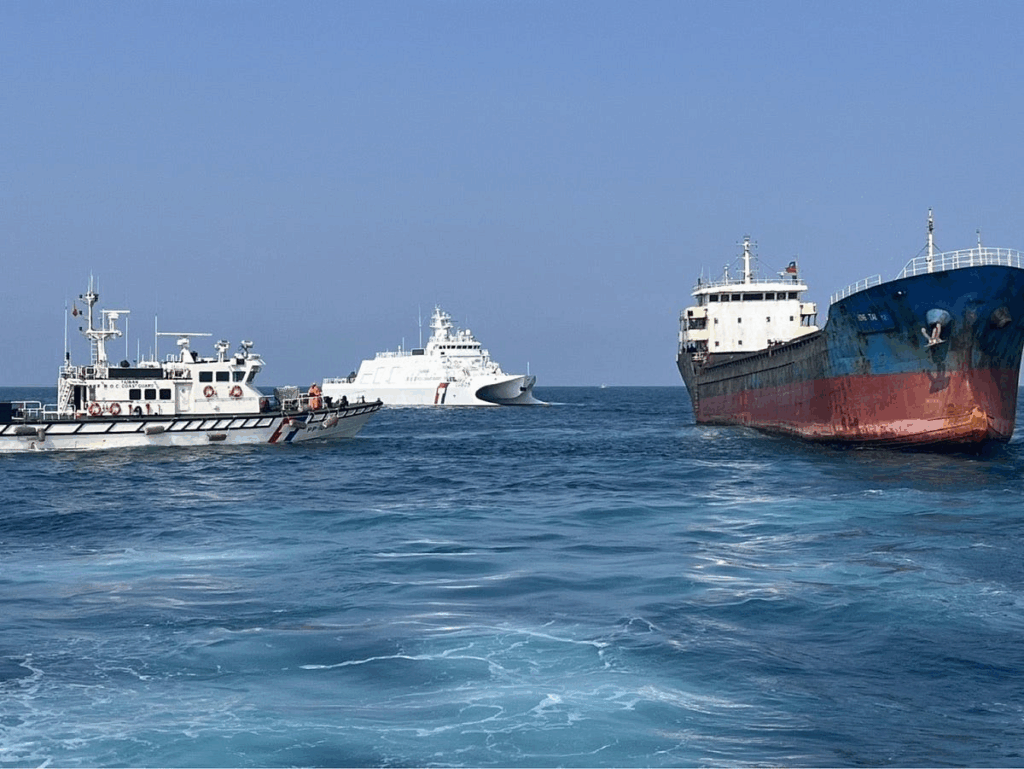
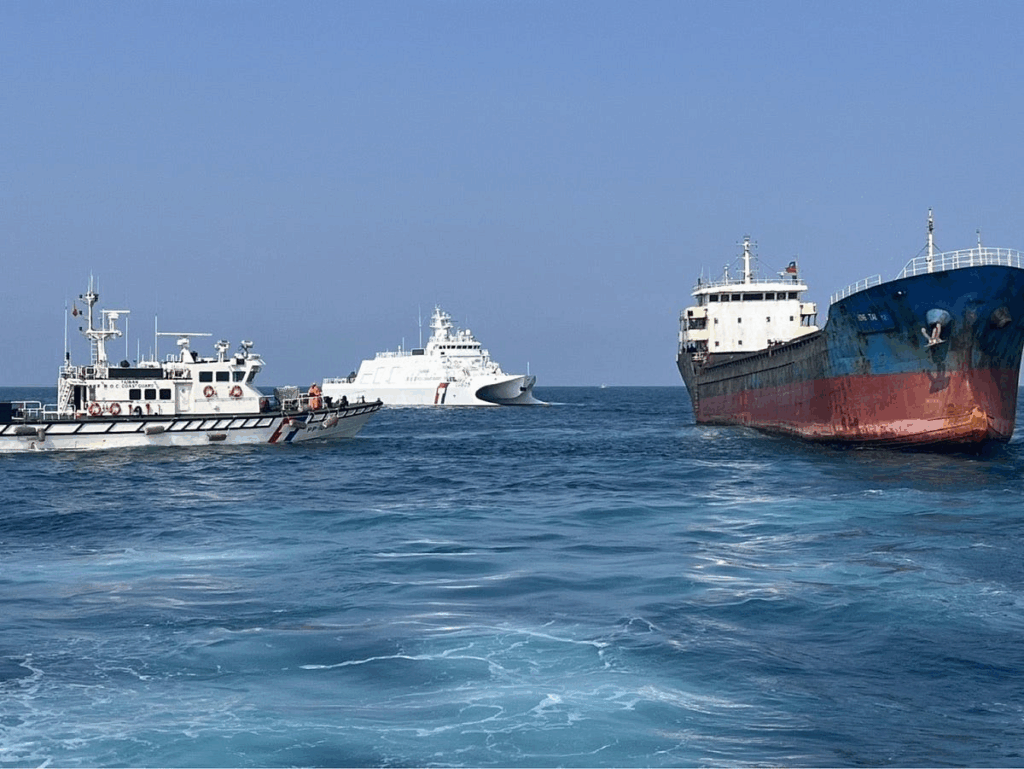
    Photo of Hongtai58 released by the Taiwan Coast Guard

    The conviction stemming from the severing of Taiwanโ€™s TP3 undersea cable was not merely a local legal success but a demonstration that gray-zone coercion can be countered when ambiguity is met with evidence and enforcement. Gray-zone strategies rely on deniability, repetition, and administrative normalizationโ€”coast-guard pressure, maritime militias, cable interference, and disinformation meant to exhaust institutions and condition the public to view incursions as routine. If left unchallenged, these tactics gradually reshape realities on the ground, shift the burden of proof onto Taipei, and narrow its political and operational options.

    The effective response lies less in escalating conventional military power than in sustained investment in attribution, law enforcement, and narrative control. Although most global undersea cable faults are accidental, that very background noise makes persistent surveillance, pattern analysis, and prosecutorial capacity essential. Patrol vessels, sensors, and legal authorities convert suspicion into proof and protests into penalties, raising the cost of coercion at a fraction of the price of advanced fighter aircraft or major combatants.

    Partnerships and disciplined transparency further strengthen deterrence. Cooperation with allies, insurers, and port authorities can impose economic and legal consequences on China-linked โ€œshadow fleets,โ€ while selective, evidence-based disclosure undermines disinformation without fueling panic. The TP3 verdict signaled that Taiwanโ€™s maritime domain is governed by rules and consequences; sustaining that message requires consistently funding the institutions that patrol, document, prosecute, and communicate. If Taipei seeks fewer gray-zone tests, it must resource the people and tools that confront them every day.

    Read at Small Wars Journal.