Taiwan Security Monitor

Weekly Taiwan Arms Update: 10/22/25

Author: Joe O’Connor

Contributing Researchers: Jaime Ocon, Eric Gomez, Sean Dilallo, and Giuseppe DiStefano


See this weekโ€™s Taiwan Arms Tracker update, covering news relating to arms sales, indigenous production, and defense procurement in Taiwan, all below!

Cabinet Approves Drone Development Program

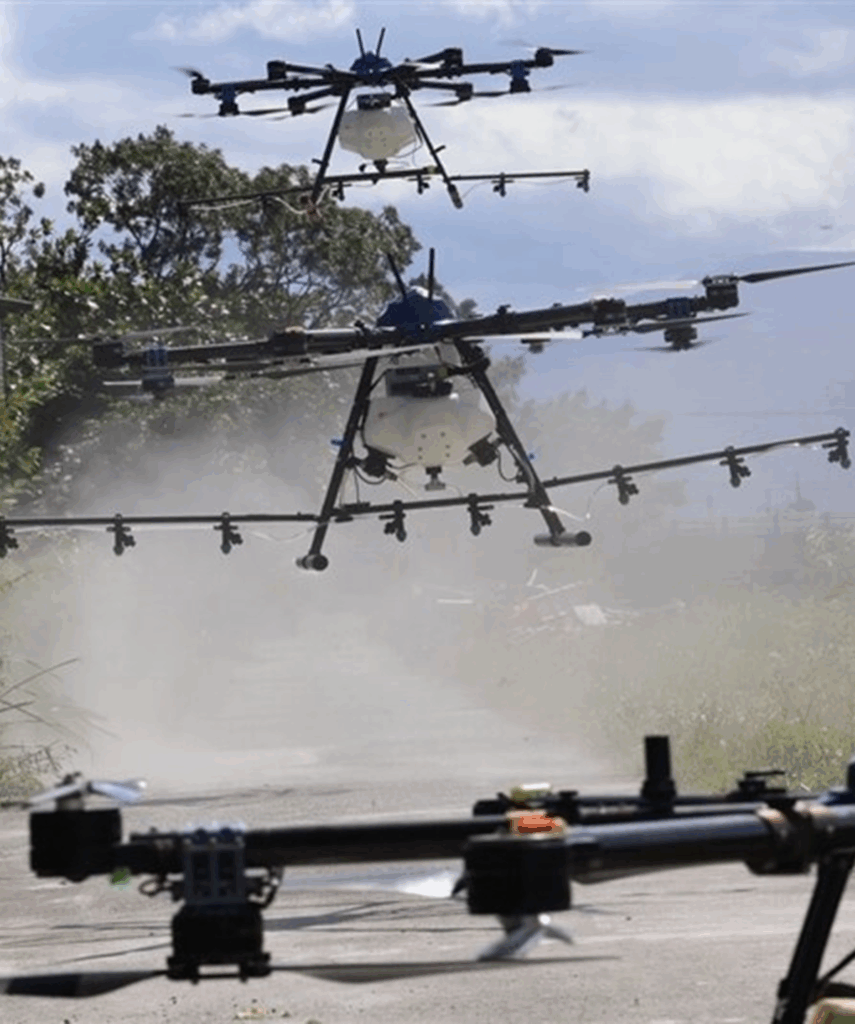
On Thursday, the Executive Yuan approved a proposal for indigenous production of drones, worth NT$44.2 billion (US$1.4 billion). Procurement will be funded via the โ€special resilience budgetโ€ that is under Legislative Yuan consideration. Notably, about 100,000 drones will be purchased under the program, of which 48,750 would be for national defense.
SOURCE: Chung Li-Hua & Hollie Younger, Taipei Times

ROCAF Solicits Bids for Anti-Drone Netting

On October 13, the Air Force Command Headquarters issued a preliminary inquiry for anti-drone equipment, including bird netting, tent pegs, and bamboo. The nets and other equipment will be deployed around Chiayi Air Base, where F-16V fighters are located. Similar nets are currently used in Ukraine to protect against first-person-view (FPV) drones.

SOURCE: Tu Ju-Min, Liberty Times

Harpoon Coastal Defense System Delivery Updates

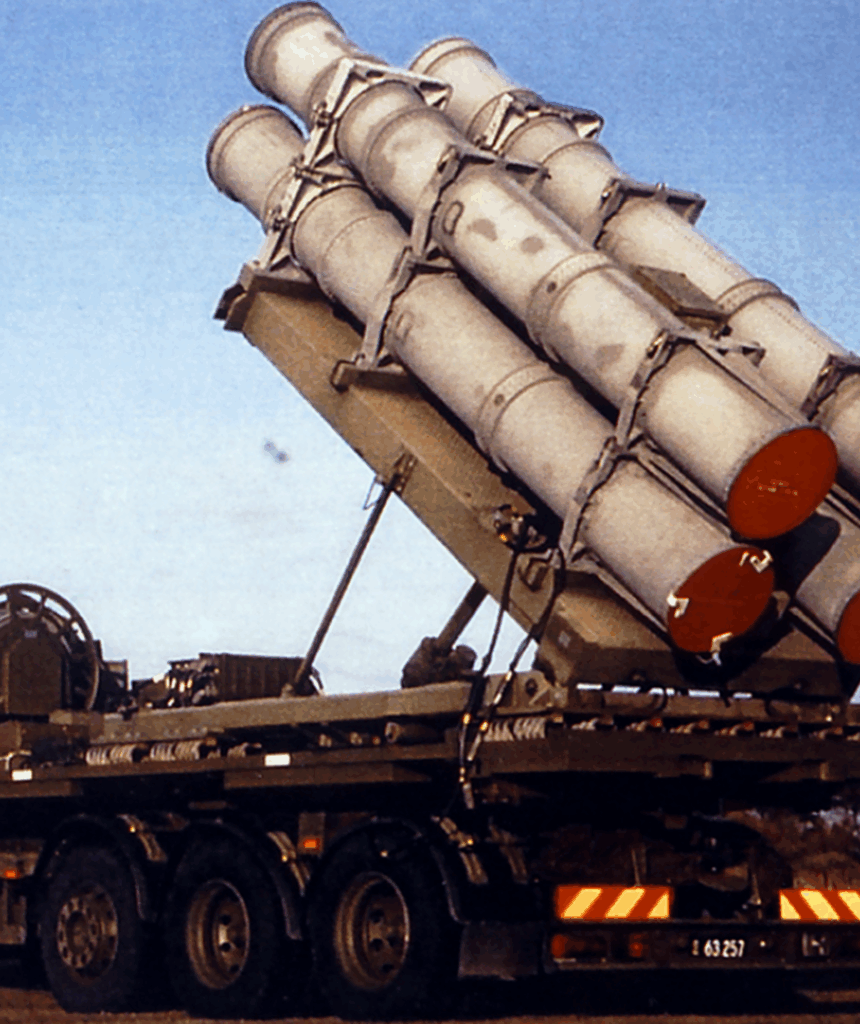
On Monday, Navy Chief of Staff, Vice Adm. Chiu Chun-jung provided an update to the LY on delivery of the Harpoon Coastal Defense System. As previously reported in September, Taiwan is expected to receive the first batch of Harpoon missiles (approximately ~20) for their existing 5 launchers by January 1, 2026. The new Littoral Combatant Command, under which the Harpoons will be based, will also be launched that day, per Chiu.
SOURCE: Matt Yu & Sean Lin, CNA

DIO Procures Tethered Drones, Stinger Simulators

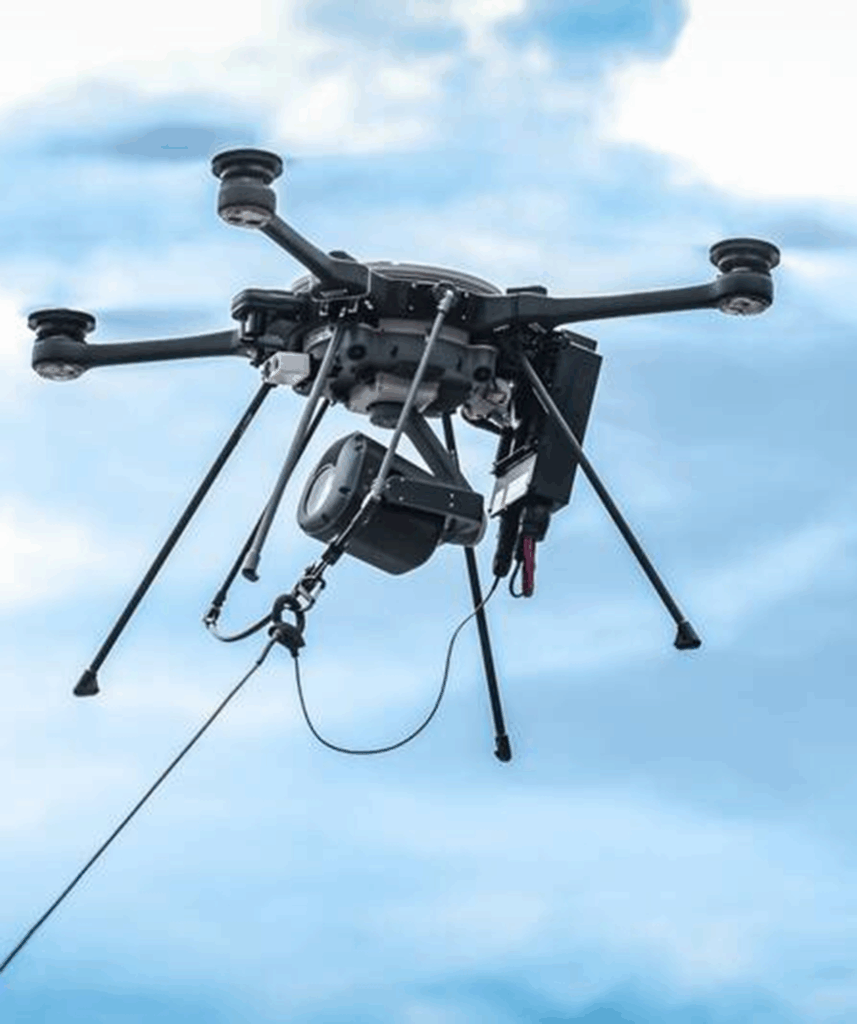
The MNDโ€™s Defense Innovation Office (DIO) has announced its plans to acquire tethered drones, as well as Stinger missile simulators via small-lot procurement and evaluation. Tethered drones are meant to provide continuous data-linking and power over a fixed location. All procurements are expected to take place in 2026.

SOURCE: Chen Chih-cheng, Liberty Times

F-16 Block 70 and Brave Eagle Delivery Updates

During an LY hearing on Monday, Air Force Chief of Staff, Lt. Gen. Lee Ching-jan said that the โ€œrisk assessment is quite highโ€ that delivery of the F-16V Block 70 fighters will be delayed until the end of 2026. He also said that funds to pay for the aircraft would be reserved from the Air Forceโ€™s budget. On Wednesday, it was also reported that 49 Brave Eagle advanced trainer jets were delivered by September 2025, with the remainder expected by 2026.

SOURCE: Lo Tien-pin & Chen Chih-cheng, Liberty Times

Weekly PRC Media Review: 10/17/25

Author: Ethan Connell

Contributing Researchers: Nathan Stolzenfeld


Here’s the first edition of the TSM PRC State Media Tracker. Each Friday, we highlight key excerpts from China’s state media organs, such as the Ministry of Foreign Affairs, Ministry of National Defense, and Taiwan Affairs Office, all below!

Ministry of National Defense Statement on “T-Dome” and Plans to Increase Taiwanese Defense Spending

17 October 2025

Zhang Xiaogang: Lai Ching-teโ€™s remarks distort historical facts and international legal principles. He is once again peddling the worn-out fallacy of โ€œTaiwan independence,โ€ dressing it up in new forms to curry favor with external forces while deceiving the people of Taiwan and provoking cross-strait confrontation. This once again proves that he is a thorough โ€œdestroyer of peaceโ€ and a โ€œtroublemaker,โ€ exposing his malicious intent to sell out, harm, and ruin Taiwan.

The Democratic Progressive Party (DPP) authorities, disregarding the livelihood and well-being of the people on the island, are recklessly rushing down the wrong path of militarism, deluding themselves that the illusory โ€œShield of Taiwanโ€ can boost their morale. In doing so, they are only accelerating Taiwanโ€™s slide toward the peril of war and becoming the source of chaos and instability in the Taiwan Strait. We sternly warn the DPP authorities: attempts to seek independence by relying on external forces are doomed to fail, and using force to resist reunification leads nowhere. The Peopleโ€™s Liberation Army remains a powerful force, unshakable in its mission to defend the nationโ€™s unity, and will continue to enhance its real-combat capabilities against separatism and external interferenceโ€”resolutely safeguarding national sovereignty and territorial integrity, and maintaining peace and stability in the Taiwan Strait.

Ministry of National Defense Statement on China-related Provisions in the Senate-passed NDAA

17 October 2025

Zhang Xiaogang: The negative China-related provisions in the U.S. bill constitute a blatant interference in Chinaโ€™s internal affairs, undermine Chinaโ€™s sovereignty, security, and development interests, and jeopardize world peace and stability. We firmly oppose this. The Taiwan question is the first and foremost red line that must not be crossed in Chinaโ€“U.S. relations. The U.S. playing the โ€œTaiwan cardโ€ is tantamount to playing with fireโ€”arming Taiwan is a dangerous gamble that will inevitably come at a heavy cost.

We urge the United States to adhere to the one-China principle and the three Chinaโ€“U.S. joint communiquรฉs, to honor its commitment not to support โ€œTaiwan independence,โ€ to stop sending the wrong signals to separatist forces, and to cease all forms of military contact with Chinaโ€™s Taiwan region, so as to avoid damaging relations between the two countries and their militaries, as well as peace and stability across the Taiwan Strait.

Ministry of National Defense Statement on China-related Provisions in the Senate-passed NDAA

17 October 2025

Zhang Xiaogang: The negative China-related provisions in the U.S. bill constitute a blatant interference in Chinaโ€™s internal affairs, undermine Chinaโ€™s sovereignty, security, and development interests, and jeopardize world peace and stability. We firmly oppose this. The Taiwan question is the first and foremost red line that must not be crossed in Chinaโ€“U.S. relations. The U.S. playing the โ€œTaiwan cardโ€ is tantamount to playing with fireโ€”arming Taiwan is a dangerous gamble that will inevitably come at a heavy cost.

We urge the United States to adhere to the one-China principle and the three Chinaโ€“U.S. joint communiquรฉs, to honor its commitment not to support โ€œTaiwan independence,โ€ to stop sending the wrong signals to separatist forces, and to cease all forms of military contact with Chinaโ€™s Taiwan region, so as to avoid damaging relations between the two countries and their militaries, as well as peace and stability across the Taiwan Strait.

Taiwan Arms Sale Backlog, September 2025 Update

Partial Deliveries, Future Schedules and Co-Production News

By Eric Gomez and Joseph Oโ€™Connor

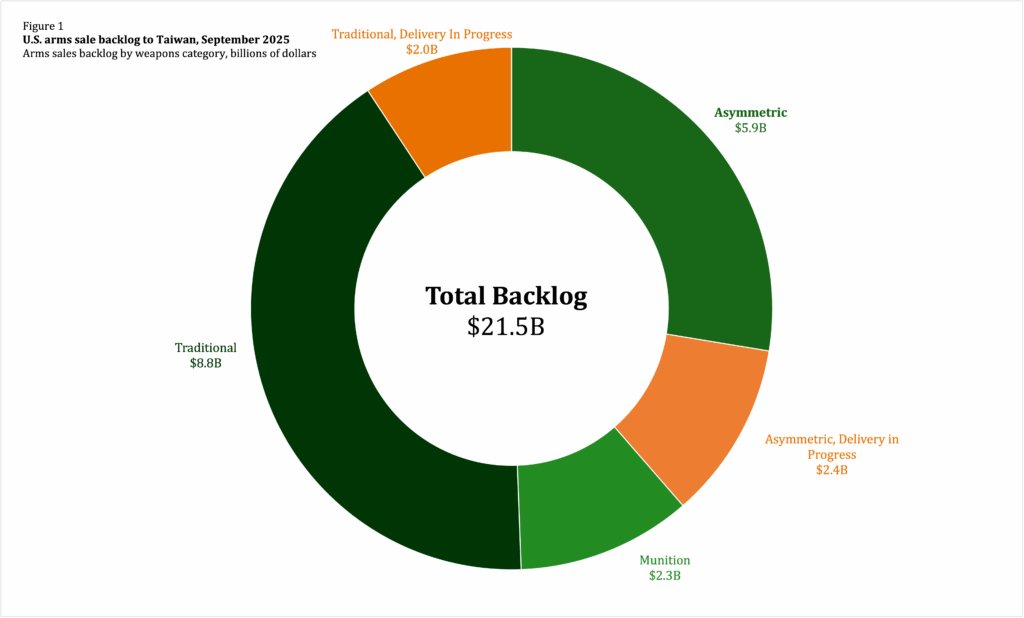
There were many updates to US arms sale cases to Taiwan, but no new Foreign Military Sales (FMS) cases were announced, and no deliveries were completed, so our dataset has not changed from last month. We assess the current backlog to be $21.54 billion.

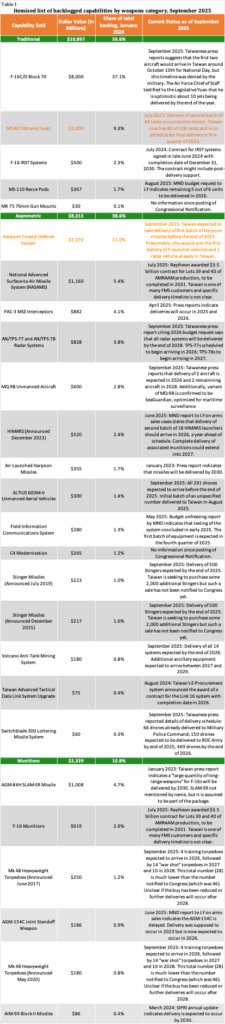
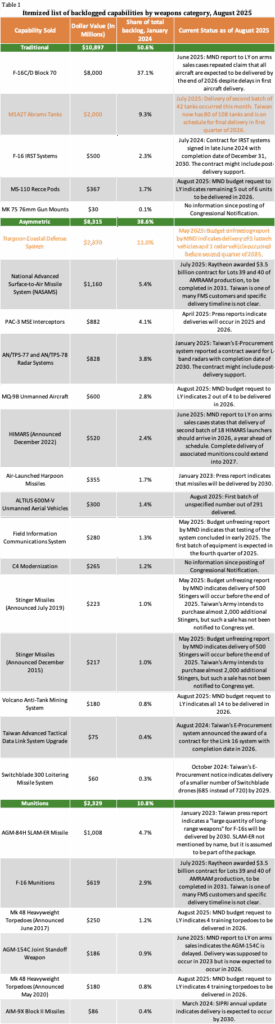
See Figure 1 for a breakdown of this total by category and Table 1 for an itemized list of the FMS cases in the backlog with the latest available information on their status.

Before getting into updates from September 2025, we wanted to explain why our dataset has remained fixed at $21.54 billion despite more information coming out about partial deliveries.

A Note on Methodology
Our dataset retains the full dollar value of an arms sale case as notified to Congress until the arms package is fully delivered. However, as 2025 has progressed, many packages have been partially delivered. This means that the datasetโ€™s top-line backlog dollar value of $21.54 billion is inaccurate.
While we are aware of this accuracy issue, we are not changing the datasetโ€™s methodology at this time and wanted to explain why.


First, FMS cases typically include many more pieces of equipment than the headline item. The sale of 108 Abrams tanks, for example, includes tank recovery vehicles, munitions, machine guns, and spare parts. Reducing the backlogโ€™s dollar value by a fraction of the number of tanks delivered would therefore also produce an inaccurate number.


Second, while it may be easy to track partial deliveries of weapons systems with a bigger media following, like tanks and aircraft, most of the backlog consists of platforms that are smaller in both size and level of attention, making it harder to determine when partial delivery has occurred.


Third, it is not always possible to determine the scale of a partial delivery. For larger capabilities like HIMARS, F-16s, and Abrams tanks, it is easy to keep track of what is in Taiwan and what is not, but for many other cases, precise numbers are not available. The partial delivery of Altius drones from August 2025 is an instructive recent example of this. As of the end of September, no specific number of drones has been mentioned as being delivered, only a โ€œfirst batch.โ€


While our current methodology is imperfect, due to data availability constraints, we are concerned that attempting to adjust the backlogโ€™s dollar value based on partial deliveries would also produce an inaccurate number. Therefore, we will stick with our existing methodology despite its flaws.


Additionally, we have made two changes to the Excel file that accompanies these blog posts. First, we deleted the sheet that tracked US arms transfers to Ukraine and their overlap with arms sales to Taiwan because of changes in the overall level of US military aid to Ukraine and a general lack of new information from the State Department. Second, the sheet tracking all FMS cases since the beginning of the Ukraine war had become very long, so we disaggregated it. The new sheets are now labeled โ€œGlobal FMS Cases 2022,โ€ โ€œGlobal FMS Cases 2023,โ€ etc.

New Information on Partial Delivery of Switchblade Drones
A press report from Taiwanโ€™s Liberty Times, citing the Ministry of National Defense (MND) 2026 budget request, indicates that, in addition to the partial delivery of Altius-600M drones last month, Taiwan has also started receiving Switchblade 300 drones. The Military Police Command has already received 66 Switchblade drones. The army is receiving 619 Switchblades, with 150 expected by the end of 2025 and 469 by the end of 2026. The original Congressional notification for the Switchblade sale had 720 drones, but from the press report and other sources, this number has evidently been reduced to 685.

The same press report also indicated that a second batch of Altius-600M drones should arrive in Taiwan by the end of 2025, which would complete the FMS case. If the defense industry can stick to these delivery schedules, it will be a significant achievement in the speedy delivery of FMS cases. Both cases were notified to Congress in mid-June 2024, meaning that it took just slightly over a year to go from notification to initial delivery. In the world of arms sales, this is a breakneck pace. Given Taiwanโ€™s urgent need for large numbers of unmanned systems to offset Chinaโ€™s military advantages, the rapid pace of Switchblade and Altius deliveries is a heartening development.

Updated Delivery Timelines for Multiple Arms Sales
We were able to find new information about delivery timelines for five arms sale cases in the backlog. These are covered in alphabetical order.


AN/TPS-77/78 Radar Systems
In October 2024, Congress was notified of an FMS case for an unspecified number of AN/TPS-77 and AN/TPS-78 mobile air defense radar systems valued at $828 million. A press report in September 2025 provided more information about the number of radar systems being procured and their delivery timeline. Taiwan is purchasing four TPS-77s and five TPS-78s. The TPS-77s will begin arriving in 2026, while the TPS-78s will begin arriving in 2027. Both radar systems should be completely delivered by the end of 2028.


F-16 Block 70s
Taiwanโ€™s first F-16 Block 70 aircraft rolled off the production line in March 2025, but the jets have not been flown to Taiwan yet. Taiwanese news sources reported that the first two aircraft would arrive in early October, around the time of the National Day holiday on October 10. The ROCAF has denied the press reports, but the Air Force Chief of Staff testified to the Legislative Yuan (LY) that he expects 10 aircraft to arrive before the end of the year.


Harpoon Coastal Defense System
The $2.37 billion sale of 100 ground-based Harpoon launchers, 25 radar vehicles, and 400 missiles is the largest asymmetric arms sale by dollar value in the backlog. In May 2025, the MND informed the LY that 5 launch vehicles and 1 radar vehicle had already been delivered. A press report from September 2025 indicates that Taiwan will take delivery of the first batch of ground-launched Harpoon missiles before the end of 2025. Assuming that there will be enough missiles to fully arm the five launchers, with four tubes apiece, this would be 20 total missiles.


MK-48 Heavyweight Torpedoes
Taiwan News, citing the MNDโ€™s budget request for 2026, reported in September that Taiwan will receive four training Mk-48 heavyweight torpedoes next year, with 14 additional torpedoes arriving in 2027 and 10 in 2028. There was a 2017 Congressional notification for 46 Mk-48s for $250 million, and it is not clear if these 28 total torpedoes represent a reduction in the original arms sale or if deliveries will continue past 2028. These torpedoes will arm Taiwanโ€™s new class of indigenously produced submarines, which have run into delays.


MQ-9B Drones
Last month, we shared information from the 2026 MND budget request saying that two MQ-9B drones are expected to be delivered next year. Additional reporting from September clarifies that the two remaining drones will be delivered in 2028, and that all four will be the SeaGuardian variant of the MQ-9B, optimized for maritime reconnaissance.

Barracuda Missile Co-Production
The final major update from September 2025 was an announcement by Taiwanโ€™s National Chung-Shan Institute of Science and Technology (NCSIST) that it will co-produce with Anduril Industries the Barracuda, a low-cost anti-ship missile. NCSIST claims that each missile will cost approximately $216,000 and be made in Taiwan. Little else is known about the Barracuda or the details of the co-production agreement, but if NCSIST and Anduril can indeed join forces to manufacture such missiles in Taiwan at scale, it would be a major positive development for Taiwan moving toward a sustainable asymmetric defense posture.

Co-production means that Taiwanese companies would produce American-designed weapons in Taiwan. Such agreements would require export licensing of sensitive US technology, which undergoes a complex and lengthy review and approval process. This may mean a slower up-front process, but successful co-production agreements between the United States and Taiwan would take pressure off an overburdened US defense industrial base while also giving the Taiwanese defense industry experience building more weapons. The Barracuda missile is not part of the backlog because it does not have an FMS case notified to Congress.

Conclusion
Although the dollar value of Taiwanโ€™s arms sale backlog has not changed, 2025 has been a busy year for US-Taiwan arms sales. There is considerably more information available about delivery schedules and partial deliveries than last year, including much-faster-than-expected timelines for critical asymmetric capabilities like man-portable drones. We hope our methodological note explains our reasoning for not adjusting the backlogโ€™s dollar value yet despite the partial delivery developments.

Visualization: 101st Amphibious Reconnaisance Battalion “Frogmen” Relocation

Author: Noah Reed


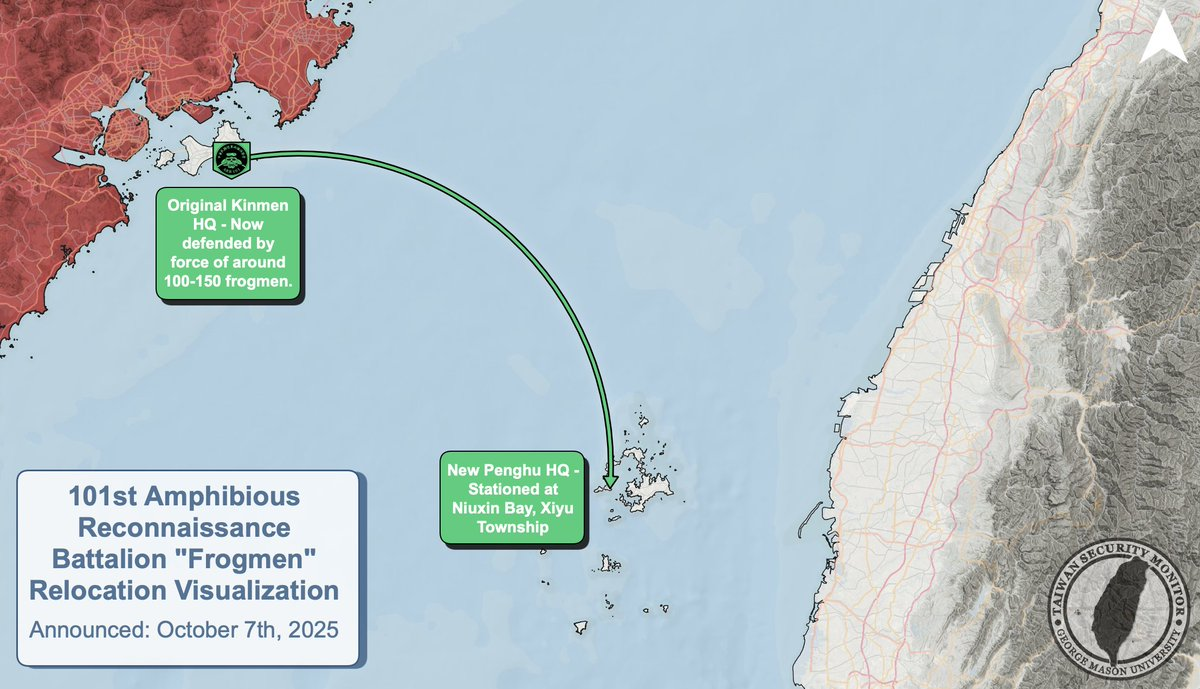
Per UDN & CNA, Taiwan’s 101st Amphibious Reconnaissance Battalion, commonly known as the โ€œSea Dragon Frogmenโ€, has completed its relocation from Kinmen to Penghu.

The ARB-101st operates as a special-purpose coastal surveillance, infiltration, and clandestine operations unit. Taiwan’s military says the move is due to “combat needs” and that training by US instructors will not be interrupted.

Taiwan Arms Sale Backlog, August 2025 Update

Altius Deliveries and 2026 Delivery Schedules

By Joseph Oโ€™Connor and Eric Gomez

August featured a major development in arms sales to Taiwan, as US manufacturer Anduril announced the delivery of the first set of Altius drones to the MND, just six months after the initial contract was announced. In late August, the 2026 defense budget request was submitted to the Legislative Yuan, and included a schedule of incoming deliveries, including MQ-9B drones and Mk 48 heavyweight torpedoes.

The overall size of the U.S. arms sale backlog to Taiwan remains $21.54 billion. For arms sales valued at over $1 billion, deliveries in progress are marked in yellow-orange in our visualizations. Figure 1 shows the current composition of the arms sale backlog by weapon category. Table 1 shows an itemized list of arms sales in the backlog with the most recently available information about their status.

Altius UAV Delivery

On August 4, Anduril founder Palmer Luckey visited MND officials, presenting them with the first delivery of Altius-600M drones. This is especially significant as this sale was only notified to Congress in June 2024, just over a year ago, and as Liberty Times reported, likely set a record for the fastest delivery of weapons in the last twenty years. The Congressional notification gives a dollar value of $300 million for 291 drones.

However, the number in the first batch was reported as unspecified. Thus, we regard the Altius-600M sale as being partially but not fully delivered. Because the sale is under the $1 billion threshold, we have not adjusted the visualizations. The dollar value of the arms sale backlog will decrease once all the drones are in Taiwan. Regardless, the rapid speed of the initial Altius delivery to Taiwan is a positive development given the importance of these types of asymmetric capabilities in fending off a Chinese invasion.

2026 Defense Budget Request and Schedule of Delivery

On August 29, the 2026 defense budget was submitted to the Legislative Yuan (LY) by the Executive Yuan (EY) for review and debate. As United Daily News reported, the budget request also contained specifics about scheduled arms deliveries in the next year.

First, two MQ-9B drones (of four) for the ROCAF are expected next year. Backlog followers will recall that in May, an MND budget unfreezing report indicated that all four would be delivered in 2026 due to concerns about where they would be based.

Next, the remaining batch of five MS-110 reconnaissance pods (of six total) are scheduled to be delivered. The last update to this was in June, when a press report indicated that the pods would begin arriving in 2025, contradicting SIPRIโ€™s claim that five had already been delivered.

Additionally, the report indicated that four Mark 48 heavyweight torpedoes of 46 will be delivered. Our last update to this sale was also in June, when we reported that delays to Taiwanโ€™s indigenous submarine program may affect torpedo deliveries. We suspect that the 2026 torpedoes may be practice or training torpedoes.

Lastly, the budget report stated that all 14 Volcano anti-tank mining systems would be delivered by the end of next year. The last update to this was in September 2024, when a press report indicated delivery by 2026.

Another note from the budget report: Liberty Times reported that the budget also includes a request for 9 NASAMS launchers and 339 missiles for the ROCAF, worth $3.63 billion or NTD $110 billion. This was moved from the 2025 confidential budget to next yearโ€™s public budget.

Conclusion

The Altius delivery is extremely significant and a potential sign of things to come for future arms sales deliveries, especially lower-cost, asymmetric items. The updated schedules for 2026 deliveries are mixed, but completion of MS-110 pods and Volcano systems are welcome in reducing the $21 billion backlog.

Weekly PRC Media Review: 10/31/25

Author: Ethan Connell


Hereโ€™s the latest edition of the TSM PRC State Media Tracker. Each Friday, we highlight key excerpts from Chinaโ€™s state media organs, such as the Ministry of Foreign Affairs, the Ministry of National Defense, and the Taiwan Affairs Office, all below!

Ministry of Foreign Affairs Statement on Taiwan Restoration Day

27 October 2025

Guo Jiakun: On the 80th anniversary of Taiwanโ€™s restoration, the Standing Committee of the National Peopleโ€™s Congress decided to establish Taiwan Restoration Day, demonstrating the firm resolve of all ethnic groups in China to uphold the One-China principle and defend national sovereignty and territorial integrity. It reflects the common aspiration of Chinese people at home and abroad, including compatriots in Taiwan, and highlights the strong will of the Communist Party of China to fulfill its historical mission and unswervingly achieve the complete reunification of the motherland.

The restoration of Taiwan is an important component of the victory of World War II and the postwar international order. The One-China principle is a universally recognized consensus and a fundamental norm in international relations. By establishing Taiwan Restoration Day, China has further consolidated the international consensus that there is only one China in the world and that Taiwan is an inseparable part of China. We hope that all countries will continue to adhere to the One-China principle, jointly promote a correct understanding of World War II history, resolutely safeguard the fruits of the victory in that war, and support the just cause of the Chinese people in opposing โ€œTaiwan independenceโ€ separatist activities and achieving national reunification.

Ministry of Foreign Affairs Statement on Lin Chia-lung’s Comments on the USโ€“Taiwan Relationship

30 October 2025

Guo Jiakun: Taiwan is an inalienable part of Chinaโ€™s territory. The greatest threat to peace and stability in the Taiwan Strait today comes from โ€œTaiwan independenceโ€ separatist activities and the indulgence and support of external forces. China firmly opposes any form of official exchanges between the United States and Taiwan, and hopes that the U.S. side will abide by the One-China principle and the three Chinaโ€“U.S. joint communiquรฉs, and handle Taiwan-related issues with utmost prudence.

The Democratic Progressive Party (DPP) authorities stubbornly seek independence by relying on foreign forces, using every occasion to peddle โ€œTaiwan independenceโ€ fallacies in an attempt to distort facts and mislead the public. Their actions are despicable and shameful, and their schemes are doomed to fail. No matter what the DPP authorities say or do, they cannot change the historical and legal fact that Taiwan is part of Chinaโ€™s territory, nor can they stop the unstoppable historical trend of Chinaโ€™s eventualโ€”and inevitableโ€”reunification.

Ministry of National Defense Statement on the U.S.โ€“Taiwan Defense Industry Conference

30 October 2025

Zhang Xiaogang: The DPP authorities, for the sake of one-party interests, pander to the United States and sell out Taiwan with no bottom line, recklessly pursuing militarization that hollows out Taiwan and pushes ordinary Taiwanese toward a disaster. No matter how many weapons the DPP buys, it will not change the cross-Strait military balance or alter the inevitable fate of โ€œTaiwan independenceโ€ collapsing.

The U.S. should fully recognize the extreme sensitivity and serious harm of arms sales to Taiwan, stop playing with fire on issues involving Chinaโ€™s core interests, and put its professed non-support for โ€œTaiwan independenceโ€ into practice. The PLA will, with greater capability and more reliable means, resolutely smash any โ€œTaiwan independenceโ€ plots and outside interference, and defend the countryโ€™s sovereignty and territorial integrity.

A report from China Central Television on the establishment of “Taiwan Restoration Day” in China, intended to “solidly advance the process of national reunification”:

24 October 2025

October 25th will now be “Taiwan Restoration Day” in China, according to state media reporting. The day will feature “commemorative activities in various forms” and is intended to โ€œsolidly advance the process of national reunification.โ€ The measure was adopted this week following a decision by the Standing Committee of the National People’s Congress. October 25th is already a national holiday in Taiwan, called “Taiwan Retrocession Day,” and celebrates the turnover of Taipei from Japanese to ROC forces following the end of WWII.

How Japan Can Unlock US Munitions Bottlenecks for Taiwan

Author: Jonathan Walberg


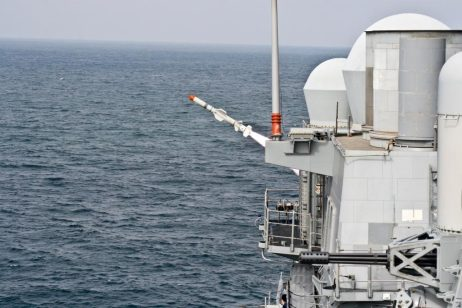
The guided missile cruiser USS Princeton (CG 59) launches an AGM-84 Harpoon Block II missile at the Naval Air Systems Command Sea Test Range off the coast of Southern California, Sept. 10, 2009. The Harpoon Block II is one of several arms systems sold but not yet delivered to Taiwan. Image Credit: U.S. Navy

U.S. arms deliveries to Taiwan are being slowed less by politics than by production and regulatory constraints. Bottlenecks in munitions and critical subcomponents (such as rocket motors, seekers, radomes, and launch hardware) are limiting output on U.S. production lines. Because those same lines support foreign military sales to multiple allies, delays to Taiwan also push deliveries for other partners further into the future.

Current export control rules, particularly the International Traffic in Arms Regulations (ITAR), restrict the ability of close allies to help relieve these industrial chokepoints, even when they have available capacity. The 2024 AUKUS ITAR framework with the United Kingdom and Australia shows that it is possible to reduce regulatory friction while maintaining strong security safeguards. A similarly narrow, mission-driven arrangement with Japan could allow co-production of low-sensitivity munitions subassemblies that are currently constraining U.S. output, without transferring sensitive technologies or design authority.

Read the full article here.

Taiwan Arms Sale Backlog, July 2025 Update

Second Batch of Abrams Tanks Arrives

By Eric Gomez and Joseph Oโ€™Connor

A second batch of Abrams tanks arrived in Taiwan in late July, but besides this development, July was quiet in terms of arms sales updates. From July 9-18, Taiwanโ€™s military conducted its annual Han Kuang series of exercises, which featured several developments of note.

The Taiwan Security Monitor (TSM) dataset only removes an arms sale from the backlog when it is fully delivered. Therefore, the overall size of the U.S. arms sale backlog to Taiwan remains $21.54 billion. However, for arms sales valued at over $1 billion, deliveries in progress are marked in yellow-orange in our visualizations.. Figure 1 shows the current composition of the arms sale backlog by weapon category. Table 1 shows an itemized list of arms sales in the backlog with the most recently available information about their status.

Han Kuang Exercise

The biggest development in Taiwan security news in July was the annual Han Kuang exercise. Han Kuang is Taiwanโ€™s largest and most highly publicized exercise. The 2025 iteration featured several notable changes from previous years. The TSM team conducted real-time open-source analysis of the Han Kuang exercise that can be found on our X account.

One of the most widely covered new aspects of the Han Kuang exercise was increased realism in engineering and logistics aspects of the exercise to better simulate wartime conditions. For example, military police troops practiced moving shoulder-fired Stinger missiles on Taipeiโ€™s underground metro system. Other aspects of improved realism in Han Kuang 2025 were the calling up of more reservistsโ€” 22,000 participated, a record highโ€” and the integration of two civil defense drills that occur concurrently with Han Kuang but were previously kept separate.

Abrams Tank Delivery and Other Arms Sale Updates

The biggest piece of arms sales backlog news in July was the arrival of a second batch of 42 M1A2T Abrams tanks. Taiwan has now taken delivery of 80 Abrams tanks. The final batch of 28 tanks is expected to arrive in the first quarter of 2026, which seems likely given the successful on-time deliveries of the first two batches. The Abrams sale, valued at $2 billion, was originally notified to Congress in July 2019.

As a reminder, the TSM dataset does not reduce the overall dollar value of the backlog for partial deliveries, which is why there is no change in the backlogโ€™s overall composition or dollar value from June 2025. The Abrams case, the third largest case by dollar value, has been a relatively smooth arms sale compared to other large cases in the backlog. Final delivery in early 2026 will bring the backlogโ€™s overall value below the $20 billion threshold, assuming there are no new arms sales announced between now and then.

There were two other small developments in July worth mentioning:

First, at the end of the month, Raytheon was awarded a $3.5 billion contract to produce Lots 39 and 40 of AIM-120 Advanced Medium-Range Air-to-Air Missiles (AMRAAM), with a completion date in the third quarter of fiscal year 2031. The AMRAAM is one of the most popular U.S. arms sale items, as shown by the 19 foreign country customers mentioned in the contract award announcement. It is unclear when Taiwan will receive the missiles and how many missiles are being produced. Taiwan is currently waiting for delivery of 123 AMRAAM-ER missiles from a 2024 sale of National Advanced Surface-to-Air Missile Systems and 200 AIM-120C-8 missiles from a 2023 sale of various F-16 munitions.

Second, Taiwanโ€™s Ministry of National Defense (MND) announced plans to purchase five types of commercial, off-the-shelf drones, with almost 50,000 to be purchased in 2026. Commercial drones have played a significant role in helping Ukraine stymie Russia and would be an important fixture of an asymmetric defense strategy for Taiwan. The MND has made welcome investments and efforts to expand its use of drones of various sizes and capabilities across the military, including purchasing approximately 1,000 small drones via U.S. arms sales (720 Switchblades and 291 ALTIUS drones).

While the overall value of the U.S. arms sales backlog to Taiwan did not change in July, the on-time delivery of a second batch of Abrams tanks is a good sign and a harbinger of a very large decrease in the backlog early next year.

Visualization: Deployment of U.S. Typhon Missile System in Japan

Authors: Chris Dayton, Joe O’Connor


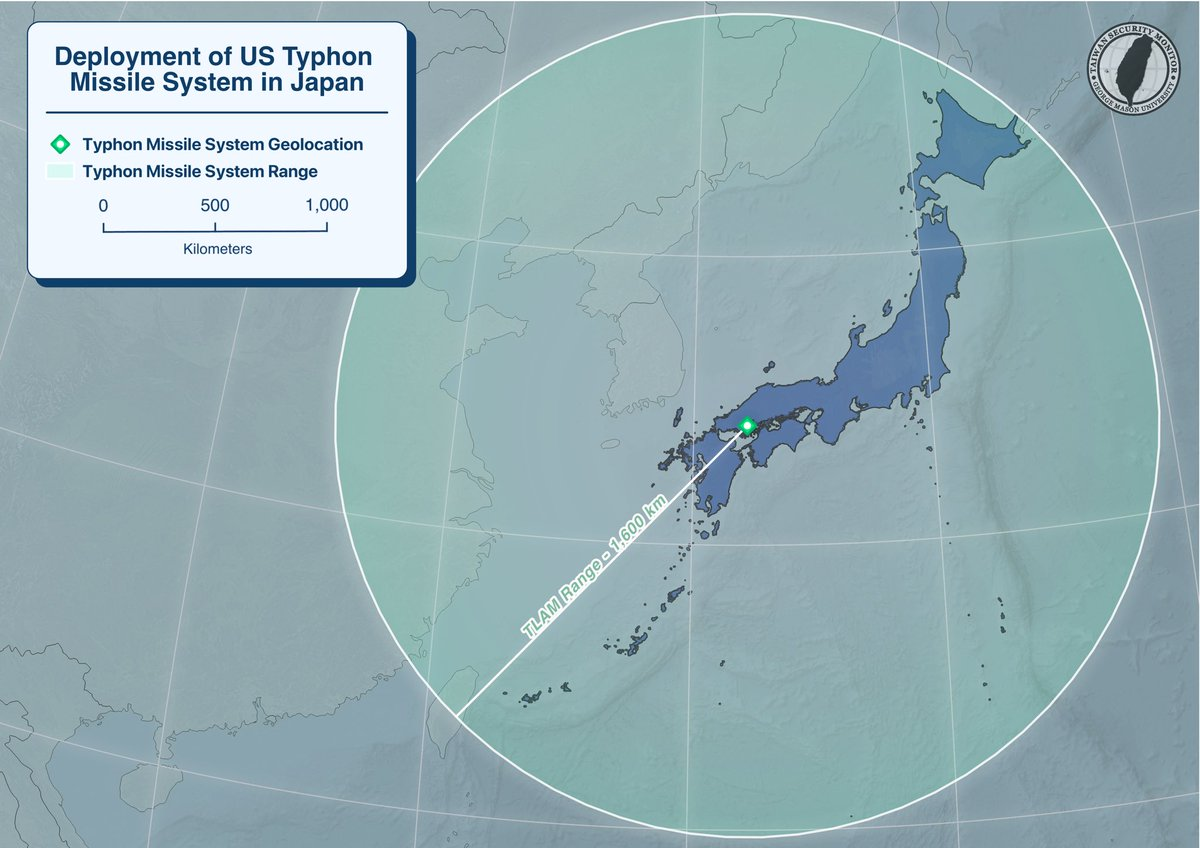
On September 15, a U.S. Typhon Missile System, capable of firing the Tomahawk Land Attack Missile (TLAM), was deployed to Marine Corps Air Station Iwakuni in southern Japan. This marks the first deployment of Typhon to Japan, and the platform will take part in the currently ongoing Resolute Dragon 25 exercise.

Below is our visualization of the Typhonโ€™s deployment location and operational range.

Visualization: Delared Scarborough Shoal “Natural Nature Reserve”

Author: Chris Dayton


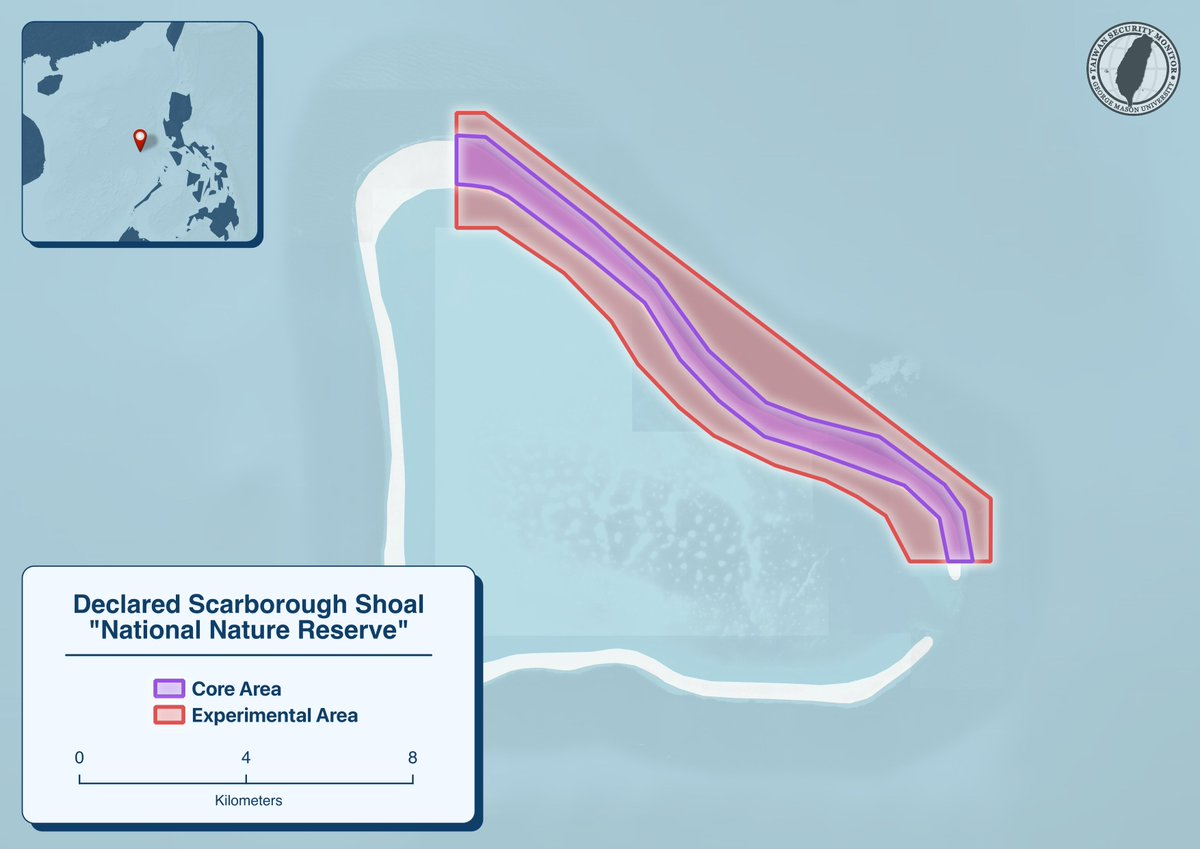
Following an incident on August 11th between a PLAN/CCG vessel and a Philippine Coast Guard vessel near Scarborough Shoal, the PRC recently announced the creation of a “national nature reserve” surrounding a portion of the Shoal.

Our visualization shows the core and experimental areas, which respectively limit certain activities within their areas.