Taiwan Security Monitor

Mainland authorities on the relevant side will actively make thorough preparations for all aspects of the additional Lunar New Year flights across the Taiwan Strait.

At the February 5 Taiwan Affairs Office press conference, a reporter asked: With the Lunar New Year and winter vacation approaching, Taiwan compatriots, Taiwan businesspeople, and Taiwan students on the mainland are paying close attention to the availability of tickets for returning to Taiwan. What are this yearโ€™s flight arrangements?

TAO spokesperson Chen Binhua responded: Direct cross-strait air links have greatly facilitated travel between people on both sides and have played an important role in improving the well-being of compatriots across the Strait. At present, due to interference by the DPP authorities, cross-strait routes and airports have not yet fully returned to normal. The mainland currently operates more than 300 weekly passenger flights on cross-strait routes from 14 cities. Compared with the pre-2020 situationโ€”when there were 61 mainland departure/arrival points and up to 890 weekly passenger flightsโ€”this remains a large gap, which has seriously affected cross-strait travel. There is a very strong call among compatriots on both sides for the full resumption of cross-strait direct flight routes and airports.

The Lunar New Year is the most important traditional festival of the Chinese nation, and Taiwan compatriots, Taiwan businesspeople, and Taiwan students are eagerly hoping to travel smoothly and return home for the holiday. Relevant mainland authorities will think what Taiwan compatriots think and act urgently on what they need, and will actively make thorough preparations for all aspects of additional Lunar New Year flights across the Strait. We hope the Taiwan side will follow public sentiment, promptly lift unreasonable restrictions on cross-strait air transport, and meet the travel needs of compatriots on both sidesโ€”especially Taiwan compatriots.
Weekly Arms Update: 2/4/26

Authors: Joe Oโ€™Connor, Shikhar Chaturvedi, Danielle Kremer, and Wyeth Lindberg

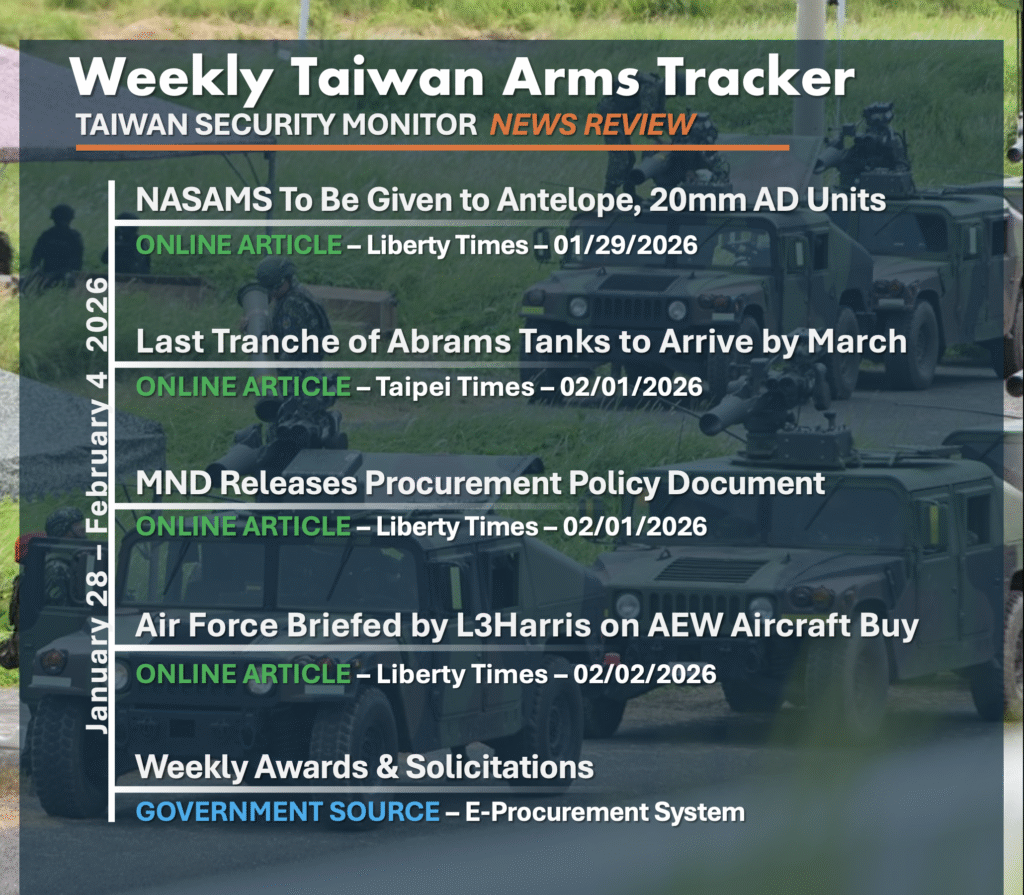
This week: MND announces that NASAMS will be deployed to current SHORAD units, a status update on last Abrams tank deliveries emerged, the MND released a policy document with details about naval, wheeled vehicle, and missile procurement, and the Air Force expressed interest in buying new early warning aircraft, alongside weekly awards and solicitations.

NASAMS To Be Given to Antelope, 20mm AD Units

As part of Taiwanโ€™s ongoing air defense modernization, the MND announced this week that US-sold National Advanced Surface-to-Air Missile System (NASAMS) medium-range air defense batteries will replace Antelope and 20-mm short-range capabilities currently used by air-defense units. Per our Taiwan Arms Sales Backlog, this case remains in progress since its notification in November 2024, though a recent US$698.95 million (NT$21.8 billion) U.S. Army production contract awarded to Raytheon for the first three NASAMS fire units signals the beginning of the manufacturing phase, with completion expected by 2031.

Last Tranche of Abrams Tanks to Arrive by March

Taiwanโ€™s MND reported that it would receive its final batch of 28 M1A2T Abrams tanks by March of this year, confirming an MND report to the LY submitted in May 2025. This will be the third batch of Abrams, originally approved in July 2019 sent from the United States to the Taiwanese Army. The first batch of 38 tanks arrived in December 2024, being commissioned in October 2025; and the second batch, sent in July 2025, is still awaiting commissioning; totaling 108 tanks. The sale, which remains backlogged until delivery is confirmed, is worth $1.28 billion USD (NT$40.52 billion).

MND Releases Procurement Policy Document

On Friday, the MND released their โ€œList of Regulated Military Products for the Second Half of 2025,โ€ a policy document outlining controlled procurement items and timelines for future projects, including naval vessels, wheeled vehicles, and indigenous missile programs.

Most importantly, the Navy listed plans to procure several classes of vessels, including five next-generation light anti-air frigates, five light anti-submarine frigates, two rescue ships, one submarine rescue ship, one new Yushan-class dock landing ship, and one oil/ammunition replenishment ship. These projects have a total estimated cost of NT$315 billion (US$9.97 billion) and are expected to be built between 2027 and 2040.

The MND also announced plans to produce 500 additional Clouded Leopard infantry fighting vehicle variants equipped with 105mm cannons, alongside 468 โ€œreconnaissance and tactical wheeled vehicles,โ€ beginning in 2028. Lastly, the list announced plans to procure 2 launchers and 128 missiles for the Strong Bow anti-ballistic missile defense system, still under development and part of the proposed โ€œT-Domeโ€ air defense system.

Air Force Briefed by L3Harris on AEW Aircraft Buy


Per UpMedia, the Air Force Command recently received a briefing from American defense contractor L3Harris on options for commercial procurement of early-warning aircraft. This comes after repeated requests for procurement of E-2D Hawkeye aircraft and MH-60R Black Hawk anti-submarine helicopters were blocked by the United States, and the Air Forceโ€™s desire to upgrade aging early warning airframes. L3Harris is the primary manufacturer of the EA-37B Compass Call aircraft, a modified Gulfstream G550 business jet that has recently been commercially sold to other US allies, including Italy.

Weekly Awards/Solicitations

Last Thursday, the Naval Command awarded Van Halteren Technologies a NT$756.06 million (US$23.89 million) open-ended contract for naval โ€œdrive and controlโ€ spare parts. The contract will be fulfilled throughout the southern region of Taiwan, including Kaohsiung.

Also on Thursday, the Air Force Command awarded a NT$589.83 million (US$18.64 million) contract to Rheinmetall Italia SPA for maintenance of aircraft training simulator systems. This contract is to be fulfilled throughout the southern region of Taiwan.

On Friday, the Naval Commandโ€™s Magong Logistics Support Command made a repeat bid solicitation for the renovation of Magong Naval Baseโ€™s mobilization depot, worth NT$49.00 million (US$1.55 million).

On Monday, the Army Logistics Command solicited bids for rifle magazine bags, worth NT$32.48 million (US$1.03 million).

On Wednesday, the Air Force Command solicited bids for a high-voltage power supply renovation turnkey project at Tainan Air Base, part of Tainan Airport, worth NT$402.67 million (US$12.75 million).

Weekly Security Review: 2/2/26

Author: Jaime Ocon


Welcome to the Weekly Security Review, where we highlight key military, security, and political developments around Taiwan in one straightforward summary!

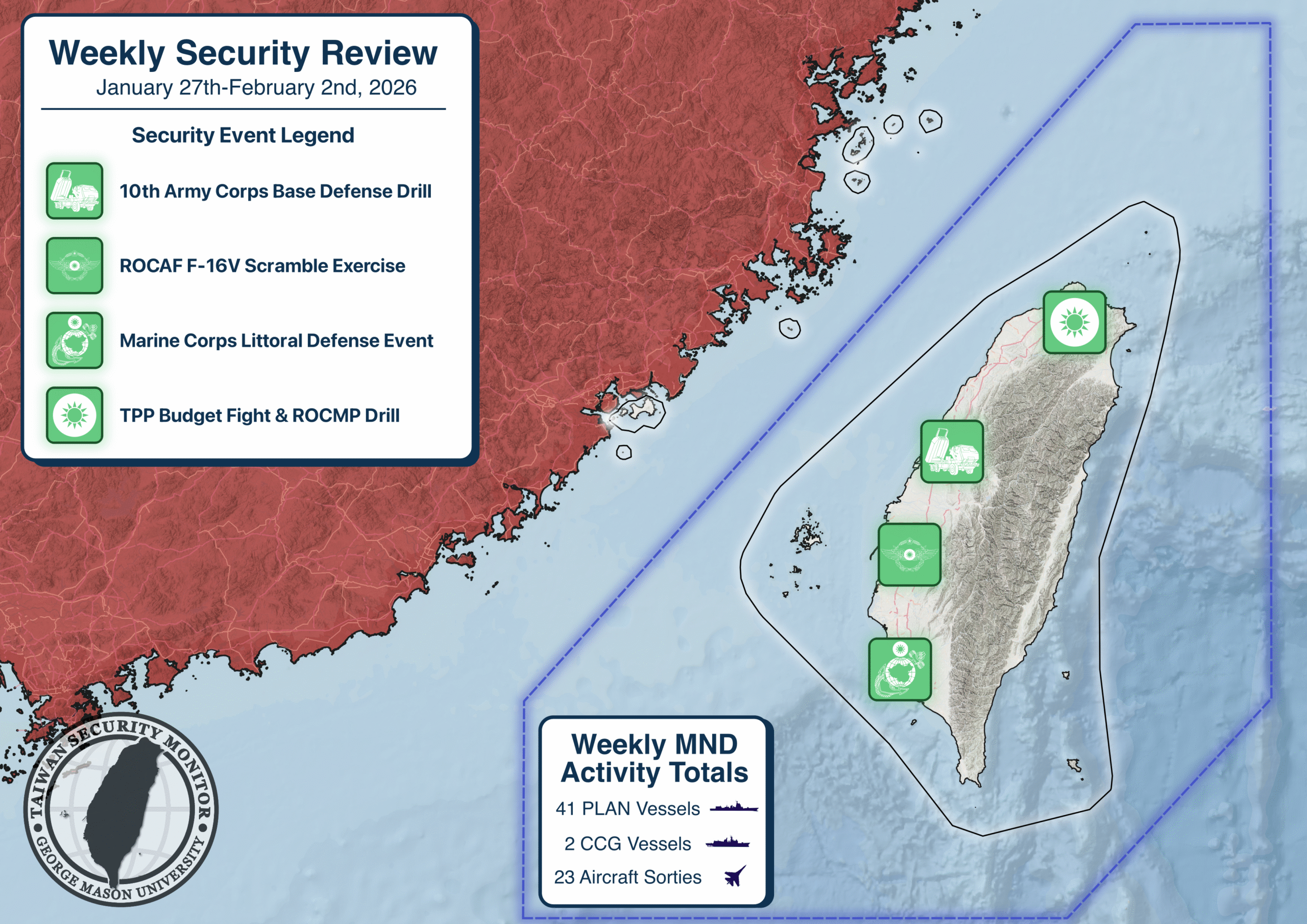
This week, Taiwanโ€™s military conducted nationwide combat readiness drills ahead of the Lunar New Year, military police sharpened urban-warfare and close-quarters combat skills, and opposition lawmakers moved to cut supplementary defense funding.

Military Conducts Lunar New Year Exercises 

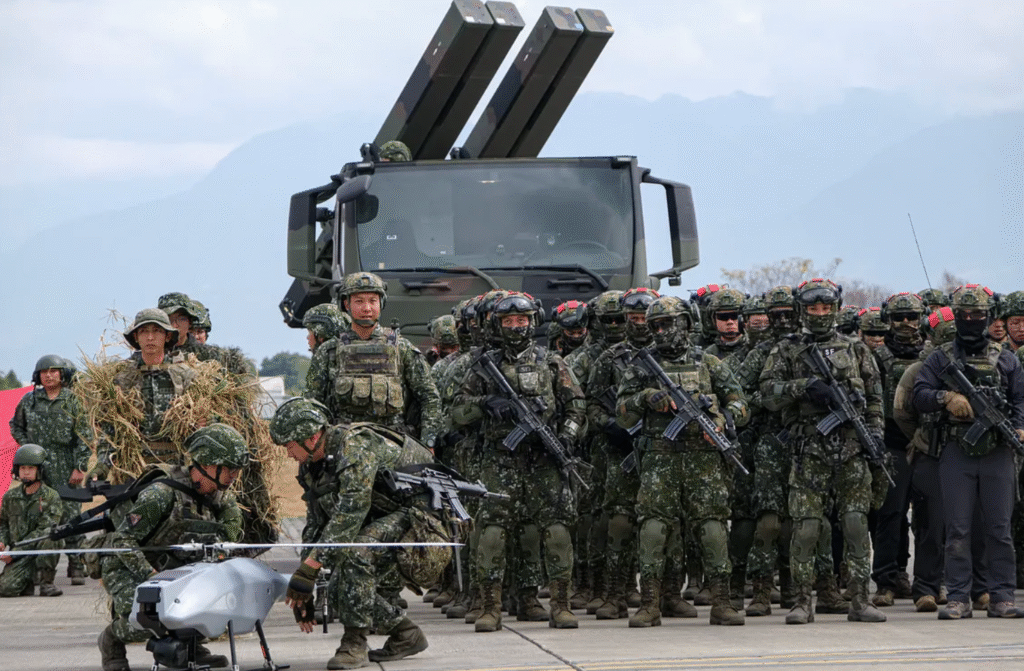
Ahead of the Lunar New Year, Taiwanโ€™s military is conducting its annual combat readiness exercises to demonstrate that the armed forces will maintain vigilance and operational preparedness throughout the holiday period. For this iteration, the military held air, land, and sea media demonstrations over three days. Itโ€™s important to mention that there were other LNY exercises conducted away from the cameras in other parts of the country. 

Army Deploys HIMARS, UAVs in Base Defense Drill 

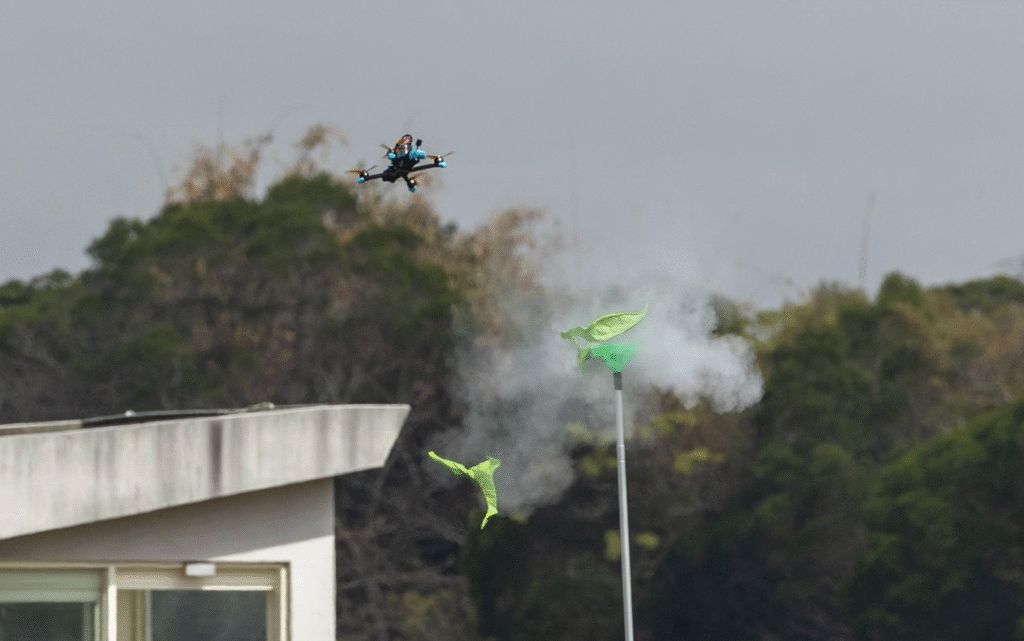
On Tuesday, 27 January, the 10th Army Corps conducted a โ€œrapid combat readinessโ€ scenario in which an opposing force, mostly fifth column operatives, attacked a small military base. The force was equipped with machine guns and used technical-style pickup trucks to launch an assault, with additional forces arriving by helicopter to support the broader attack. Taiwanโ€™s army responded to this scenario by deploying troops from the 586th Armored Brigade, 58th Artillery Command, supported by the 602nd Army Aviation Brigade. Assets used included M60A3 tanks, CM33/34 Clouded Leopard infantry fighting vehicles, Humvees equipped with TOW-2B anti-tank missiles, Land Sword-2 SAM systems, UH-60M Black Hawk helicopters, AH-1W Super Cobra attack helicopters, and, for the first time, HIMARS and small-scale first-person-view (FPV) drones.

The exercises demonstrated small-scale counterinsurgency operations. Further, the MND said the drills were an opportunity for the 58th Artillery Command to test the effectiveness of new equipment. Most notable was the use of new HIMARS systems and FPV drones to provide additional firepower against potential enemy attacks. FPV drones were used to target balloons simulating enemy targets, while HIMARS demonstrated mobile โ€œscoot-and-shootโ€ tactics,  coordinating fire with troops on the ground. The tactic involves friendly forces practicing target engagement before relocating to avoid detection from the enemy.

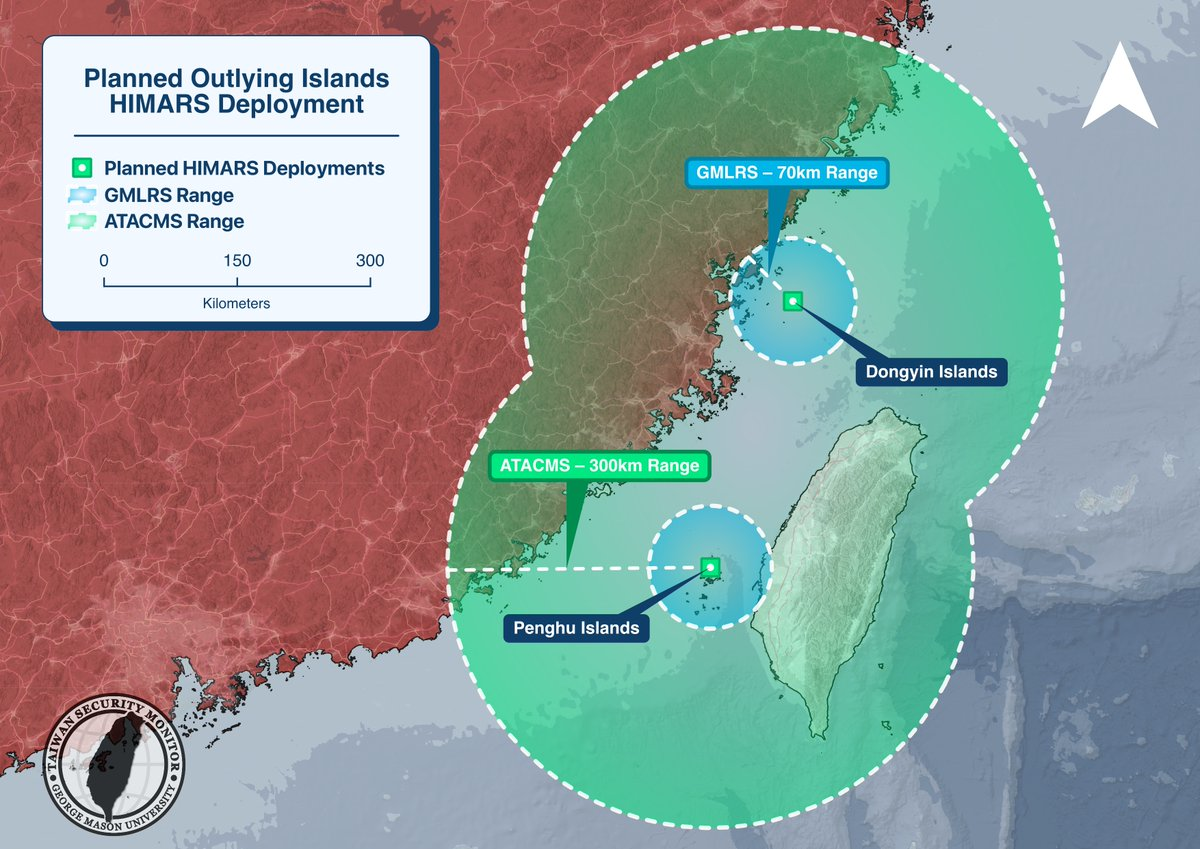
Itโ€™s important to remember that late last year, the U.S. approved the sale of 82 HIMARS systems and 420 ATACMS worth more than $4 billion. Taiwanโ€™s military considers these systems crucial to the islandโ€™s defense, and recent reports indicate the Army could deploy them to the outlying islands, closer to China. You can see our own visualization of that deployment here: 

Air Force Demonstrates F-16V Scramble, Air Defense Operationsย 

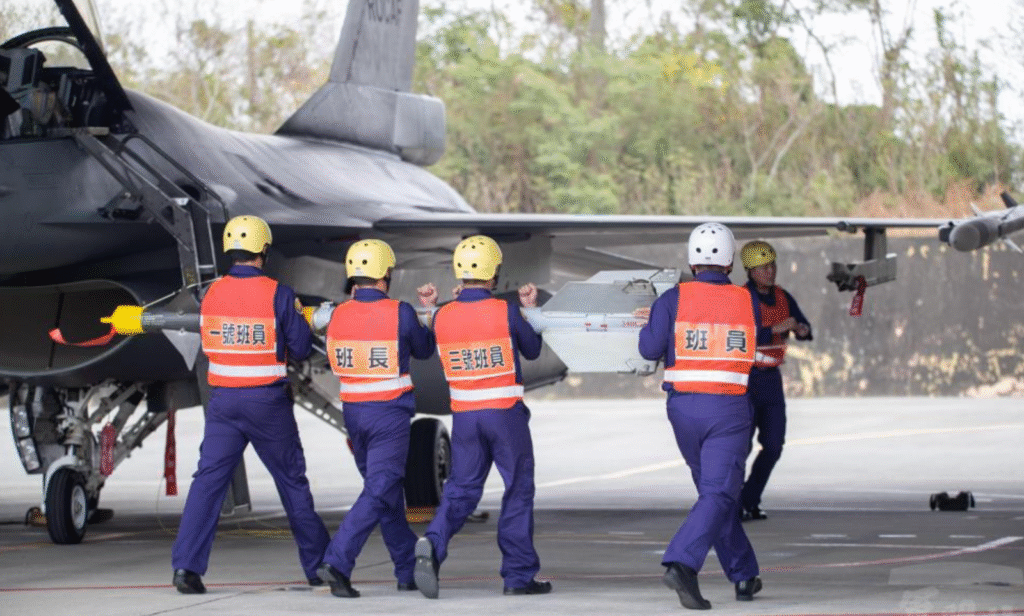
For two consecutive days (27-28 January), the media demonstrations moved south to Chiayi Air Base, home to the 4th Tactical Fighter Wingโ€™s F-16V fighter jets. The exercises began with a demonstration of how pilots scramble to intercept enemy aircraft flying close to the countryโ€™s airspace. From the moment the alarm sounded to take off, the entire procedure reportedly took place in under six minutes. The Air Force also demonstrated various daily maintenance operations, including weaponsโ€‘loading teams mounting different types of missiles, such as AIMโ€‘120 AMRAAMs and AIMโ€‘9 Sidewinders. Officers told the media that โ€œthrough integrated combat turnaround procedures, the aircraft can swiftly transition between airโ€‘toโ€‘air, airโ€‘toโ€‘sea and airโ€‘toโ€‘ground missions, enabling it to respond effectively to the rapidly changing conditions of the battlefieldโ€.ย 

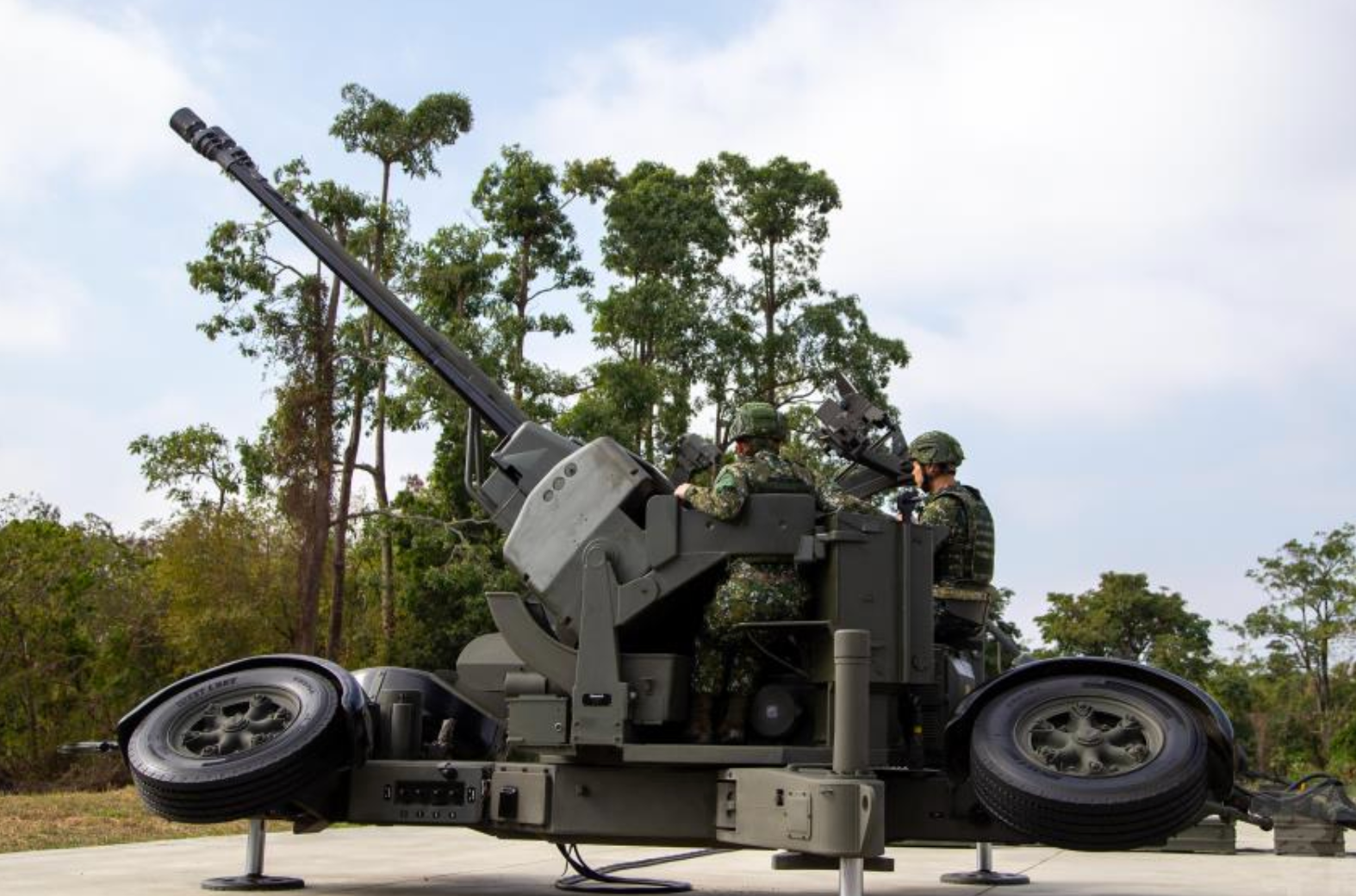
Along with the scramble exercises, units from the Air Forceโ€™s 301st Air Defense and Missile Battalion were also deployed to practice defending the surrounding airspace. Assets deployed included Skyguard GDFโ€‘006 antiโ€‘aircraft guns, Skyguard radar systems, and AIM-7 Sparrow SAM systems. 

Navy, Marines Showcase Coastal Strike and Littoral Defense Capabilities

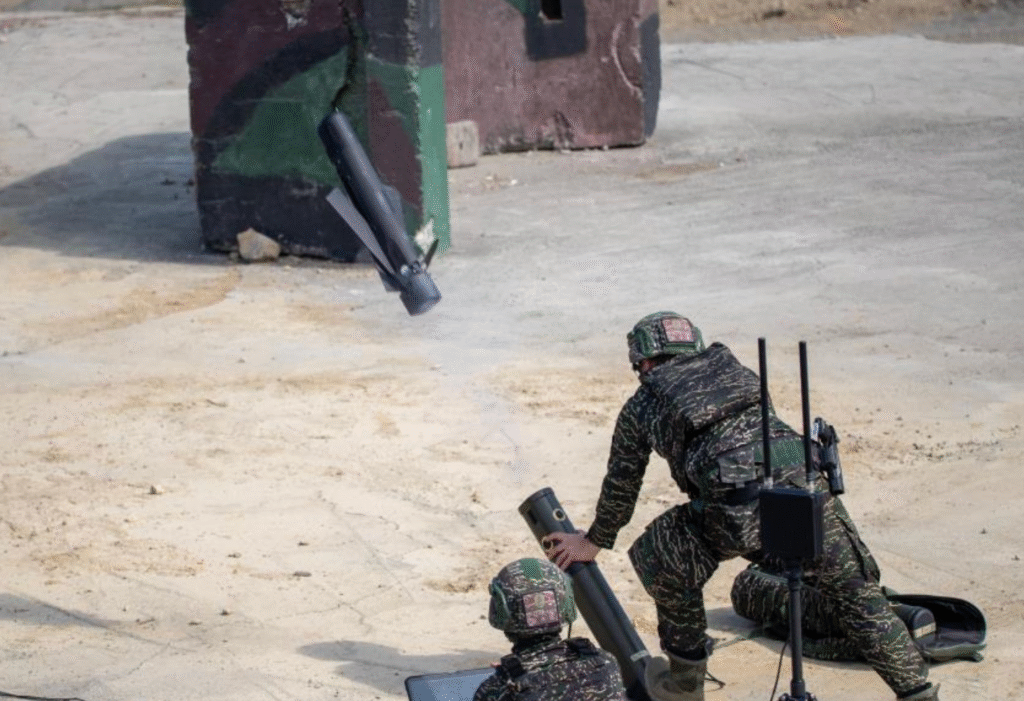
On the last day of the exercises (29 January), the Navy and Marine Corps hosted members of the media to demonstrate how they would defend against enemy vessels attempting to make it ashore. During the demonstration, ROCMC units held the first public live-fire test of the Chien Feng I attack UAV. This is a tube-launched drone that is similar to the American Switchblade system. One drone crashed shortly after takeoff, but the second backup drone launched successfully and struck a maritime target.ย 

One component of the drill also featured enemy vessels rushing to shore, as Marine units aboard M109 speedboats and Kuang Hua-class missile boats raced to intercept and defend against the attack. In the background and along the shore, Haifeng Brigade mobile anti-ship missile launchers were deployed alongside snipers hidden in the tall grass. The MND says the overall goal of the drill was to demonstrate โ€œintegrated reconnaissance UAVs, mobile radar, and missile unitsโ€ฆexecuting coordinated ISR, strike, and battle damage assessment operationsโ€.

After the exercise, the National Chung-Shan Institute of Science and Technology (NCSIST), which produces the Chin Feng I drone, said the initial crash was due to wing control failure and that reliability improvements are underway. 

Military Police Conducts Urban Defense Drills in Taipei

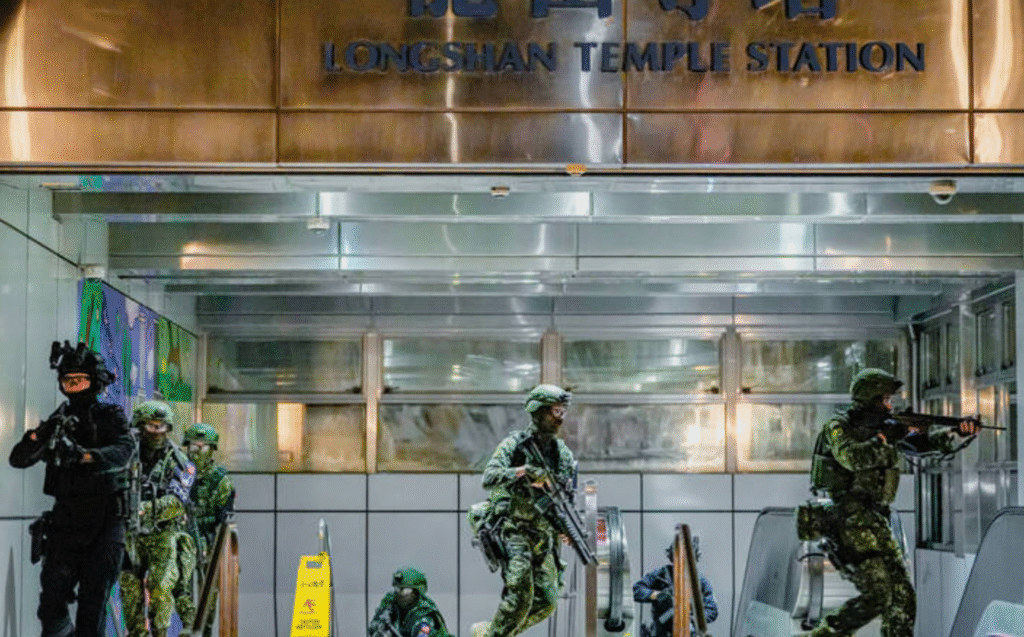
Taiwanโ€™s military police were also busy this week as some units completed a four-day, three-night training exercise in the capital, Taipei. The drills tested defenses in both urban and mountainous environments, close-quarters battle (CQB), and counter-drone tactics.

Units from the 211th, 229th, and 332nd Battalions operated under the Military Policeโ€™s 202nd Command. The 211th Battalion, or โ€œIron Guard Battalion,โ€ is responsible for guarding the Presidential Office and other key heads of state in downtown Taipei. Images show military personnel conducting CQB and seizing key positions as they exit Taiwanโ€™s subway system. Other scenarios also included simulated artillery, gas, and drone attacks, forcing troops to shift constantly between underground and surface operations.

During last yearโ€™s annual Han Kuang military exercises, ROCMP troops made headlines as they were filmed using the subway system to transport Stinger and Javelin missiles across the city. The MND says the Military Police play an important role in the countryโ€™s defense, as they would be responsible for protecting key infrastructure from sabotage, terrorism, and other internal attacks.  

TPP Agrees on Initial Passing of Supplemental Budget 

After weeks of back and forth, Taiwanโ€™s Legislative Yuan (LY) has voted to send the Taiwan People’s Party’s (TPP) proposed โ€œnational security and asymmetric warfare procurement billโ€ to committee review.

Originally, the ruling Democratic Progressive Party (DPP) proposed a special supplementary defense budget of roughly US$40 billion, comprising eight major categories of spending. You can find a complete breakdown here. 

The TPPโ€™s alternative proposal lists five line items and caps annual spending at US$12.6 billion, approximately one-third of the MNDโ€™s original request. The TPPโ€™s proposal keeps 5 cases, including additionalย  HIMARS, 60 Paladin self-propelled howitzers, Javelin anti-armor missiles, TOW anti-armor missiles, and ALTIUS loitering munitions. However, the proposal omits Tactical Mission Network software, AH-1W helicopter parts, and Harpoon missile support. Additional funding for production agreements with local arms industries, including the procurement of 200,000 drones and the T-Dome multilayered air defense system, has also been cut.ย 

Taiwanโ€™s MND says the TPPโ€™s proposal lacks supporting measures, and without proper funding, weapon systems and defense procurement would be harder to implement and may have serious long-term repercussions.

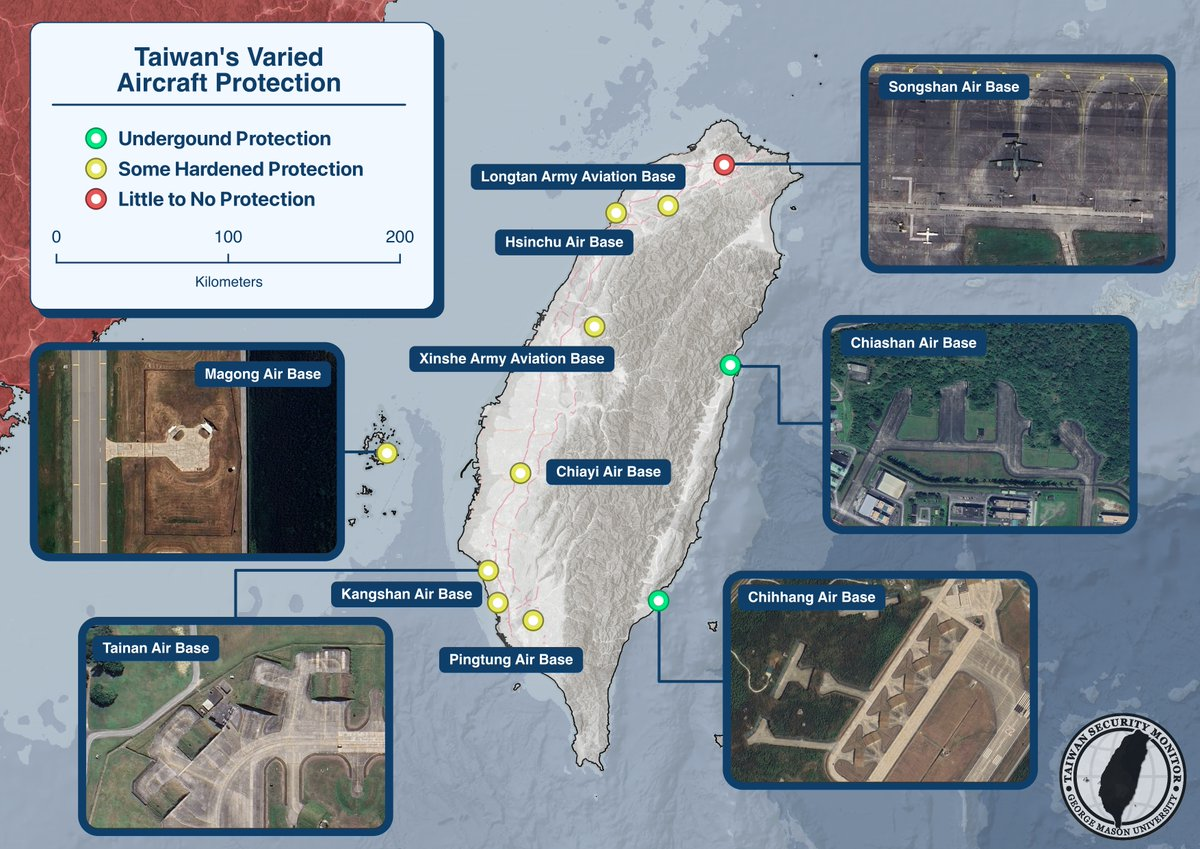
Visualization: Taiwan’s Varied Aircraft Protection


Authors: Chris Dayton & Noah Reed


Recent drone attacks on airfields in global conflicts have placed a heightened focus on aircraft protection at Taiwanโ€™s major military bases. Improving ROCAF survivability is now a priority for the MND, with plans to significantly expand hardened shelters at Chihhang AFB by 2028 to protect future F-16C/D Block 70 fighters. Above is our visualization of the level of hardened protection at each of Taiwanโ€™s airbases.

Justice Missionโ€“2025: The Narrative Battle Inside Chinaโ€™s Latest Taiwan Exercise

Author: Jonathan Walberg


When the Peopleโ€™s Liberation Armyโ€™s Eastern Theater Command launched its Justice Missionโ€“2025 exercises around Taiwan on December 29th, the visible indicators were familiar: joint air and naval maneuvers,[1] expanded operating zones, and calibrated signaling toward Taipei and external actors.[2] What distinguished this iteration was not just the scale or geometry of the activity, but the depth and coherence of the narrative campaign that unfolded alongside it.

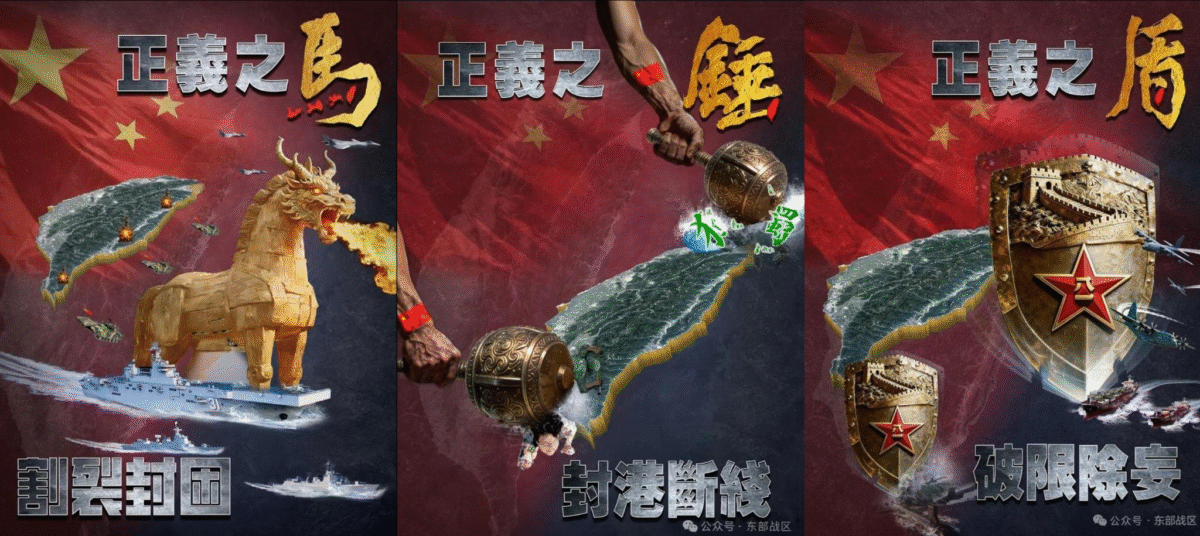
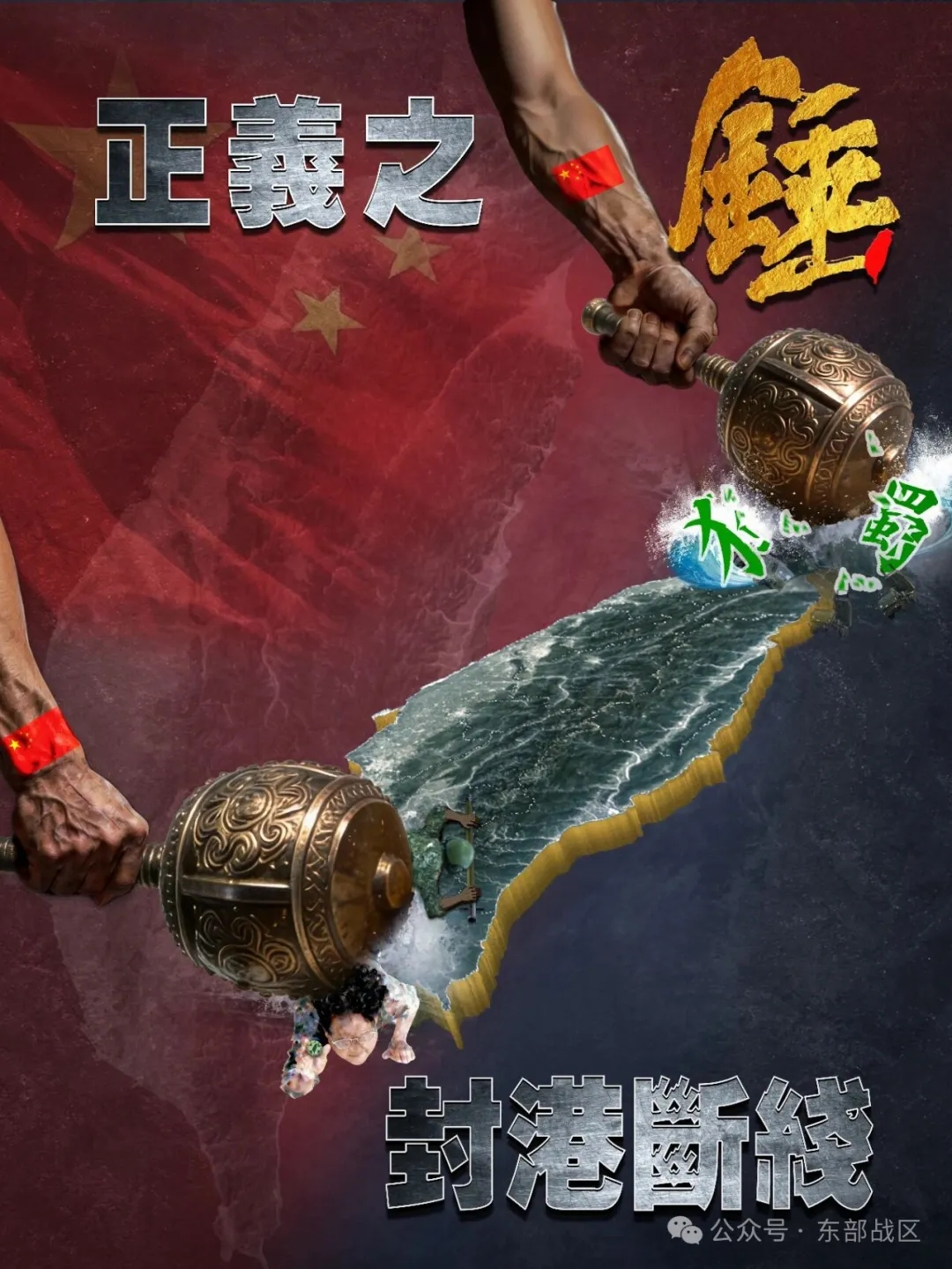
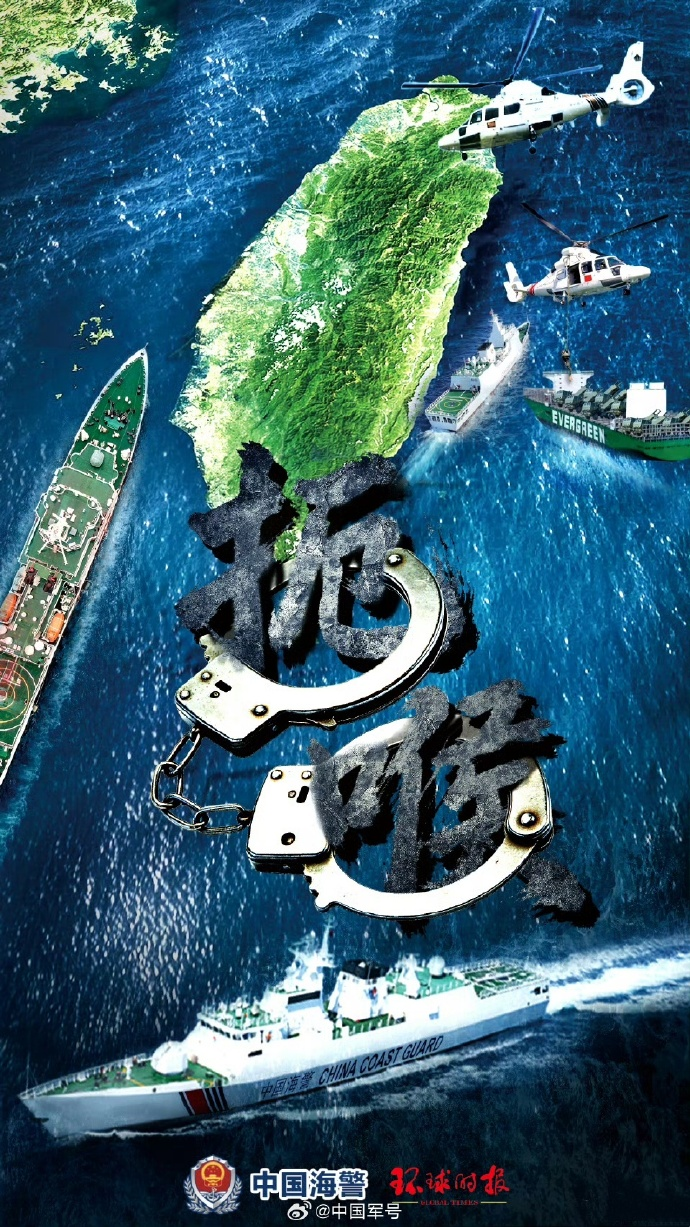
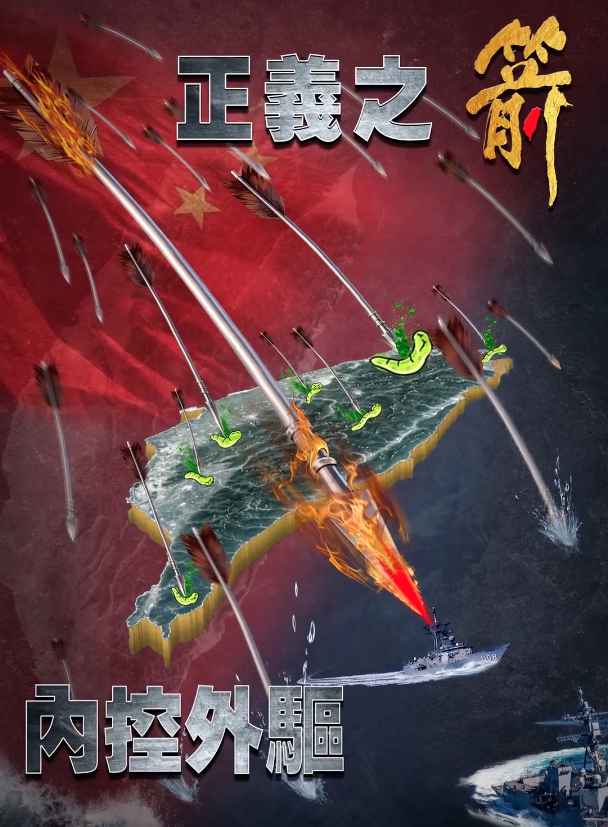
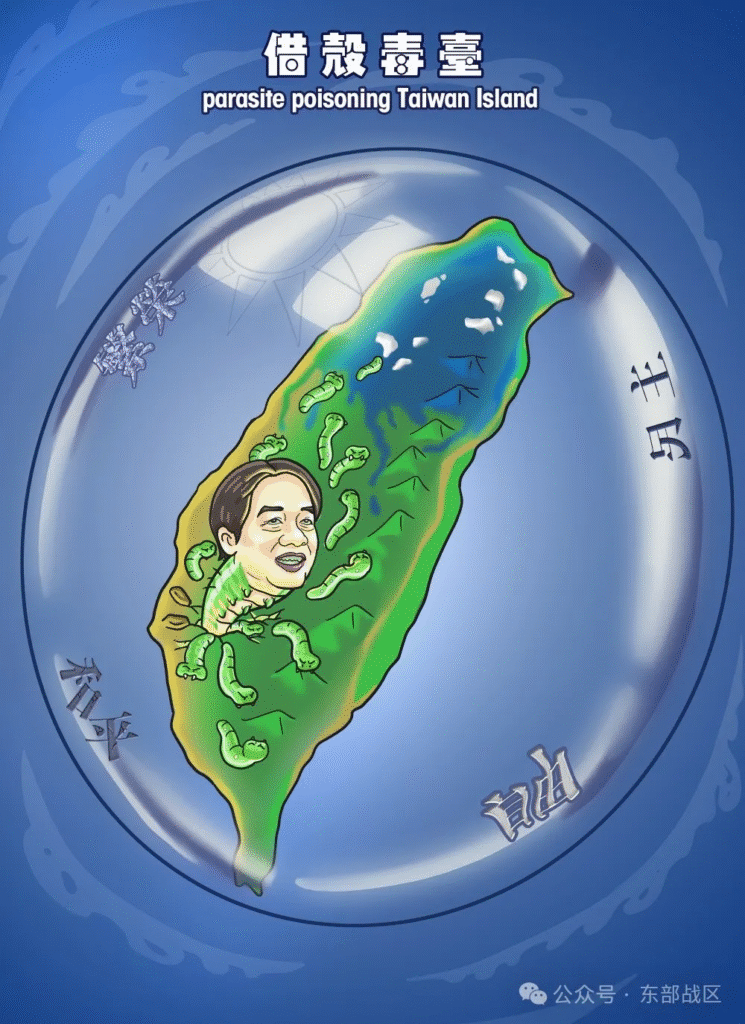
Rather than treating messaging as post hoc propaganda, Beijing used Justice Missionโ€“2025 to actively storyboard a theory of coercion in real time. A coordinated series of posters released through PLA and affiliated channels visually depicted how Beijing intends to punish pro-independence forces; why such punishment is legitimate, and why resistance is futile. In the days immediately following the exercise, Taiwan Affairs Office (TAO) press conferences reinforced and formalized those same narrative frames through authoritative political language.

Taken together, the posters and follow-on statements show how China increasingly integrates narrative warfare with military signaling to shape Taiwanese and American expectations about legitimacy, inevitability, escalation, and identity.

Justice as the Organizing Frame of the Exercise

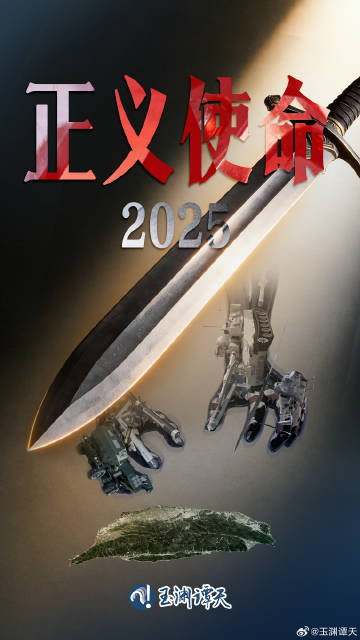
The narrative architecture of Justice Missionโ€“2025 begins with the exercise name itself: โ€œJustice Missionโ€“2025โ€ (ๆญฃไน‰ไฝฟๅ‘ฝโ€“2025). The term zhengyi (justice or righteousness) is used to morally pre-legitimize the operation. The exercise is framed not as discretionary pressure or political signaling, but as enforcement of an already rightful order. Beijingโ€™s message is that the mission is โ€œjustice,โ€ and resistance is implicitly illegitimate.

The narrative architecture of Justice Missionโ€“2025 begins with the exercise name itself: โ€œJustice Missionโ€“2025โ€ (ๆญฃไน‰ไฝฟๅ‘ฝโ€“2025). The term zhengyi (justice or righteousness) is used to morally pre-legitimize the operation. The exercise is framed not as discretionary pressure or political signaling, but as enforcement of an already rightful order. Beijingโ€™s message is that the mission is โ€œjustice,โ€ and resistance is implicitly illegitimate.

This framing was reinforced with a reiteration of messaging on โ€œHow to Curb โ€˜Independence.โ€ The phrasing is revealing. Instead of depicting a political dispute between two actors, the problem is framed as a technical control challenge: how to suppress or restrain a condition. โ€œIndependenceโ€ becomes something mechanical to be constrained rather than a societal preference or political identity. Taiwan itself is rendered visually as an objectโ€”cut by cables, fractured into segments, encircled by forcesโ€”reinforcing a systems-control worldview rather than a political one.

The TAO immediately echoed this framing after the exercise. Responding directly to Justice Missionโ€“2025, a spokesperson described the PLAโ€™s actions as โ€œa necessary and just measure to safeguard national sovereignty and territorial integrityโ€ and โ€œa stern warningโ€ to โ€œTaiwan independenceโ€ and โ€œexternal interference.โ€[4] The political language locks in the moral logic embedded in the posters: coercion is corrective, not escalatory.

Shield and Sword: Encoding Enforcement Logic

Several of the exercise posters establish a clear moral dualism between protection and punishment. โ€œShield of Justiceโ€ (ๆญฃไน‰ไน‹็›พ) depicts PLA symbolism forming a protective barrier over Taiwan, visually communicating that China is acting as a stabilizing force safeguarding rightful order.[5] This poster also features a shield bearing the Great Wall of China forcing American C-130s to turn away from Taiwan. The messaging here is clear: To the people of Taiwan, America wonโ€™t be able to come to your aid. To Washington, your efforts to intervene in a contingency will be futile compared to the โ€˜great powerโ€™ of China, as shown through the symbolism of the Great Wall.

Building off of this messaging is another poster titled โ€œSword of Justiceโ€ (ๆญฃไน‰ไน‹ๅ‰‘), which depicts a blade striking downward into the island.[6] Justice is not passive; it enforces compliance. Punishment is portrayed as morally righteous rather than coercive. Together, the shield-and-sword motif communicates a simple conditional logic: alignment brings protection, resistance brings righteous force.

This same logic surfaced in TAO messaging tied to the exercise. Officials accused the Lai administration of โ€œrecklessly colluding with external forces,โ€ โ€œselling out Taiwan,โ€ and pushing the island toward confrontation, while warning that such actions โ€œwill be firmly struck down.โ€[7] The sword imagery becomes political language: punishment is framed as an unavoidable consequence rather than a choice. Another TAO briefing extended the sword narrative outward toward external actors, warning that any country or force that โ€œplays with fire on the Taiwan question will inevitably pay a price,โ€ reinforcing deterrence signaling that accompanied the exerciseโ€™s expanded operational footprint.[8]

Systemic Isolation: Ports, Cables, and Everyday Vulnerability

One of the most analytically important themes of the Justice Missionโ€“2025 posters is the emphasis on systemic isolation rather than battlefield confrontation. โ€œSeal Ports, Cut Linesโ€ (ๅฐๆธฏๆ–ญ็บฟ) depicts hammers crushing Taiwan in the North and South, and maritime access constrained.[9] Another poster shows handcuffs on the island, and Chinese Coast Guard vessels โ€œchoking offโ€ Taiwanโ€™s ports.[10] In this messaging, Taiwanโ€™s vulnerability is framed not primarily in terms of military defeat, but in terms of disrupted connectivity: data flows, trade routes, energy supply, logistics, and digital lifelines.

This logic is paired with a carefully calibrated assurance. The posters and TAO statements consistently distinguish between โ€œTaiwan independence forcesโ€ and the broader population, framing coercion as corrective rather than collective. This is a classic coercive move: threats are made credible by being conditional, while reassurance is offered to those willing to disengage from the targeted behavior. The message is not that Taiwan as a society must be destroyed, but that normalcy will return once pro-independence leadership is rejected.

This imagery subtly shifts the imagined battlespace away from amphibious invasion toward persistent, incremental coercion applied against civilian infrastructure and economic normalcy. The message is that pressure can be sustained below traditional thresholds of war while still imposing cumulative strategic effects.

Post-exercise TAO messaging reinforced this normalization logic through law-enforcement framing. In a briefing addressing mainland China Coast Guard activity near Kinmen, the spokesperson asserted that there are โ€œfundamentally no such things as so-called โ€˜restricted watersโ€™โ€ and that patrols are conducted โ€œin accordance with the lawโ€ to maintain navigation order and protect fishermen.[11] Maritime pressure is reframed as routine governance rather than escalation.

This political framing directly complements posters featuring handcuffs and Coast Guard imagery. Together, they normalize gray-zone pressure as administrative control rather than crisis behavior, as well as push the norm of Chinese ships being able to interdict vessels heading to Taiwanโ€™s ports.[12]

Deter Externally, Contain Internally: Managing Escalation

Another poster cluster encodes escalation management logic. โ€œCounter External Influenceโ€ (ๅๆŽงๅค–่ฐƒ) sits above a set of arrows in flight at Taiwan, implicitly threatening the Taiwanese people.[13] The arrows are piercing green worms, a reference to an earlier 2025 poster displaying Taiwan President Lai Ching-te as a green worm.[14] The imagery reflects not operational anti-access in the narrow military sense, but a narrative adaptation of anti-access logic. Rather than depicting missiles denying airspace or sinking ships, the posters show arrows striking Taiwan itself, signaling that foreign involvement will translate into intensified pressure on the island. The intended audience is therefore not primarily external militaries, but Taiwanese observers being warned that outside intervention will not insulate them from coercion. In this sense, the messaging exploits both Taiwanese vulnerability and U.S. preoccupation with anti-access scenarios, emphasizing political consequences over operational mechanisms.

Language from the TAO tied directly to Justice Missionโ€“2025 reinforced this precise logic. Officials emphasized that the PLAโ€™s actions target โ€œseparatist activities and external interferenceโ€”not the people of Taiwan,โ€ while urging Taiwanese citizens to recognize the danger of their leadershipโ€™s course and oppose independence.[15] The narrative pressures Taiwan internally while attempting to reduce reputational costs externally.

Precision and Exposure: Targeting Critical Nodes

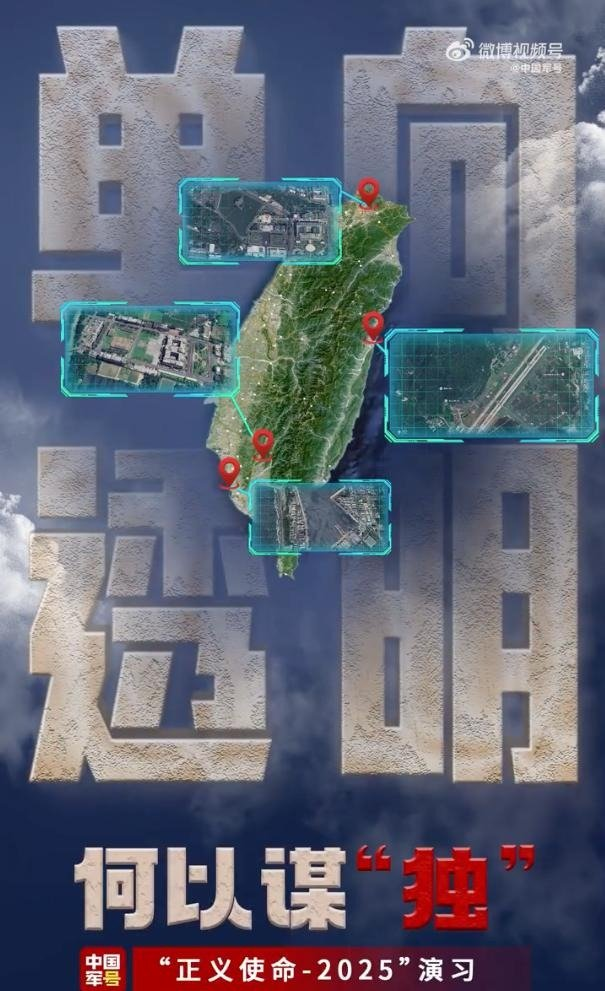
Several posters emphasize surveillance and precision dominance. โ€œLock the islandโ€ (้”ๅฒ›) overlays Taiwan with targeting graphics and highlighted infrastructure nodes. Below it, the message of โ€œHow could you possibly pursue โ€˜independenceโ€™?โ€ (ไฝ•ไปฅ่ฐ‹โ€œ็‹ฌโ€ )[16]. The narrative message is omniscience: critical systems are known, mapped, and vulnerable. Coercion is framed as precise and technologically controlled rather than indiscriminate. Beijing intentionally couples its supposed revelation of Taiwanese capabilities in an attempt to puncture the hope the Taiwanese have in their own military. 

This reinforces deterrence through perceived exposure rather than sheer destructive threat. Psychologically, it compresses uncertainty and signals that escalation pathways are already mapped.

Narrative Warfare as Operational Preparation

Justice Missionโ€“2025 demonstrates that China increasingly treats exercises as integrated narrative operations rather than isolated military demonstrations. The posters storyboarded a coercive pathway: justice and legitimacy; suppression of independence; protection and punishment; systemic isolation; escalation control; precision targeting; and administrative normalization. The TAO then formalized that storyboard into authoritative political language.

The objective is not merely intimidation. It is expectation management: normalizing coercion, relocating blame, compressing escalation timelines, and psychologically conditioning audiences toward acceptance of pressure as lawful and inevitable through calibrated threats and assurances that deliberately play to existing fears: Taiwanese fears of isolation and cutoff, accommodationist hopes that restraint will restore normalcy, and external concerns that China can exploit anti-access dynamics to keep interveners out.

For analysts and policymakers, the implication is methodological as well as strategic. Monitoring aircraft counts and maritime tracks alone no longer captures the full signaling environment. Visual messaging, slogan sequencing, and political language now provide early indicators of how Beijing conceptualizes coercive pathways and escalation control.

Justice Missionโ€“2025 illustrates how narrative warfare is being embedded directly into Chinaโ€™s military signaling toolkit, shaping how future coercion will be interpreted long before a crisis unfolds.


[1] https://x.com/TaiwanMonitor/status/2005636702183039129?s=20

[2] https://tsm.schar.gmu.edu/visualization-historical-pla-exercise-zones-2022-2025/

[3] https://x.com/TaiwanMonitor/status/2005431801721094379?s=20

[4] https://tsm.schar.gmu.edu/taiwan-affairs-office-the-plas-military-operations-are-a-solemn-warning-to-taiwan-independence-separatist-forces-and-external-interference-forces/

[5] https://x.com/TaiwanMonitor/status/2005453180860084427?s=20

[6] https://x.com/TaiwanMonitor/status/2005456163249192993?s=20

[7] https://tsm.schar.gmu.edu/taiwan-affairs-office-any-taiwan-independence-separatist-actions-will-never-be-tolerated-and-will-be-met-with-severe-punishment/

[8] https://tsm.schar.gmu.edu/taiwan-affairs-office-any-country-or-force-that-plays-with-fire-on-the-taiwan-question-will-inevitably-pay-a-price/

[9] https://x.com/TaiwanMonitor/status/2005807062735790564?s=20

[10] https://x.com/TaiwanMonitor/status/2005837836851855481?s=20

[11] https://tsm.schar.gmu.edu/taiwan-affairs-office-the-coast-guard-is-conducting-law-enforcement-patrols-in-the-relevant-waters-to-safeguard-the-lives-and-property-of-fishermen-on-both-sides-of-the-taiwan-strait/

[12] https://x.com/TaiwanMonitor/status/2005837836851855481?s=20

[13] https://x.com/TaiwanMonitor/status/2005456163249192993?s=20

[14] https://www.globaltimes.cn/page/202504/1331297.shtml

[15] https://tsm.schar.gmu.edu/taiwan-affairs-office-the-plas-military-operations-are-a-solemn-warning-to-taiwan-independence-separatist-forces-and-external-interference-forces/

[16] https://x.com/TaiwanMonitor/status/2005473337783492633?s=20

Visualization: Planned HIMARS Deployments on Outlying Islands

Author: Chris Dayton


Taiwan’s military reportedly plans to deploy its recently acquired HIMARS launcher platforms to its outlying islands of Penghu and Dongyin, a move that could put many of China’s coastal naval facilities and airfields in Fujian and Zhejiang provinces within range of Taiwanese missiles. This comes after reports that Taiwan intends to expand its M142 HIMARS inventory to 111 launchers in future material purchases from the United States. Our visualization shows possible deployment locations and the operational range of HIMARS munitions in Taiwan’s inventory.

Weekly Arms Sales Tracker: 1/28/26

Author:Joe Oโ€™Connor


This week: US and Taiwanese companies partner on drones, a former ROCA commander reveals details about the sale of Abrams tanks to Taiwan, the TPP issues their own special budget proposal, the Navy prepares dive tests on its Hai Kun submarine, alongside weekly awards and solicitations.

Taiwanese GTOC and US Companies Partner on Drones

On Friday, Taiwanese company G-Tech Optoelectronics Corp. (GTOC) and US companies Aerkomm and Firestorm Labs signed strategic partnerships to establish a military-grade drone industrial chain in Taiwan. GTOC Chairman Huang Kun-chien stated at the event that the Ukraine conflict has changed thinking on drone usage, and that supply chain resilience is critical. Firestone Labs was founded just before the Ukraine war as an innovator, while Aerkomm brings significant aerospace and satellite communications to the partnership. As a part of the strategic partnership, the three companies will embark on โ€œdecentralized production [and] localized supportโ€ models to produce drones.

Ex-Army Commander Reveals Abrams Sale Expedited

Former Army Deputy Commander Lt. Gen. Huang Kuo-ming told Liberty Times this week that the sale of M1 Abrams tanks to Taiwan was actually directly negotiated with the American Institute in Taiwan (AIT), the United Statesโ€™ de facto embassy, bypassing the Ministry of National Defenseโ€™s normal procedures. Huang stated that the MND was focusing on air and naval capabilities, while the Army urgently needed new tanks. Huang proposed that the Army go directly to the AIT and received permission from the Armyโ€™s then-commander. When the AIT was receptive to the idea of the sale, Gen. Huang then sent then-Col. Huang Wen-chi to the US to brief US officials on the sale. According to Gen. Huang, the MND was surprised when the sale was announced to hear that the Army had already been in discussions with the US on its own.

TPP Issues Special Budget Proposal, Cuts to NT$400 Billion

On Monday, the Taiwan Peopleโ€™s Party (TPP), an opposition party in the Legislative Yuan, released its proposal for a special defense budget, reducing the budget ceiling from NT$1.25 trillion (US$40 billion) to NT$400 billion (US$12.74 billion) and mandating additional oversight. On Tuesday, the MND held its own press conference in opposition to the TPPโ€™s proposal, criticizing it as hasty and unprofessional, and providing clarification. Director of the MND Strategic Planning and Operations Department, Maj. Gen. Huang Wen-chi, provided background on project development and the Five-Year Force Structure Plan, stating that the TPPโ€™s proposal would not allow for revision of project documents within an appropriate timeline, and that additional oversight is not required as each project must undergo audits by the MNDโ€™s Audit Department alongside LY oversight.

Navyโ€™s Hai Kun Submarine Undergoes Dive Tests

On Wednesday, CSBC announced that the Navyโ€™s Hai Kun indigenous submarine will conduct its first dive trial off Kaohsiung on Thursday, 29 January. Construction on Hai Kun began in November 2020, its keel was laid in November 2021, and it last completed sea trials in June 2025. The testing program has been beset by technical problems, including hydraulic issues and a main engine failure, and has drawn criticism over cost overruns and inefficiencies. CSBC has pushed back, arguing that Hai Kun is cheaper than comparable South Korean or Australian programs and should be considered a โ€œmid-rangeโ€ submarine in terms of price.

Weekly Awards/Solicitations: Ammunition, Ship Parts

On Thursday, the Army Command awarded a NT$238.03 million (US$7.58 million) contract to Shaoteng Construction Co. for renovation of 30-mm cannon training facilities. The contract will be fulfilled in Kaohsiung City. 30-mm cannons are used on the CM34 variant of the Clouded Leopard APC.

On Friday, the Naval Command awarded a NT$1.39 billion (US$44.37 million) contract to Wartsila Taiwan, Ltd., for main engine spare parts and logistics support services for naval vessels. The contractโ€™s fulfillment location was not stipulated.

On Monday, the Tactical Control Wing, Air Force Command awarded an NT$735.58 million (US$23.54 million) contract to NCSIST for reconnaissance radar auxiliary facility maintenance. The contract will be fulfilled in Wufeng Township, Hsinchu County. This is likely for the Air Force Surveillance and Early Warning Center, a PAVE Phased Array Warning System with a purported range of ~3,000 nautical miles.

On Wednesday, the Army Ordnance Maintenance and Development Center, Army Logistics Command awarded a NT$288 million (US$9.22 million) contract to the Armament Bureauโ€™s 209th Factory for commercial repair and maintenance of 40-mm grenade launcher variants of the CM-32/33 Clouded Leopard APC. On the same day, the Center also awarded a NT$186 million (US$5.95 million) contract to NCSISTโ€™s Manufacturing Center for commercial repair and maintenance of 30-mm autocannon turret systems on CM-34 Clouded Leopard APCs. Both contracts will be fulfilled at the Centerโ€™s headquarters in Jiji Township, Nantou County.

Also on Wednesday, the Armaments Bureau awarded a NT$1.07 billion (US$34.10 million) contract to Cheng Yuen International Co. and Taiwan HoYa International Co. for 7.62-mm blank cartridges and 3 other ammunition items. The contract will be fulfilled in Dashu District, Kaohsiung City.

Taiwan Affairs Office: The โ€œKMTโ€“CPC Think Tank Forumโ€ will be held in Beijing on February 3.

At the January 28 press conference of the Taiwan Affairs Office of the State Council, TAO spokesperson Zhang Han announced that, following consultations between relevant bodies of the Kuomintang (KMT) and the Communist Party of China (CPC), the โ€œKMTโ€“CPC Think Tank Forumโ€ will be held in Beijing on February 3. The forum is jointly organized by the Cross-Strait Research Center of the Taiwan Work Office of the CPC Central Committee and the National Policy Research Foundation of the Chinese Kuomintang.

The theme of this yearโ€™s forum is โ€œProspects for Cross-Strait Exchange and Cooperation.โ€ Representatives, experts, and scholars from both parties and from sectors including tourism, industry, science and technology, healthcare, and environmental protection from both sides of the Strait will attend. They will conduct in-depth exchanges and discussions on topics such as cross-Strait tourism, industry, the environment, and sustainable development cooperation, jointly deliberate on major plans for the development of cross-Strait relations, and seek ways to advance the interests and well-being of compatriots on both sides of the Strait.

Taiwan Affairs Office: Holding the โ€œKMTโ€“CPC Think Tank Forumโ€ accords with the expectations of people on both sides of the Strait.

At the January 28 press conference of the Taiwan Affairs Office of the State Council, a reporter asked: Recently, Kuomintang (KMT) chair Cheng Li-wen said that Taiwanโ€™s mainstream public opinion strongly hopes for cross-Strait exchanges. She also said she has felt goodwill and sincerity from the mainland side, and hopes the KMT will shoulder its historical responsibility to help โ€œbreak the iceโ€ in cross-Strait relations and ease the current tensions. What is your comment?

TAO spokesperson Zhang Han responded that wanting peace, development, exchange, and cooperation is mainstream public opinion on the island. The mainland is willing, on the shared political basis of adhering to the โ€œ1992 Consensusโ€ and opposing โ€œTaiwan independence,โ€ to work together with Taiwanโ€™s political partiesโ€”including the KMTโ€”as well as groups and people from all walks of life, to strengthen exchanges and interactions, maintain positive engagement, jointly promote the peaceful development of cross-Strait relations, and benefit compatriots on both sides of the Strait.

He said that the upcoming โ€œKMTโ€“CPC Think Tank Forumโ€ is a concrete manifestation of the two partiesโ€™ efforts to seek peace for the Taiwan Strait, well-being for the people, and national rejuvenation, and that it accords with mainstream public opinion on the island and meets the expectations of people on both sides of the Strait.

Taiwan Affairs Office: Lai Ching-te is nothing less than a โ€œdestroyer of peace,โ€ a โ€œmaker of crises,โ€ and an โ€œinstigator of war.โ€

At the January 28 press conference of the Taiwan Affairs Office of the State Council, a reporter asked: Lai Ching-te recently said at an economic forum that โ€œour resolve to safeguard national sovereignty will not change; our commitment to defending a democratic and free way of life will not change; our efforts to maintain the peaceful development of cross-Strait relations will not change; and under the principle of equal dignity, our commitment to maintain dialogue and exchanges with China to promote peace and shared prosperity will not change.โ€ What is your comment?

TAO spokesperson Zhang Han responded that Lai Ching-te is accustomed to confusing right and wrong and turning black into white. The facts are that Lai Ching-te stubbornly adheres to a โ€œTaiwan independenceโ€ separatist stance and refuses to acknowledge the โ€œ1992 Consensus,โ€ seriously challenging the one-China principle; he seeks โ€œindependence by relying on external forcesโ€ and โ€œindependence by force,โ€ continuously escalating tensions in the Taiwan Strait; he disregards the mainstream public opinion in Taiwan that wants peace, development, exchange, and cooperation, and keeps manipulating โ€œanti-Chinaโ€ sentiment; and he goes even further in creating โ€œgreen authoritarianism,โ€ implementing โ€œTaiwan independence autocracy,โ€ and deliberately obstructing and undermining cross-Strait exchanges and cooperation. The facts have repeatedly proven that Lai Ching-te is nothing less than a โ€œdestroyer of peace,โ€ a โ€œmaker of crises,โ€ and an โ€œinstigator of war.โ€