
Author: Jaime Ocon
Welcome to the Weekly Security Review, where we highlight key military, security, and political developments around Taiwan in one straightforward summary!
This week, Taiwan’s army conducts a new kind of exercise, a lack of ADIZ activity around Taiwan raises suspicion, and a supplemental defense budget inches closer to being passed.
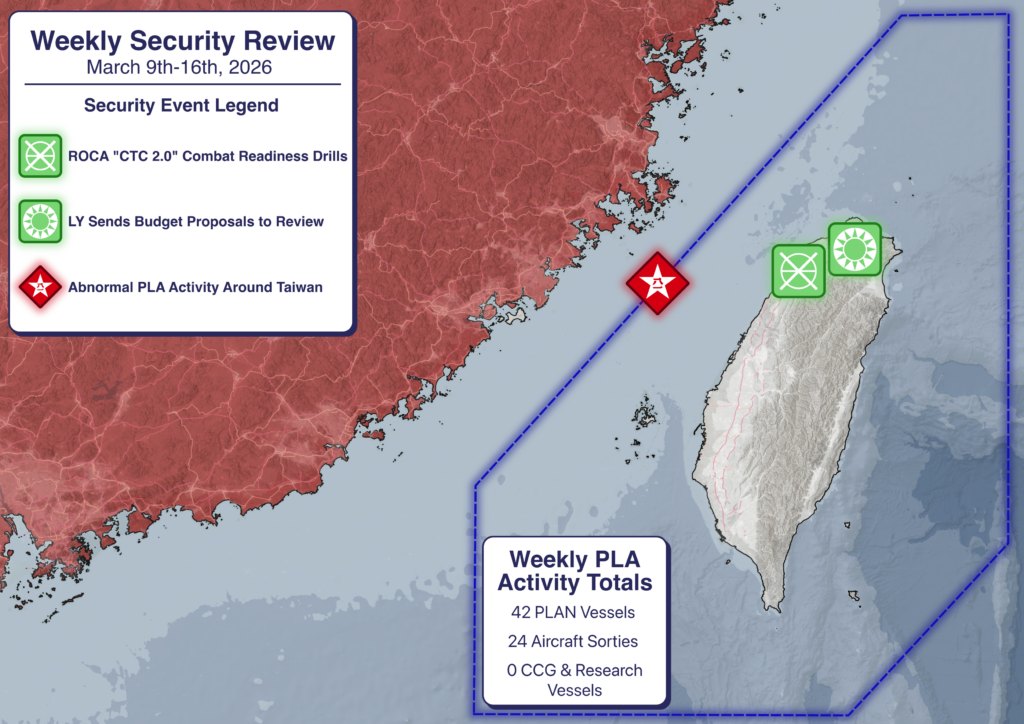
Army Wraps Up Inaugural CTC 2.0 Combat Readiness Drills
Taiwan’s Army has wrapped up a new kind of military exercise called “CTC 2.0” (Combat Training Center rotation 2.0). The Ministry of National Defense (MND) says the inaugural drills are a significant upgrade to its existing combat readiness exercise and are modeled after U.S. Army training. The first-ever rotation involved the 542nd, 584th, and 586th Combined Arms Brigades, along with the 39th Chemical Corps and 52nd Engineer Group. The goal of these exercises, per military officials, is to simulate uninterrupted high-intensity operations to improve the combat endurance of Taiwan’s troops. The military simulated live-fire scenarios using an opposing force, creating mock fires within an integrated engagement system. These live-fire scenarios put pressure on units to coordinate combined arms tactics and forced officers to issue quick orders using the Military Decision Making Process (MDMP). Soldiers taking part in the drills were also tested on how they conducted logistics, with some units even performing maintenance and swapping engines on the fly.
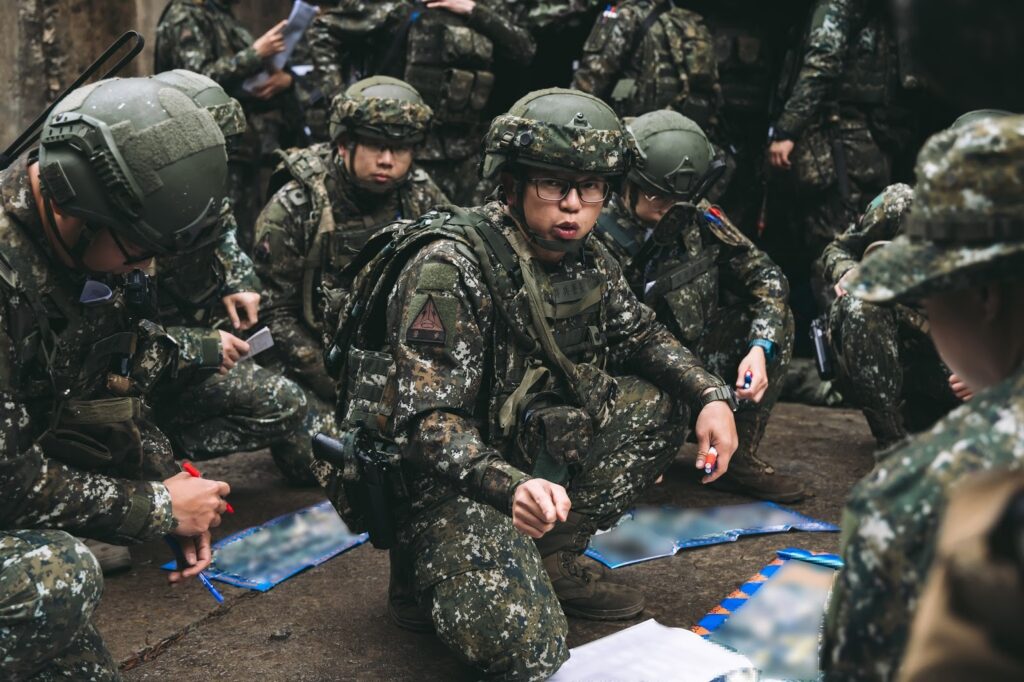
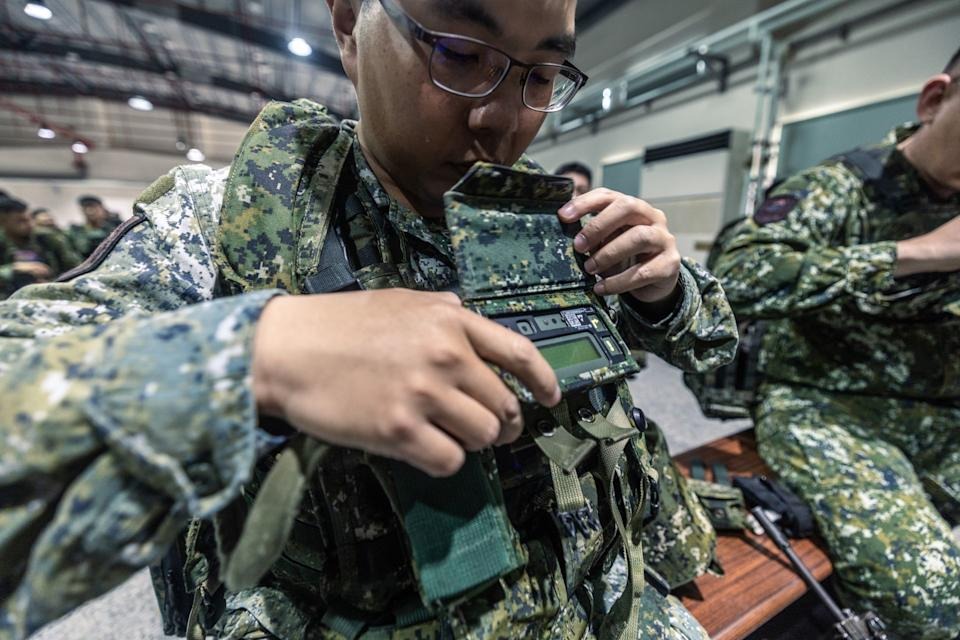
Since 2023, Taiwan has been making great strides to increase the realism of its military exercises, and the new CTC 2.0 is a continuation of those efforts. These drills were extended from 5 days/4 nights to 10 days/9 nights, and included one-year conscripts alongside the active volunteer force. Units that fail the drills must complete the entire exercise again. Engineers who took part in CTC 2.0 say this iteration helped them improve their ability to rapidly deploy mines, obstacles, and field fortifications under pressure across different terrains. A large number of armor crewmembers, however, say the drills are physically and mentally demanding, due to the 24-hour cycle having no predictable rest periods. Battalion commanders say the biggest challenge was issuing orders under pressure and under consistently changing battlefield conditions.
Suspicious ADIZ Activity Around Taiwan Raises Eyebrows
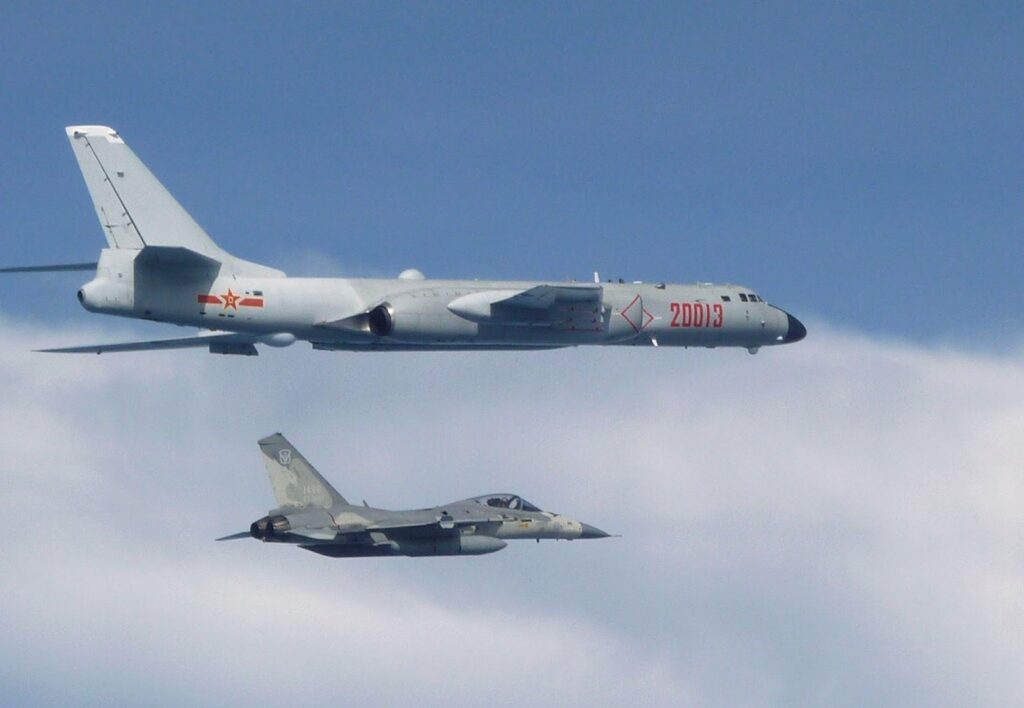
It’s been an interesting two weeks for Taiwan, which has since reported a sharp uptick in Chinese military activity around its airspace on Sunday, ending a rare 10-day lull in flights that have left analysts and observers around the world looking for answers. Regardless, Taiwan’s MND says it spotted 26 PLA military aircraft operating in the region, with 16 crossing the median line of the Taiwan Strait or entering Taiwan’s air-defense identification zone (ADIZ). Seven Chinese naval vessels were also observed maneuvering in the surrounding waters.
From February 27 to March 11, the MND reported zero People’s Liberation Army Air Force (PLAAF) sorties on 11 of 13 days, being the longest pause since 2021. Beijing offered no public comment, and Taiwan’s Minister of National Defense, Wellington Koo, has cautioned against reading too much into the “de-escalation.” Koo went on to tell reporters that Chinese naval patrols “still surround us daily.” Analysts in Taipei and Washington have floated a variety of competing theories, ranging from internal leadership disruptions due to recent PLA purges to political calculations ahead of an anticipated U.S.–China summit. Some analysts have highlighted possible fuel shortages and new training formats as another possibility, but one thing is for sure: no one knows exactly why. Some observers now say that the resurgence of flights suggests the lull was tactical rather than strategic, as with the Two Sessions finished, aircraft are now starting to return.
Taiwan Security Monitor put out its own explanation for the lull in activity on March 7. You can read the full article here:
Taiwan’s Legislature Sends All Supplemental Budget Proposals to Committee Review
Taiwan’s Legislative Yuan (LY) has agreed to send all three versions of a supplemental defense budget draft to the various committees for review. The competing proposals includes the Lai administration’s NT$1.25 trillion (US$40 billion) request, a proposal by the Taiwan People’s Party (TPP) worth NT$400 billion (US$12.7 billion), and a third budget by the Kuomintang (KMT) worth NT$380 billion (US$11.93 billion) Days later, the LY agreed to allow the Cabinet to sign Letters of Offer and Acceptance (LOA) for four U.S. weapons systems. Three of those systems, Paladin self-propelled howitzers, TOW-2B, and Javelin anti-armor missiles, had a deadline of March 15. A fourth LOA, to be signed for 82 High Mobility Artillery Rocket Systems (HIMARS) and munitions, has a March 26 deadline. The next step is for the Cabinet to inform the Legislature of the estimated procurement timelines for these systems. The decision to push the budget forward comes just days after the KMT said it could also support the TPP’s special defense budget proposal. KMT legislator Lo Ting-wei said the plans are similar enough that the versions could be merged into a unified “blue-white” budget reflecting cooperation between the parties.
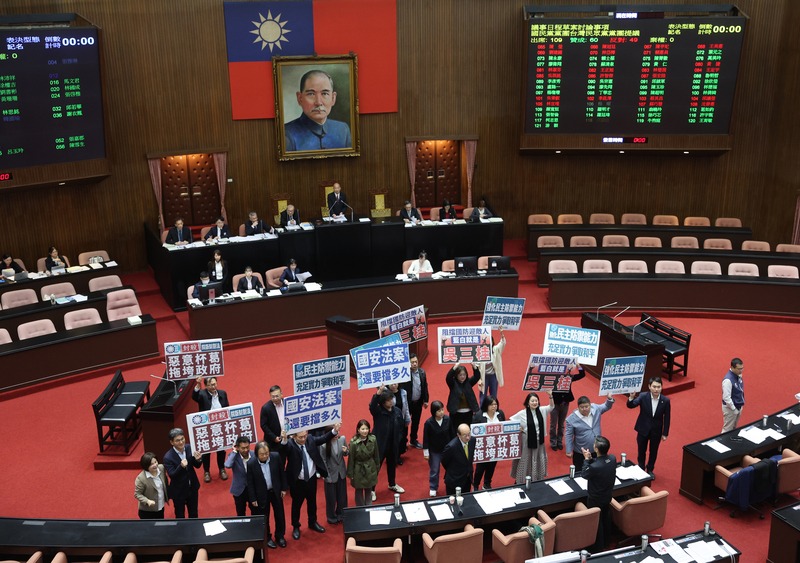
The budget dispute has intensified after the U.S. announced a US$11 billion arms sale to Taiwan in December. Over 30 American lawmakers took to social media and sent a bipartisan letter to LY leaders, urging approval of a supplemental budget. The KMT and TPP both support increasing defense spending, but are more concerned about oversight mechanisms and specific funding details. The KMT’s version requires receipt of LOAs before releasing funds and mandates delivery by 2028, while the TPP would fund only five of the eight U.S. arms sale items. The KMT and TPP oppose the idea of the DPP receiving a “blank check” for President Lai’s administration. The DPP has continued to release more information clarifying what they would purchase, including funds for a domestic air defense network (T-Dome) and indigenous missile production.