Author: Jaime Ocon
Welcome to the Weekly Security Review, where we highlight key military, security, and political developments around Taiwan in one straightforward summary!
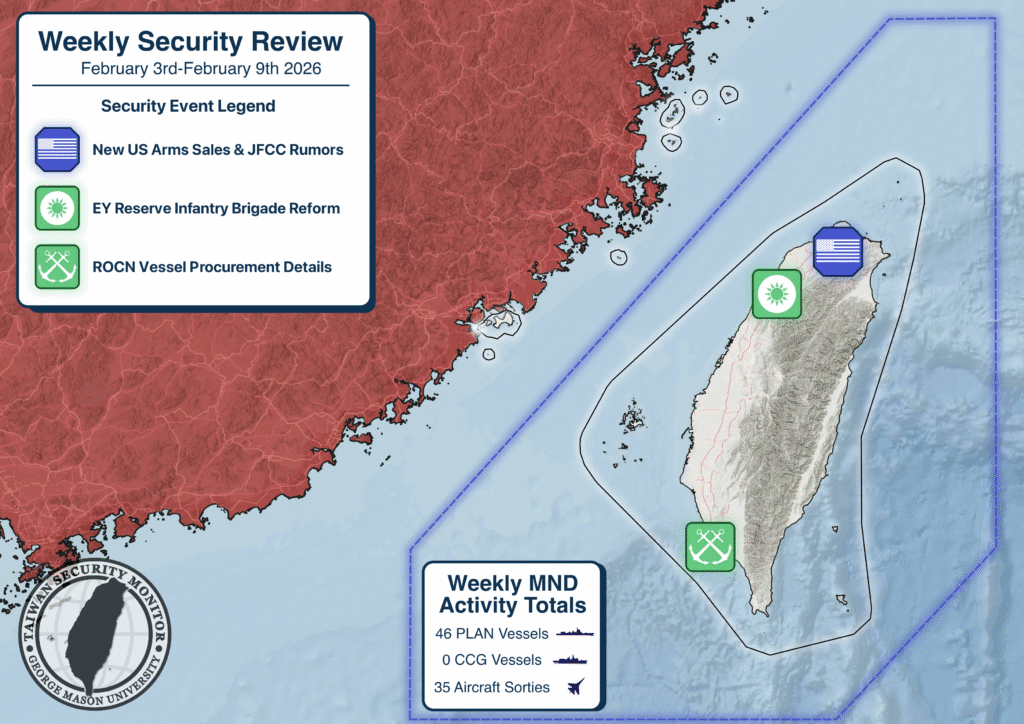
This week, Washington eyes new air defense upgrades for Taiwan, conscripts gear up for enhanced training, talks of a joint U.S.-Taiwan firepower center heat up, and the Navy’s modernization plan raises a big question: How many ships are too many?
FT: U.S. Set to Approve Huge Air Defense Package to Taiwan
A report on Friday, 6 February, from the Financial Times revealed that the U.S. is preparing a set of four new arms packages for Taiwan, including Patriot missiles and launchers, potentially worth up to $20 billion. The prospective deal is also expected to include additional National Advanced Surface-to-Air Missile Systems (NASAMS), as well as two other unknown sales. This comes after the U.S. already approved a US$11 billion arms package, but funding for that deal (part of a special defense budget) is currently stalled in the Legislative Yuan by opposition parties. All eyes are now on the Trump administration and whether or not the proposed sale will be announced to Congress before or after Trump’s trip to China in April. Beijing has warned that any sort of arms deal could derail President Donald Trump’s planned state visit, with Chinese President Xi Jinping personally urging the U.S. to handle Taiwan arms sales “with prudence.”
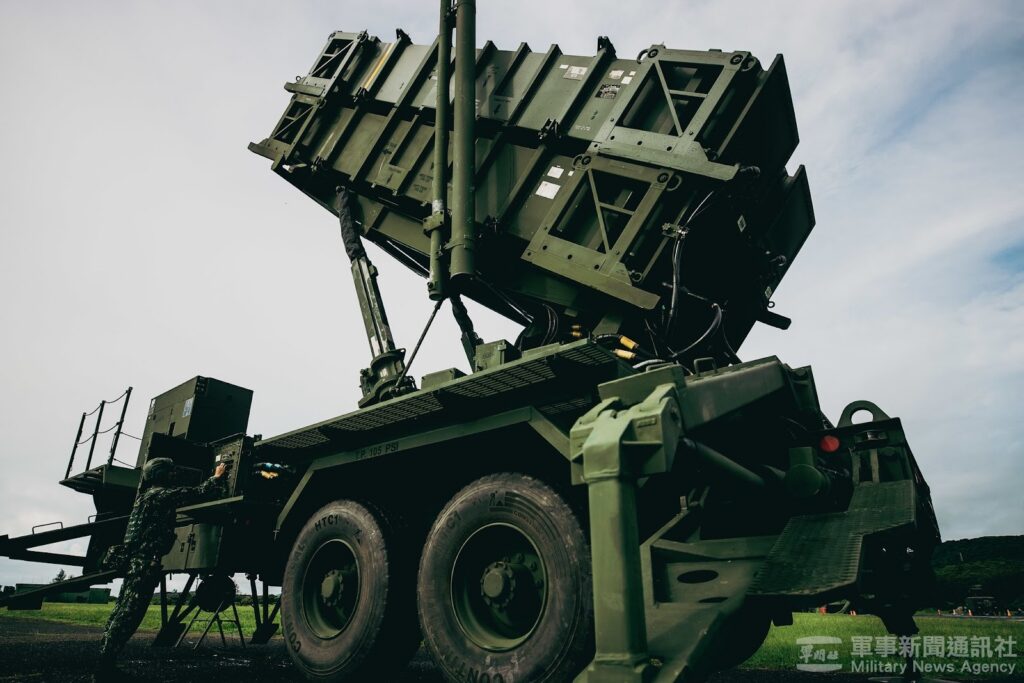
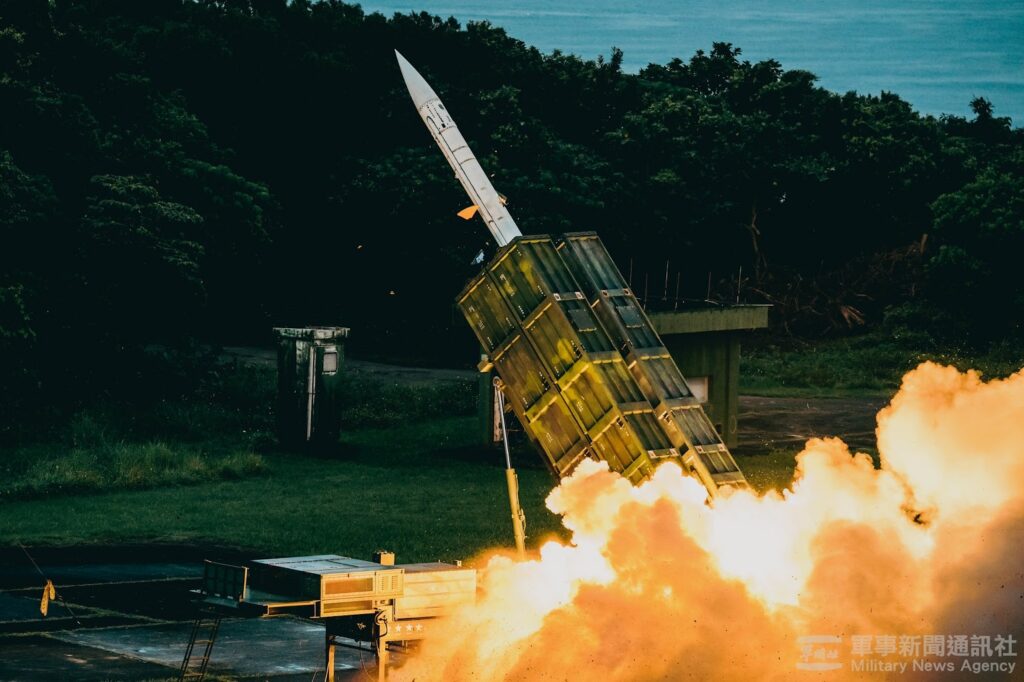
While more willingness from the U.S. to provide defense equipment to Taiwan is great for the country’s defense, it could potentially put Taipei in a difficult position if it is unable to pay on time or at all. Senators Jim Risch (R-ID) and Jeanne Shaheen (D-NH) are among a handful of U.S. lawmakers who have criticised the stalled budget and are putting pressure on Taiwan’s political parties to cooperate and fund the island’s security. The Legislative Yuan, meanwhile, is on winter break until the end of February.
Taiwan Announces Reorganization of Conscripts Units and Training
Taiwan’s Executive Yuan (EY) released a policy report with a detailed overview of major defense reforms, including a change to conscript training. According to the report, starting this year, conscripts will not only be reorganized into battalion-level units but also grouped into combined-arms brigades when conducting the annual Lien Yung live-fire exercise. One of the main goals for the military is to “enhance joint counter-force strike capabilities,” which is why conscript units will move beyond static defense. Traditionally, once conscripts completed basic training, they would serve as support for the main volunteer force, helping to provide logistics. They will now train alongside main combat units equipped with systems like new M1A2T Abrams tanks and Clouded Leopard infantry fighting vehicles. A number of brigades are planned, which include:
- 109th Infantry Brigade (虎躍部隊) – guarding the Taoyuan Plateau and the northern gateway to Greater Taipei.
- 249th Infantry Brigade (龍虎部隊) – defending Zhunan’s beach and the Hsinchu Science Park area.
- 101st Infantry Brigade (堅毅部隊) – securing deep inland areas of Taiwan’s central region.
- 137th Infantry Brigade (南威部隊) and 117th Infantry Brigade (海鵬部隊) – responsible for guarding the cities of Tainan and Kaohsiung.
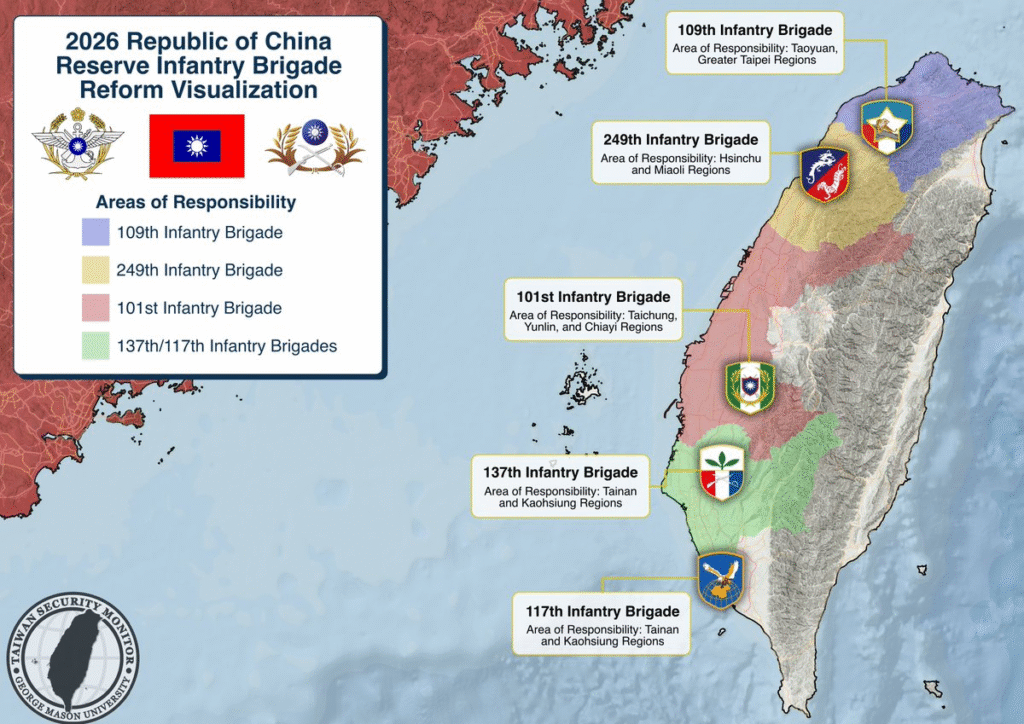
While the move is a step in the right direction in terms of the planned quality of training, there are several obstacles and potential roadblocks. The main concern is training capacity and feasibility. According to Chieh Chung, a strategic studies professor at Tamkang University, the advanced 13-week base-level field training could only be properly conducted at two large facilities – Hukou in Hsinchu, northwestern Taiwan, and Baihe in Tainan, southern Taiwan. There is also the concern of a lack of trainers, as without adequate training, this risks labelling units as combat-ready when they might be lacking in quality.
Rumors of a U.S.-Taiwan Joint Firepower Coordination Center Circulate
Some interesting news came out this week about the possibility of a U.S.-Taiwan Joint Firepower Coordination Center (JFCC). In a span of 2 weeks, Taipei-based United Daily News and the U.S. outlet Defense News have run similar stories claiming that both countries are working to set up a mechanism and procedure to coordinate precision strikes. To be very clear, this has not been confirmed by either side. Taiwan’s MND says details regarding the cooperation center are “inconvenient to disclose,” but confirmed that Taiwan has “institutionalized” and “deepened” cooperation with the U.S. military to enhance its defense capabilities. This is significant for several reasons, but we need to first understand where Taiwan stands in terms of its U.S. defense procurement.
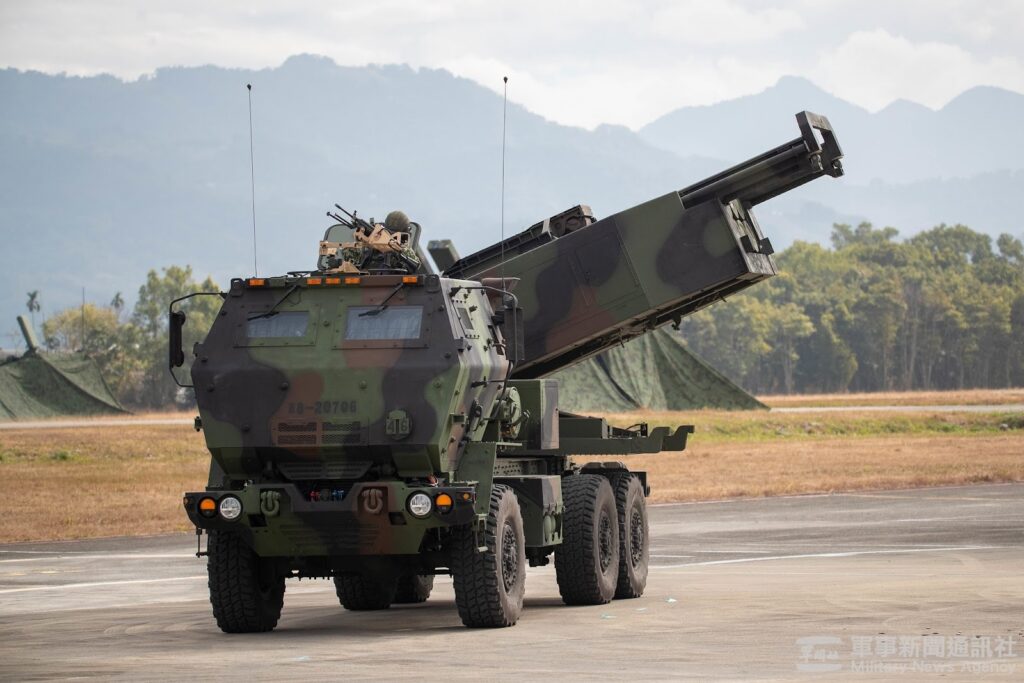
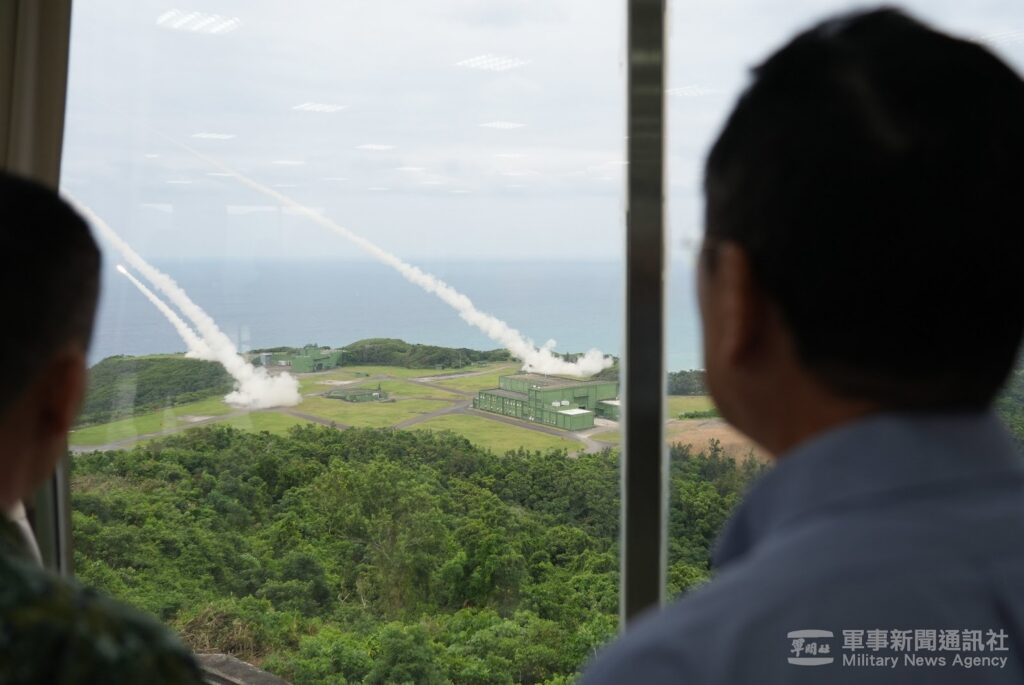
Taiwan’s military has been trying to stockpile and produce a variety of precision-guided munitions and support equipment to boost its strike and defense capabilities. Military sources say that Taiwan still has more than 1,000 missiles pending delivery, which include PAC-3 MSE, AMRAAMs, the shore-based Harpoon Coastal Defense System (HCDS), and ATACMS. On top of that, if the MND can secure full funding in its supplemental special defense budget, Taiwan can acquire over 200,000 UAVs, 100,000 USVs, and thousands of other domestically produced missiles.
A major obstacle for Taiwan is creating a robust and capable C4ISR (Command, Control, Communications, Computers, Intelligence, Surveillance, and Reconnaissance) system. For decades, Taiwan continued to procure expensive “legacy” platforms that have questionable survivability and largely neglected improved sensor and software capabilities. Taiwan does not have many satellites, and local reporting shows that it has a mediocre grasp of its maritime domain. This is where the JFCC could help fill the gap needed for effective strike operations, with the MND already stating the center “will be able to effectively coordinate firepower deployment across different service branches, thereby maximizing operational effectiveness”.
According to military sources, the General Staff Headquarters’ Operations and Planning Office (J-3) will be responsible for allocating and managing upcoming assets and has already begun preparatory work to help establish the JFCC. Included in the US$40 billion supplemental budget are plans to invest nearly US$3.1 million to upgrade the Joint Operations Command, Joint Emergency Response, and distributed command centers, with an additional US$316,000 allocated to the Intelligence Division.
Assuming that the most recent package of HIMARS approved in December 2025 is fulfilled, Taiwan will be the second largest operator of those systems behind the U.S. With local media already teasing possible deployments of the system in the outlying islands of Penghu, and more “firepower” units being created, Taiwan’s next challenge will be to upgrade its infrastructure to support this new hardware.
Navy Eager to Start Massive Modernization Program
Taiwan is planning a major naval modernization centered on six new ship programs between roughly 2027 and 2040. Below is a public list of planned vessels with their production schedule and estimated cost.
- 1 submarine rescue ship (2027–2032, ~NT$13.2bn)
- 1 next-generation fast combat support ship, Panshih class (2027–2033, ~NT$17.2bn)
- 5 next-generation light frigates (anti-submarine warfare variant) (2028–2040, ~NT$125bn)
- 5 next-generation light frigates (air defense variant) (2028–2040, ~NT$125bn)
- 2 rescue ships (2027–2034, ~NT$21.8bn)
- 1 additional Yushan-class dock landing ship (2028–2034, ~NT$13.4bn)
The much-anticipated light frigates were scaled down from the original 4,500-ton concept to 2,500 tons and are meant to strengthen badly needed anti-air and anti-submarine capabilities in the face of threats from the People’s Liberation Army Navy, Air Force, and Rocket Force. Currently, around 60 percent of Taiwan’s main surface fleet is nearing 30 years old, with some ships passing 50 years in service. This is why the Navy says modernization and phasing out aging platforms should be the country’s priority.
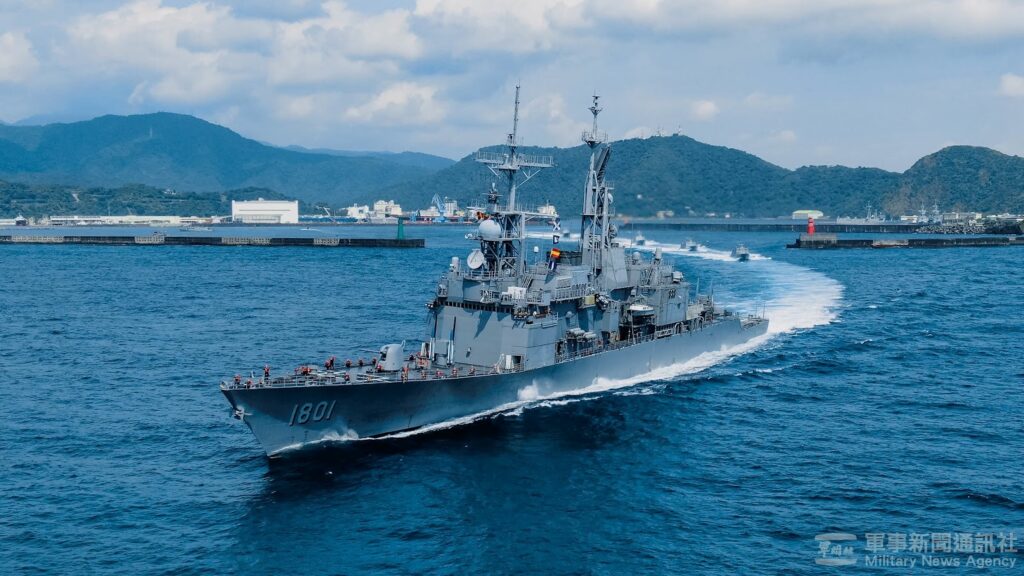
However, Taiwan faces a dilemma, as the military needs to decide how it will balance the daily gray-zone pressure brought by Chinese Coast Guard vessels and naval vessels, as well as the worst-case invasion scenario. The ROCN has already started to replace legacy vessels and introduce smaller Tuo Chiang–class “carrier killers” that rely on “shoot-and-scoot” tactics with Hsiung Feng III missiles. Taiwan’s Coast Guard Administration has also made headway in beefing up its fleet with plans unveiled in September 2025 to add 12 new 2,000-ton class cutters and 28 new smaller boats. Some critics argue that investing in unmanned vessels armed with loitering munitions could offer cheaper, more survivable firepower. The MND says that the modernization plan is in line with the country’s combat needs and threats it faces today.