Author: Ethan Connell & Jonathan Walberg
Key Findings
- In January 2026, Taiwan’s Ministry of National Defense recorded 270 PLA aerial sorties around the island, a 21 percent decrease compared to the 340 sorties in January 2025. This month marks the first complete period of post-Justice Mission activity, following the December 29, 2025, exercise that deployed 130 aircraft in a single day.
- Four Joint Combat Readiness Patrols (JCRPs) occurred during the month, with the January 15 JCRP involving 34 aircraft, marking the highest single-day total. The consistent scheduling of JCRPs throughout January demonstrates that the PLA retains the capability for high-intensity, multi-platform demonstrations around Taiwan, despite a reduction in routine sortie volumes compared to 2025.
- PLAN vessel detections averaged 6.6 per day in January, with a peak of 11 vessels, aligning with the five-to-nine vessel baseline observed throughout 2025. Naval presence remained stable during the month and was largely unaffected by fluctuations in air activity.
- The Coast Guard Administration documented five CCG incursions into Taiwan’s restricted waters in January: four near Kinmen and one near Dongsha Island (Pratas). The January 14 Dongsha incident involved CCG vessel 3501, a larger-class cutter, highlighting a qualitative distinction in Beijing’s operational approach to these two locations.
January 2026 Air Activity
January 2026 opened a new chapter in the pattern of PLA air activity around Taiwan. The month’s total of 270 detected aircraft sorties, of which 166 entered Taiwan’s Air Defense Identification Zone, represents a 21 percent decline compared with January 2025’s 340 sorties. This figure must be read in context: the Justice Mission-2025 exercise of December 29, 2025, which saw 130 aircraft deployed around Taiwan in a single day, the largest such operation since comprehensive daily reporting began, may have temporarily exhausted forward-deployed assets and maintenance capacity in the Eastern Theater Command, contributing to a lower sustained tempo in the weeks that followed.
The daily pattern was characterized by a sawtooth rhythm: brief surges tied to Joint Combat Readiness Patrols, interspersed with days of minimal or zero activity. January saw 3 days in which no aircraft were detected (New Year’s Day, January 3, and January 11), punctuated by four JCRPs (January 8, 15, 23, and 29) that produced single-day peaks of 23, 34, 26, and 26 aircraft, respectively. The January 15 JCRP, involving 34 aircraft, was the month’s most significant single-day event and demonstrated multi-platform coordination across fighter, early warning, and anti-submarine warfare aircraft.
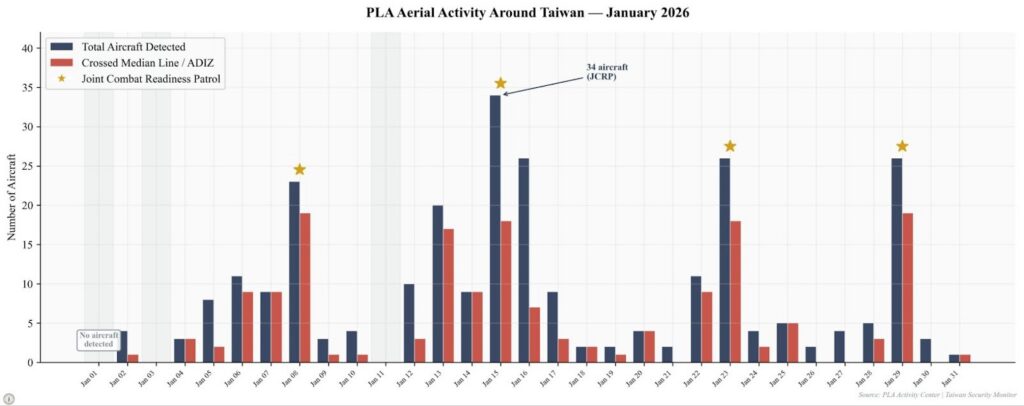
Figure 1. Daily PLA activity around Taiwan, January 2026. Gold stars denote JCRP days; shaded columns mark days with zero aircraft detected.
The removal of two senior Central Military Commission vice-chairmen in January, as part of an ongoing anti-corruption campaign within the PLA that had already affected several high-ranking officers in 2025, introduces an additional variable in interpreting the month’s air activity data. Although it is premature to establish a direct causal relationship between personnel changes and operational tempo, disruptions to command authority at the highest levels may have fostered institutional caution, potentially reducing routine sortie generation.
Monthly Trajectory: Where January Fits
January’s 270 sorties place the month at the low end of the range observed in recent years. For comparison, January 2024 recorded 331 sorties and January 2025 recorded 340. The year-over-year decline is more modest than the raw numbers might suggest: January historically sits below the annual average, as the PLA’s operational calendar typically builds toward spring and fall peaks. What distinguishes January 2026 is the extent to which the month was shaped by the aftereffects of the December 2025 Justice Mission exercise, which represented an operational high-water mark that appears to have drawn forward maintenance and logistics resources.
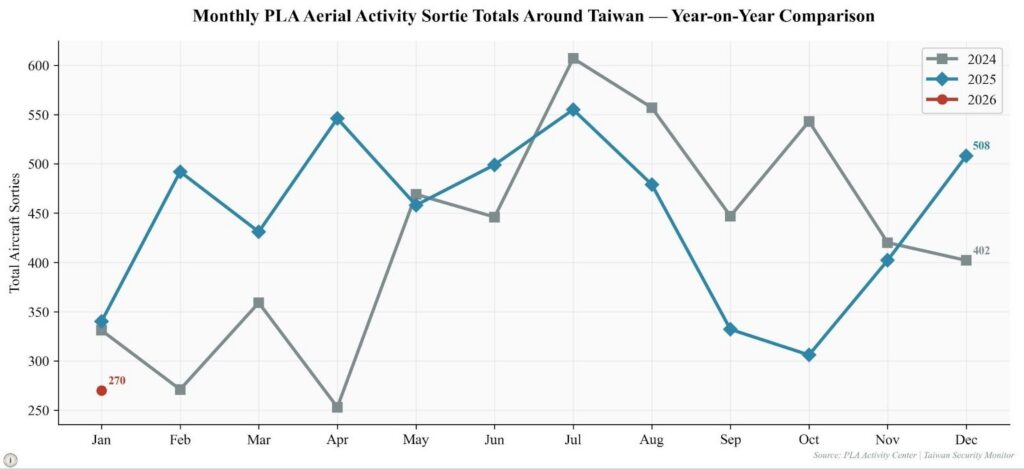
Figure 2. Monthly PLA sortie totals, 2024–2026. For 2026, only January data is available.
The frequency of joint combat readiness patrols in January 2026, totaling four events, surpassed the typical January cadence observed in previous years. This indicates that the decrease in total sortie volume has not corresponded with a reduction in the PLA’s readiness to conduct large-scale, multi-domain demonstrations on short notice, a trend warranting continued observation in the coming months.
At Sea: Naval Presence in January
In January, PLAN vessel detections in the waters around Taiwan averaged 6.6 per day, peaking at 11 vessels on January 14 and 15. These numbers align with the five-to-nine vessel baseline that has defined PLAN presence throughout 2025 and into the new year. The stability of naval posture during the post-Justice Mission period, when air activity was moderating, reinforces a key structural observation from Taiwan Security Monitor’s multi-domain tracking: PLAN presence around Taiwan follows a different operational cycle from PLA aerial activity, showing less sensitivity to the political and institutional factors that influence air sortie fluctuations.
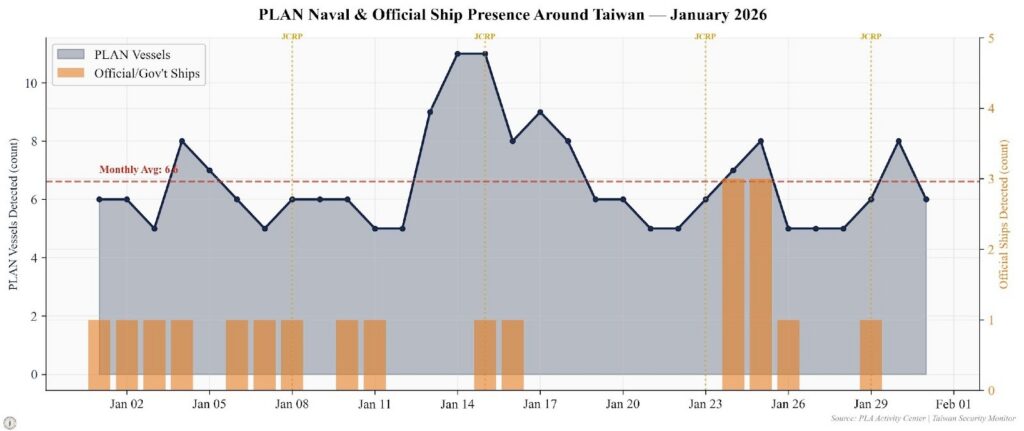
Figure 3. PLAN vessel and official ship detections around Taiwan, January 2026.
Official and government ship detections remained generally low throughout January, with a notable increase on January 24 and 25, when three official ships were detected each day. This decoupling between air and naval activity is analytically significant: analysts focusing solely on sortie counts may interpret January’s data as evidence of moderation, yet the stable naval footprint demonstrates that the PLA’s overall maritime posture has not significantly diminished. China Coast Guard activity in Taiwan’s restricted waters constitutes a third, frequently underreported dimension of cross-strait pressure. In January 2026, the CCG conducted at least 5 documented incursions: 4 around Kinmen and 1 near Dongsha Island (Pratas). The Kinmen operations follow a recognizable pattern: typically three to four CCG cutters entering restricted waters near Liaoluo and Lieyu for two to three hours before withdrawing. Recurring hull numbers (14529, 14603, 14605, 14609, and 14533) indicate a dedicated patrol rotation rather than ad hoc deployments.
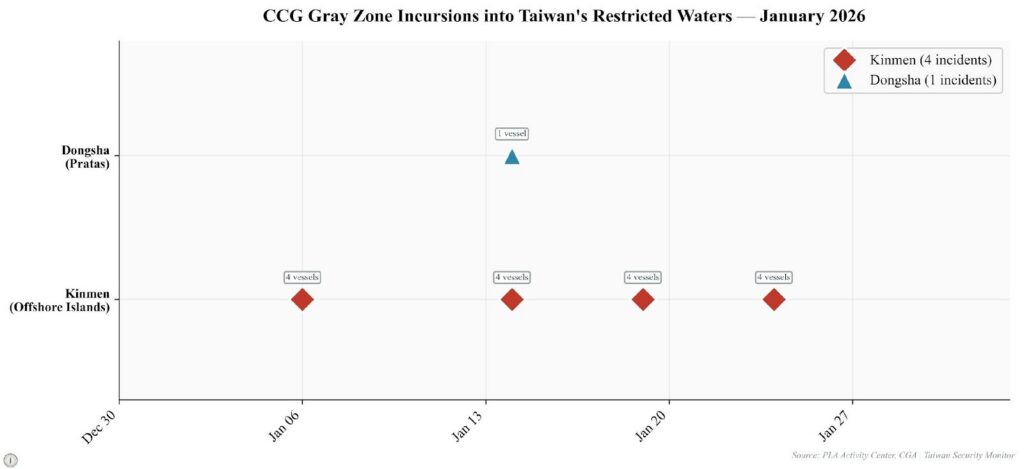
Figure 4. CCG incursions into Taiwan’s restricted waters, January 2026, by location and vessel count.
The January 14 Dongsha incursion differed qualitatively from the Kinmen pattern. CCG vessel 3501, a larger-class cutter, was detected west of Dongsha at 05:14 and remained in restricted waters for approximately eleven hours before departing. Although this duration was shorter than the twenty-five-hour dwell times observed at Dongsha in subsequent months, the deployment of a 3500-class cutter to Taiwan’s most remote holding indicates sustained interest in testing the Coast Guard Administration’s ability to maintain a presence at Dongsha, located approximately 450 kilometers southwest of the main island and over 300 kilometers from the nearest Taiwan-controlled port.
Multi-Domain Overview
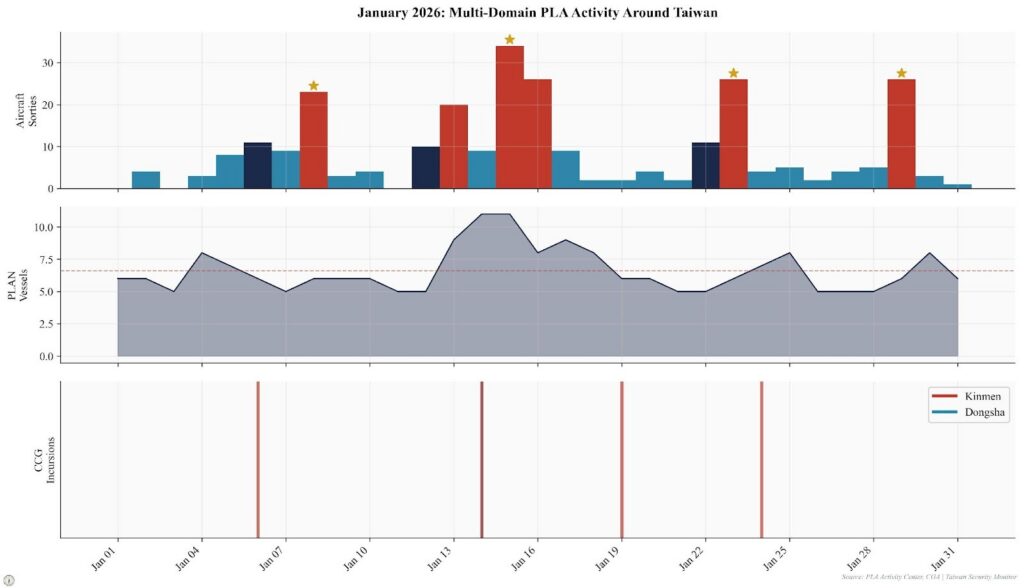
Figure 5. January 2026 multi-domain PLA activity: air sorties, naval presence, and CCG incursions.
When considered across all three domains, January 2026 exhibits the characteristic pattern of multi-domain PLA pressure that the Taiwan Security Monitor has documented since the post-2022 period. Air activity was concentrated in distinct JCRP-driven surges, separated by extended periods of minimal activity. Naval presence remained steady and was largely uncorrelated with the daily fluctuations in air operations. Coast Guard incursions persisted along established geographic patterns, with the Dongsha deployment introducing a longer-range element to an otherwise Kinmen-focused gray-zone campaign.
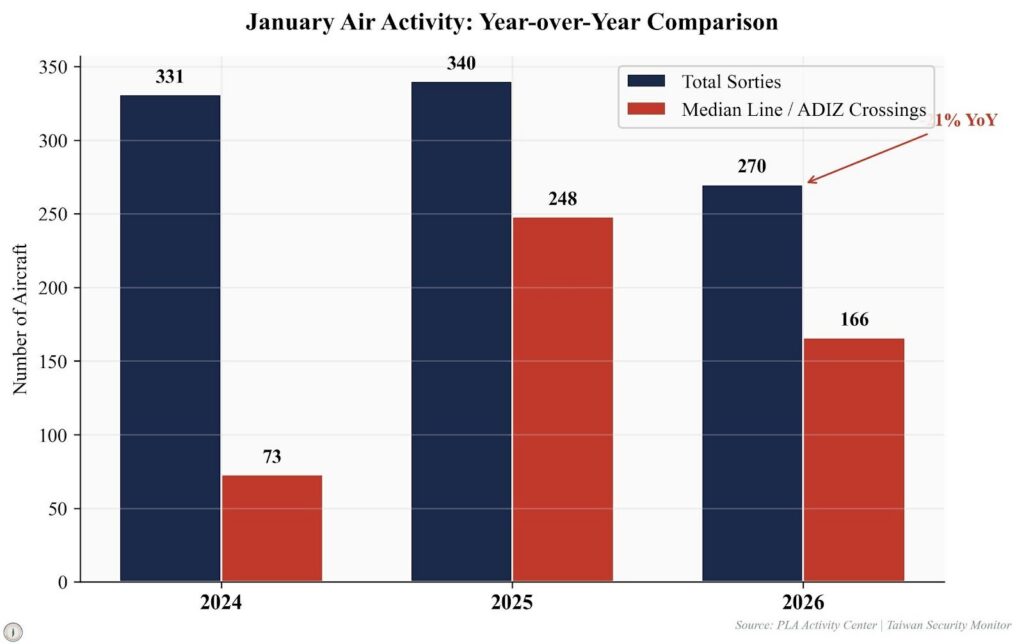
Figure 6. January air activity year-over-year: total sorties and ADIZ crossings, 2024–2026.
Analysts and policymakers should avoid interpreting a reduction in one domain as indicative of an overall decrease in pressure. The combined multi-domain posture, encompassing air, naval, and coast guard activities, does not reflect a significant departure from the sustained pattern of PLA activity around Taiwan that has shaped the cross-strait military balance since August 2022.
Methodology & Sources
Air and naval detection data are drawn from daily press releases issued by Taiwan’s Ministry of National Defense and compiled in the PLA Activity Center database maintained by Taiwan Security Monitor. Coast Guard incident data are compiled from Coast Guard Administration press releases and verified against contemporaneous media reporting. Japan ADIZ scramble data are sourced from Japan Joint Staff Office press releases and reporting by USNI News. “Median line” refers to the informal centerline of the Taiwan Strait historically observed by both sides. “JCRP” denotes Joint Combat Readiness Patrols as designated by Taiwan’s MND. All analysis and commentary are by Taiwan Security Monitor.
© 2026 Taiwan Security Monitor. All rights reserved.